Over the years, I've been deeply involved in the steel cross arm business as a supplier. It's been an amazing journey watching how these steel cross arms have evolved. Let's take a trip down memory lane and explore this evolution together.
The Early Days of Steel Cross Arms
In the beginning, steel cross arms were pretty basic. They were mainly used in power transmission and distribution systems. Back then, the focus was on simple functionality. The design was straightforward, just a piece of steel shaped into a cross, used to support electrical wires. The manufacturing process was also relatively simple. We cut the steel, shaped it, and then did some basic welding and finishing.
These early steel cross arms were made from standard carbon steel. They were strong enough to hold the weight of the wires, but they had some drawbacks. For example, they were prone to rusting. Since they were often exposed to the elements, the steel would start to corrode over time. This not only reduced their lifespan but also affected their performance. The rust could weaken the structure, making it less reliable in supporting the electrical wires.
Another issue was the weight. The early steel cross arms were quite heavy, which made installation a challenge. Workers had to use a lot of effort to lift and position them, and it also required more resources for transportation. But despite these problems, they were the go - to solution at that time because there weren't many alternatives.
Technological Advancements in Materials
As time went on, the demand for more reliable and durable steel cross arms grew. This led to significant advancements in materials. One of the most important developments was the use of galvanized steel. Galvanization is a process where a layer of zinc is applied to the steel. This zinc layer acts as a protective barrier, preventing the steel from coming into contact with oxygen and moisture, which are the main causes of rust.
Galvanized steel cross arms were a game - changer. They had a much longer lifespan compared to the early carbon steel ones. They could withstand harsh weather conditions, such as heavy rain, snow, and high humidity, without corroding quickly. This meant that power companies could save a lot of money on maintenance and replacement costs.
In addition to galvanized steel, some manufacturers also started using high - strength alloy steels. These steels have a higher strength - to - weight ratio, which means they can be made lighter while still maintaining the same level of strength. This made the installation process much easier and more cost - effective. The lighter weight also reduced the stress on the supporting structures, such as poles, which increased the overall stability of the power transmission system.
Design Improvements
Along with the changes in materials, there have also been significant design improvements in steel cross arms. In the past, the design was mainly about providing a simple support for the wires. But now, the design takes into account many other factors, such as aerodynamics and ease of installation.

Modern steel cross arms often have a more streamlined design. This helps to reduce wind resistance, especially in areas with high - wind conditions. By reducing wind resistance, the cross arms are less likely to be damaged by strong winds, and the overall stability of the power lines is improved.
Another important design improvement is the use of modular components. Instead of having a single, large cross arm, modern designs often consist of smaller, modular parts that can be easily assembled on - site. This makes the installation process faster and more flexible. Workers can adjust the configuration of the cross arm according to the specific requirements of the power line, such as the number of wires and the spacing between them.
Integration of Accessories
As the power transmission and distribution systems have become more complex, the need for additional accessories has also increased. Steel cross arms now often come with a variety of accessories to enhance their functionality.
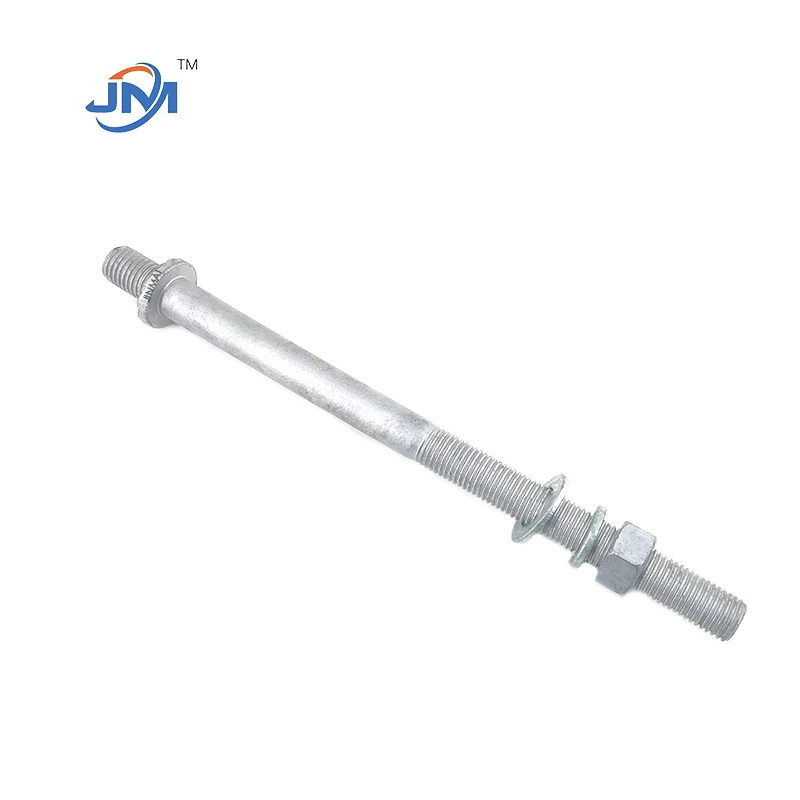
One such accessory is the [Bolt Fixing Gear Ring Stud Bolt](/metal - stamping - parts/bolt - fixing - gear - ring - stud - bolt.html). These bolts are used to securely fasten the cross arm to the supporting structure. They are designed to be strong and reliable, ensuring that the cross arm stays in place even under extreme conditions.
The [Piercing Wire Clamp](/metal - stamping - parts/piercing - wire - clamp.html) is another important accessory. It is used to hold the electrical wires in place on the cross arm. These clamps are designed to pierce through the insulation of the wire, providing a good electrical connection while also securely holding the wire.
The [Bowl Head Connection Accessories Electric Hardware](/metal - stamping - parts/bowl - head - connection - accessories - electric.html) are also commonly used. They are used to connect different components of the power line, such as the cross arm and the insulators. These accessories are designed to be easy to install and provide a reliable electrical connection.
Future Trends
Looking ahead, I think there are several trends that will shape the future of steel cross arms. One of the trends is the increasing use of smart technology. For example, sensors could be integrated into the cross arms to monitor their condition in real - time. These sensors could detect things like stress, temperature, and corrosion, and send the data to a central monitoring system. This would allow power companies to detect potential problems early and take preventive measures.
Another trend is the continued focus on sustainability. As the world becomes more environmentally conscious, there will be a greater demand for steel cross arms that are made from recycled materials and are energy - efficient in the manufacturing process.
Why Choose Our Steel Cross Arms
As a supplier, we've been at the forefront of these changes. We've invested in the latest technologies and manufacturing processes to ensure that our steel cross arms are of the highest quality. Our products are made from the best materials, whether it's galvanized steel or high - strength alloy steels.
We also pay a lot of attention to design. Our cross arms are not only strong and durable but also have a modern and functional design. We offer a wide range of accessories, including the ones I mentioned earlier, to meet the diverse needs of our customers.
If you're in the market for steel cross arms, I encourage you to get in touch with us. We're more than happy to discuss your specific requirements and provide you with the best solutions. Whether you're a power company, an electrical contractor, or involved in any other related industry, we can help you find the right steel cross arms for your project.
References
- Power Transmission and Distribution Handbook
- Steel Manufacturing and Engineering Journal
- Electrical Equipment Design and Innovation Reports