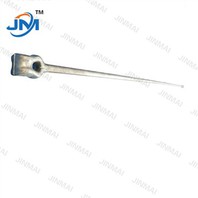
Ensuring the precision of line iron parts is of paramount importance in the manufacturing and supply industry. As a seasoned supplier of line iron parts, I understand the critical role that precision plays in the functionality, safety, and overall performance of these components. In this blog post, I will share some key strategies and practices that we implement to guarantee the highest level of precision in our line iron parts.
Understanding the Importance of Precision
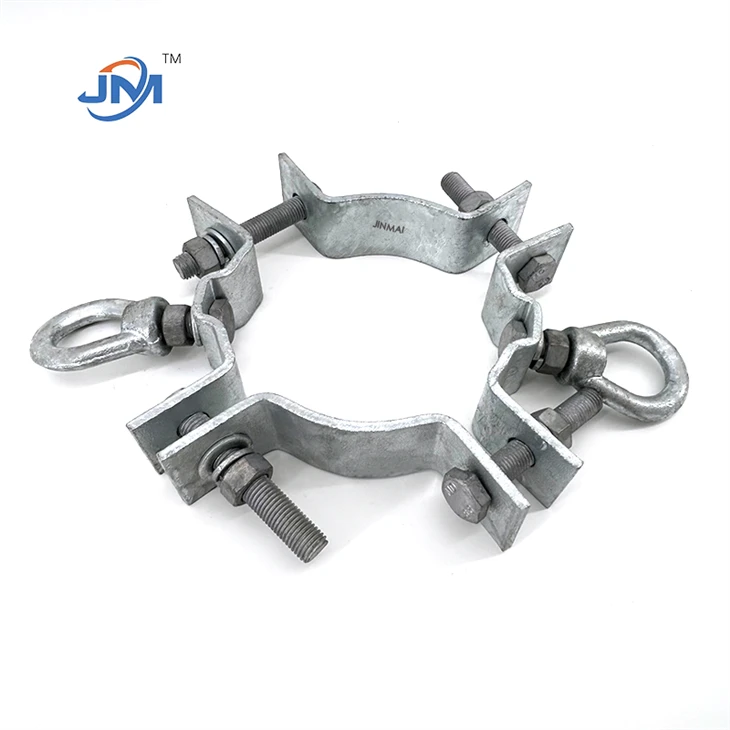
Before delving into the methods of ensuring precision, it is essential to grasp why precision matters so much in line iron parts. These parts are commonly used in various industries, including power transmission, telecommunications, and construction. In power transmission, for example, line iron parts such as Hot Dip Galvanized Pole Band Mounting Clamp and Secondary Clevis Bracket Hot DIP Galvanized Pole Line Hardware are crucial for supporting and securing power lines. Any deviation from the specified dimensions can lead to improper installation, reduced structural integrity, and potential safety hazards.
In telecommunications, precision is equally vital. Line iron parts used in the installation of communication towers and poles need to fit together perfectly to ensure reliable signal transmission. Even a small error in measurement can cause misalignment, which may result in signal interference or complete system failure.
Design and Engineering
The journey towards precision begins with the design and engineering phase. Our team of experienced engineers uses advanced computer-aided design (CAD) software to create detailed 3D models of the line iron parts. These models allow us to visualize the components from every angle and make precise calculations regarding dimensions, tolerances, and material requirements.
During the design process, we pay close attention to the intended application of the parts. For instance, if a part is to be used in a high-stress environment, we will select materials with appropriate strength and durability. We also consider factors such as corrosion resistance, as many line iron parts are exposed to harsh outdoor conditions.
Once the design is finalized, we conduct thorough simulations to test the performance of the parts under various conditions. This helps us identify any potential issues and make necessary adjustments before moving on to the manufacturing stage.
Material Selection
The choice of materials is another critical factor in ensuring the precision of line iron parts. We source our materials from reputable suppliers who adhere to strict quality standards. For most of our line iron parts, we use high-quality steel that offers excellent strength and durability.
Before using any material, we conduct comprehensive quality checks to ensure that it meets our specifications. This includes testing for chemical composition, mechanical properties, and surface finish. We also verify the material's traceability to ensure that it can be tracked back to its source in case of any quality issues.
Manufacturing Processes
At our state-of-the-art manufacturing facility, we employ a range of advanced processes to produce line iron parts with the highest level of precision. One of the key processes we use is precision machining. This involves using computer numerical control (CNC) machines to cut, drill, and shape the materials with extreme accuracy.
CNC machines are programmed with the exact dimensions and specifications of the parts, allowing for consistent and repeatable production. They can also perform complex operations that would be difficult or impossible to achieve manually. This ensures that each part is produced to the same high standard, regardless of the batch size.
In addition to precision machining, we also use other processes such as forging, casting, and stamping. These processes are carefully controlled to ensure that the parts are formed correctly and meet the required tolerances. For example, in the forging process, we use hydraulic presses to apply precise amounts of force to shape the metal. This helps us achieve the desired density and strength in the parts.
Quality Control
Quality control is an integral part of our manufacturing process. We have a dedicated quality control team that monitors every stage of production to ensure that the line iron parts meet our strict quality standards.
At the beginning of the production process, we conduct incoming inspections on all raw materials to ensure that they are of the correct quality and specification. During the manufacturing process, we perform in-process inspections at regular intervals to check for any deviations from the design requirements. This includes measuring the dimensions of the parts, checking the surface finish, and conducting non-destructive testing to detect any internal defects.
Once the parts are completed, we conduct final inspections to ensure that they meet all the specified requirements. This includes a comprehensive visual inspection, dimensional inspection, and functional testing. Only parts that pass all the quality control checks are approved for shipment.
Testing and Certification
To further ensure the precision and quality of our line iron parts, we conduct extensive testing and obtain relevant certifications. We have our own in-house testing laboratory, where we can perform a variety of tests, including tensile testing, hardness testing, and corrosion testing.
We also work with independent third-party testing agencies to conduct more specialized tests and obtain certifications such as ISO 9001, which demonstrates our commitment to quality management. These certifications provide our customers with the confidence that our line iron parts meet international standards and are reliable and safe to use.
Continuous Improvement
We believe that continuous improvement is essential in the pursuit of precision. We regularly review our manufacturing processes, quality control procedures, and design practices to identify areas for improvement.
We also encourage feedback from our customers and use it to make necessary changes to our products and services. By staying up-to-date with the latest technologies and industry trends, we are able to continuously enhance the precision and quality of our line iron parts.
Conclusion
Ensuring the precision of line iron parts is a complex and multi-faceted process that requires careful planning, attention to detail, and a commitment to quality. As a leading supplier of line iron parts, we are dedicated to providing our customers with products that meet the highest standards of precision and reliability.
If you are in need of high-quality line iron parts for your project, we invite you to contact us to discuss your requirements. Our team of experts will be happy to assist you and provide you with a customized solution that meets your needs.

References
- ASME Y14.5 - Dimensioning and Tolerancing Standard
- ASTM A123 - Standard Specification for Zinc (Hot-Dip Galvanized) Coatings on Iron and Steel Products
- ISO 9001 - Quality Management Systems - Requirements