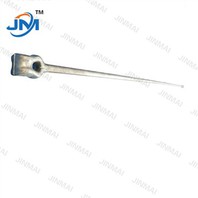
Measuring the electrical properties of a pin type insulator is a crucial aspect of ensuring its performance and reliability in electrical power systems. As a pin type insulator supplier, I understand the significance of accurate measurements in maintaining the safety and efficiency of electrical networks. In this blog post, I will share some key methods and considerations for measuring the electrical properties of pin type insulators.
1. Understanding Pin Type Insulators
Pin type insulators are widely used in overhead power lines to support and insulate the conductors from the supporting structures. They are typically made of materials such as porcelain or polymer, and their design allows them to withstand mechanical stresses and electrical voltages. The electrical properties of pin type insulators, including insulation resistance, dielectric strength, and capacitance, play a vital role in determining their suitability for specific applications.
2. Measuring Insulation Resistance
Insulation resistance is a fundamental electrical property that indicates the ability of an insulator to resist the flow of electric current. A high insulation resistance value is desirable as it minimizes leakage currents and ensures the effective isolation of the conductor from the supporting structure. To measure the insulation resistance of a pin type insulator, a megohmmeter, also known as a megger, is commonly used.
The measurement process involves connecting the megger to the insulator in a specific configuration. One terminal of the megger is connected to the conductor, while the other terminal is connected to the supporting structure or a ground reference. The megger applies a known DC voltage to the insulator and measures the resulting current. The insulation resistance is then calculated using Ohm's law (R = V/I), where R is the insulation resistance, V is the applied voltage, and I is the measured current.
It is important to note that the insulation resistance measurement should be taken under controlled conditions, such as at a specific temperature and humidity level. Additionally, the insulator should be clean and dry to obtain accurate results. Any contamination or moisture on the surface of the insulator can significantly affect the insulation resistance value.
3. Determining Dielectric Strength
Dielectric strength is another critical electrical property of pin type insulators. It represents the maximum electric field that an insulator can withstand without experiencing electrical breakdown. Electrical breakdown occurs when the electric field within the insulator becomes so strong that it causes the insulator to conduct electricity, leading to a short circuit or other electrical failures.
To measure the dielectric strength of a pin type insulator, a high-voltage test set is used. The test set applies a gradually increasing AC or DC voltage to the insulator until breakdown occurs. The breakdown voltage is recorded, and the dielectric strength is calculated by dividing the breakdown voltage by the thickness of the insulator.
During the dielectric strength test, it is essential to monitor the insulator closely for any signs of partial discharges or other abnormal behavior. Partial discharges can indicate the presence of internal defects or weaknesses in the insulator, which may lead to premature breakdown. If partial discharges are detected, further investigation and analysis may be required to determine the cause and take appropriate corrective actions.
4. Measuring Capacitance
Capacitance is a measure of the ability of an insulator to store electrical energy in an electric field. In pin type insulators, capacitance can affect the distribution of voltage along the insulator and the overall performance of the electrical system. Measuring the capacitance of a pin type insulator can provide valuable information about its electrical characteristics and help identify any potential issues.
A capacitance meter or a bridge circuit can be used to measure the capacitance of a pin type insulator. The measurement process involves connecting the meter or bridge circuit to the insulator in a specific configuration. The meter or bridge circuit applies a known AC voltage to the insulator and measures the resulting current. The capacitance is then calculated based on the measured current and the applied voltage.
It is important to note that the capacitance measurement should be taken under the same conditions as the insulation resistance and dielectric strength measurements. Any changes in temperature, humidity, or other environmental factors can affect the capacitance value. Additionally, the presence of any external objects or conductors near the insulator can also influence the capacitance measurement.
5. Importance of Regular Testing
Regular testing of the electrical properties of pin type insulators is essential to ensure their continued performance and reliability. Over time, insulators can be exposed to various environmental factors, such as pollution, moisture, and temperature variations, which can degrade their electrical properties. By conducting regular tests, potential issues can be detected early, and appropriate maintenance or replacement actions can be taken to prevent electrical failures.
In addition to regular testing, it is also important to follow proper installation and maintenance procedures for pin type insulators. This includes ensuring proper tightening of the bolts and connections, protecting the insulators from physical damage, and keeping them clean and dry. By taking these precautions, the lifespan and performance of the insulators can be maximized.


6. Our Products and Services
As a pin type insulator supplier, we offer a wide range of high-quality pin type insulators that are designed to meet the diverse needs of electrical power systems. Our insulators are made from premium materials and undergo rigorous testing to ensure their electrical and mechanical properties meet or exceed industry standards.
In addition to providing high-quality products, we also offer comprehensive testing and inspection services to help our customers ensure the performance and reliability of their pin type insulators. Our team of experienced technicians uses state-of-the-art equipment and techniques to perform accurate and reliable measurements of the electrical properties of insulators.
If you are interested in learning more about our pin type insulators or our testing and inspection services, please visit our website at Pin Type Insulator. We also offer a variety of other related products, such as Hot-dip Galvanizing Bolt and Stay Rod Stay Plate, which can be used in conjunction with our pin type insulators to enhance the performance and reliability of your electrical power system.
7. Contact Us for Purchase and Consultation
If you are in the market for high-quality pin type insulators or need professional advice on measuring their electrical properties, we encourage you to contact us. Our dedicated sales team is ready to assist you with your purchasing needs and provide you with detailed information about our products and services. Whether you are a small-scale electrical contractor or a large utility company, we have the expertise and resources to meet your requirements.
Don't hesitate to reach out to us today to start a productive discussion about your pin type insulator needs. We look forward to partnering with you to ensure the safety and efficiency of your electrical power systems.
References
- Electrical Insulation Handbook, McGraw-Hill Professional.
- IEEE Standard for Insulators - Pin Type, IEEE.
- Insulator Testing and Maintenance Guidelines, Electrical Power Research Institute.