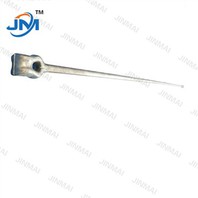
Lubrication plays a crucial role in the production of metal stamping parts. As a leading supplier of metal stamping parts, I have witnessed firsthand the impact of proper lubrication on the quality, efficiency, and cost - effectiveness of the manufacturing process. In this blog, I will delve into the lubrication requirements during the production of metal stamping parts, exploring the reasons, types of lubricants, application methods, and more.
Why Lubrication is Necessary in Metal Stamping
Metal stamping is a process that involves shaping metal sheets into desired forms using stamping presses and dies. During this process, significant friction and heat are generated between the metal sheet, the die, and the punch. Without proper lubrication, several problems can occur.
Firstly, excessive friction can lead to increased wear and tear on the dies and punches. This not only shortens the lifespan of these expensive tools but also affects the dimensional accuracy of the stamped parts. As the dies and punches wear, the parts may deviate from the required specifications, resulting in a higher rejection rate.
Secondly, the heat generated by friction can cause the metal to harden and crack. This is particularly problematic for high - strength metals, where the heat - affected zone can compromise the mechanical properties of the parts. Lubrication helps to dissipate heat, reducing the risk of thermal damage to the metal.
Finally, lubrication improves the surface finish of the stamped parts. A well - lubricated process reduces the likelihood of galling, scoring, and other surface defects, resulting in parts with a smooth and uniform appearance. This is especially important for parts that are visible or require a high - quality finish for aesthetic or functional reasons.
Types of Lubricants for Metal Stamping
There are several types of lubricants available for metal stamping, each with its own advantages and disadvantages. The choice of lubricant depends on various factors, such as the type of metal, the complexity of the stamping operation, and the environmental requirements.
Mineral Oil - Based Lubricants
Mineral oil - based lubricants are the most commonly used lubricants in metal stamping. They offer good lubricity, heat dissipation, and corrosion protection. These lubricants are relatively inexpensive and can be used for a wide range of metals, including steel, aluminum, and copper. However, mineral oil - based lubricants can be messy and difficult to clean, and they may pose environmental and health risks if not properly managed.
Synthetic Lubricants
Synthetic lubricants are formulated using synthetic base oils and additives. They offer superior performance compared to mineral oil - based lubricants, especially in high - speed and high - pressure stamping operations. Synthetic lubricants have better thermal stability, oxidation resistance, and lubricity, which can result in longer tool life and better part quality. However, they are generally more expensive than mineral oil - based lubricants.
Water - Based Lubricants
Water - based lubricants are becoming increasingly popular in metal stamping due to their environmental friendliness and ease of cleaning. These lubricants are formulated with water as the base and contain additives to provide lubricity, corrosion protection, and other properties. Water - based lubricants are less flammable than oil - based lubricants and can be easily removed from the stamped parts using water - based cleaning processes. However, they may have lower lubricity compared to oil - based lubricants, especially in high - pressure applications.
Solid Lubricants
Solid lubricants, such as graphite and molybdenum disulfide, are used in situations where traditional liquid lubricants are not suitable. Solid lubricants can be applied as a coating on the dies or the metal sheet. They offer excellent lubricity at high temperatures and pressures and can reduce friction and wear. However, solid lubricants can be difficult to apply uniformly, and they may require special handling and disposal procedures.
Lubrication Application Methods
The effectiveness of lubrication in metal stamping also depends on the application method. There are several ways to apply lubricants, each with its own advantages and limitations.
Flood Lubrication
Flood lubrication involves applying a large amount of lubricant to the metal sheet or the die using a pump or a spray system. This method ensures that the entire surface is covered with lubricant, providing good lubrication and cooling. However, flood lubrication can be wasteful, as a significant amount of lubricant may be lost during the stamping process. It also requires a proper drainage and recycling system to manage the used lubricant.
Spray Lubrication
Spray lubrication is a more precise method of applying lubricant. It involves using a spray nozzle to apply a fine mist of lubricant to the metal sheet or the die. Spray lubrication allows for better control of the amount of lubricant applied, reducing waste and improving efficiency. It is also suitable for complex stamping operations, where it may be difficult to reach all areas with flood lubrication. However, spray lubrication requires a well - designed spray system to ensure uniform coverage.
Roller Coating
Roller coating involves applying lubricant to the metal sheet using a roller. The roller spreads the lubricant evenly across the surface of the sheet, providing a consistent lubricant film. Roller coating is a simple and cost - effective method, but it may not be suitable for complex shapes or high - speed stamping operations.
Lubrication in Different Metal Stamping Processes
The lubrication requirements can vary depending on the specific metal stamping process.
Blanking
Blanking is a process of cutting a flat piece of metal from a larger sheet. In blanking, the main goal of lubrication is to reduce the cutting force and prevent the formation of burrs on the cut edge. A lubricant with good lubricity and anti - adhesion properties is required. Mineral oil - based or synthetic lubricants are commonly used for blanking operations.
Drawing
Drawing is a process of forming a flat metal sheet into a three - dimensional shape, such as a cup or a box. During drawing, the metal is subjected to high tensile and compressive stresses, and significant friction occurs between the metal and the die. Lubrication is essential to prevent cracking, wrinkling, and galling. Synthetic or water - based lubricants are often used for drawing operations, as they can provide good lubrication and heat dissipation.
Bending
Bending is a process of deforming a metal sheet along a straight line to form an angle. In bending, the lubrication requirements are relatively less stringent compared to blanking and drawing. However, lubrication can still help to reduce the bending force and prevent surface damage. A light - duty lubricant, such as a water - based or mineral oil - based lubricant, may be sufficient for bending operations.
Our Company's Approach to Lubrication
As a Metal Stamping Parts supplier, we understand the importance of proper lubrication in producing high - quality parts. We have a team of experts who carefully select the appropriate lubricants and application methods based on the specific requirements of each project.
We offer a wide range of metal stamping parts, including For Steel Arm /Line Post Bracket Bolts, WS Type Socket Clevis, and Dead End Grip. For each of these products, we ensure that the lubrication process is optimized to achieve the best results in terms of part quality, tool life, and production efficiency.
We also pay close attention to environmental and safety considerations. We use lubricants that are compliant with relevant environmental regulations, and we have implemented proper waste management procedures to minimize the impact on the environment.


Conclusion
In conclusion, lubrication is an essential aspect of the metal stamping process. It helps to reduce friction, dissipate heat, prevent wear and tear, and improve the surface finish of the stamped parts. By choosing the right type of lubricant and application method, manufacturers can significantly enhance the quality and efficiency of their metal stamping operations.
If you are in need of high - quality metal stamping parts, we invite you to contact us for procurement and further discussions. Our team of experts is ready to provide you with customized solutions based on your specific requirements.
References
- "Metal Stamping Handbook" by Peter Ulintz
- "Lubrication Fundamentals" by John W. Booser
- Technical papers from leading lubricant manufacturers