Hey there! As a supplier of cable components, I've seen firsthand how crucial it is to select the right parts for high - frequency applications. In this blog, I'll share some tips on how to make those important choices.
Understanding High - Frequency Applications
First things first, let's talk about what high - frequency applications are. High - frequency usually refers to signals with frequencies above 100 MHz. These are commonly used in telecommunications, radar systems, and high - speed data transmission. In these applications, the cable components need to be able to handle the fast - changing electrical signals without significant loss or interference.
Key Considerations When Selecting Cable Components
1. Dielectric Material
The dielectric material in a cable component plays a huge role in high - frequency performance. It's the insulating material between the conductors. For high - frequency applications, you want a dielectric with a low dielectric constant. A low dielectric constant means less signal loss and better impedance control. Materials like PTFE (Polytetrafluoroethylene) are popular choices because they have excellent electrical properties at high frequencies. They also have low loss tangent, which is another important factor in reducing signal loss.
2. Conductor Quality
The quality of the conductors is also super important. High - purity copper is often the go - to material for high - frequency cables. It has good electrical conductivity, which helps to minimize resistive losses. The surface finish of the conductor matters too. A smooth surface reduces skin effect, which is the tendency of high - frequency currents to flow near the surface of the conductor. This can cause increased resistance and signal loss.


3. Impedance Matching
Impedance matching is crucial in high - frequency applications. When the impedance of the cable component doesn't match the impedance of the source or load, it can lead to signal reflections. These reflections can cause interference and degrade the overall performance of the system. You need to make sure that the cable components you choose have the right impedance for your specific application. This might involve some calculations and testing, but it's definitely worth the effort.
4. Shielding
Shielding is essential to protect high - frequency signals from external interference. There are different types of shielding available, such as braided shields and foil shields. Braided shields offer good flexibility and mechanical protection, while foil shields provide better high - frequency shielding performance. In some cases, a combination of both types of shielding might be used to get the best of both worlds.
Specific Cable Components for High - Frequency Applications
Pigtail Hook Bolts
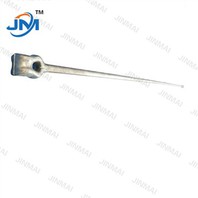
Pigtail Hook Bolts are important components in high - frequency cable installations. They are used to secure cables to various structures. When selecting Pigtail Hook Bolts, you need to consider the material and the size. The material should be corrosion - resistant, especially if the installation is outdoors. The size should be appropriate for the cable and the structure it's being attached to.
Hardware Pole Line Hook
Hardware Pole Line Hook is another useful component. These hooks are used to support cables on poles. For high - frequency applications, you want hooks that are made of high - quality materials to ensure long - term stability. They should also have a smooth surface to prevent damage to the cables.
Cable Pole Hook
Cable Pole Hook is similar to the hardware pole line hook but is specifically designed for cable support. When choosing a cable pole hook, look for one that has good mechanical strength and is compatible with the cable type. It should be able to hold the cable securely without causing any stress or deformation.
Testing and Verification
Once you've selected the cable components, it's important to test them to make sure they meet your requirements. You can use various testing methods, such as network analyzers to measure the impedance and insertion loss. These tests can help you identify any potential issues before the components are installed in the system.
Cost vs. Performance
Of course, cost is always a factor when selecting cable components. While it's tempting to go for the cheapest option, it's important to balance cost with performance. Sometimes, spending a little more on high - quality components can save you money in the long run by reducing maintenance and replacement costs.
Conclusion
Selecting cable components for high - frequency applications is a complex process that requires careful consideration of many factors. From dielectric materials and conductor quality to impedance matching and shielding, every aspect plays a role in the overall performance of the system. By understanding these factors and choosing the right components like Pigtail Hook Bolts, Hardware Pole Line Hook, and Cable Pole Hook, you can ensure that your high - frequency applications run smoothly.
If you're in the market for cable components for high - frequency applications, don't hesitate to reach out. We're here to help you make the right choices and provide you with the best products for your needs. Let's start a conversation about your specific requirements and see how we can assist you in your next project.
References
- "High - Frequency Electronics: Theory and Design" by T. C. Edwards
- "Cable and Wireless Telecommunications" by R. L. Freeman