Hey there! As an ADSS cable hardware supplier, I've been in the game for quite a while, and I know how crucial it is to test the performance of ADSS cable hardware. It's not just about making sure the stuff works; it's about guaranteeing the safety and efficiency of the whole electrical system. So, let's dive into how you can test the performance of ADSS cable hardware.
1. Visual Inspection
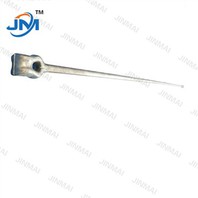
First things first, a good old visual inspection can tell you a lot. When you get a batch of ADSS cable hardware, take a close look at it. Check for any obvious signs of damage, like cracks, chips, or deformities. For example, if you're looking at a Pole Line Hardware Forged Thimble Eye, make sure the eye is smooth and there are no rough edges that could damage the cable.
The surface finish is also important. It should be uniform, without any signs of rust or corrosion. Rust can weaken the hardware over time and lead to failures. And don't forget to check the markings on the hardware. They should be clear and legible, indicating the specifications and ratings.
2. Dimensional Checks
Next up, dimensional checks are a must. Every piece of ADSS cable hardware has specific dimensions that it needs to meet. You can use tools like calipers and micrometers to measure things like the diameter of a pin, the width of a clamp, or the length of a bracket.
If the dimensions are off, it can cause problems. For instance, if a Pin Type Insulator is too small, it might not fit properly on the pole, which could lead to instability. On the other hand, if it's too large, it could put extra stress on the cable and other components.


3. Mechanical Testing
Mechanical testing is all about how the hardware holds up under stress. One common test is the tensile test. In a tensile test, you apply a pulling force to the hardware until it breaks. This helps you determine the maximum load the hardware can withstand.
For example, if you're testing a cable clamp, you want to know how much force it can handle before it slips or fails. This is especially important in areas with high winds or heavy ice loads, where the cables are under a lot of stress.
Another mechanical test is the bending test. In a bending test, you bend the hardware to see how flexible it is and if it can withstand repeated bending without breaking. This is important for hardware that might be subject to movement or vibration, like brackets or connectors.
4. Electrical Testing
Since ADSS cable hardware is used in electrical systems, electrical testing is crucial. One of the most important electrical tests is the insulation resistance test. This test measures how well the hardware insulates the electrical current.
A low insulation resistance can indicate a problem, like a crack in the insulator or moisture ingress. If the insulation resistance is too low, it can lead to electrical leakage, which is not only a safety hazard but can also cause damage to the equipment.
You can also test the dielectric strength of the hardware. This test measures how much voltage the hardware can withstand before it breaks down. It's important to make sure the hardware can handle the voltage levels in the electrical system without failing.
5. Environmental Testing
ADSS cable hardware is often exposed to harsh environmental conditions, so it needs to be able to withstand them. Environmental testing can include things like salt spray testing, which simulates the effects of a coastal environment.
In a salt spray test, you expose the hardware to a saltwater mist for a certain period of time. Then you check for signs of corrosion. If the hardware shows significant corrosion after the test, it might not be suitable for use in coastal areas.
Another environmental test is the temperature cycling test. In this test, you subject the hardware to a series of temperature changes, from very cold to very hot. This helps you determine how well the hardware can handle thermal expansion and contraction.
6. Compatibility Testing
Finally, compatibility testing is important to make sure the ADSS cable hardware works well with other components in the electrical system. For example, you need to make sure the cable clamps are compatible with the type of cable you're using.
If the hardware is not compatible, it can cause problems like poor electrical contact, excessive wear, or even mechanical failures. So, before you install the hardware, it's a good idea to do some compatibility testing to avoid any issues down the road.
As an ADSS cable hardware supplier, I can tell you that testing the performance of our products is a top priority. We use all of these tests and more to make sure our hardware meets the highest standards. And if you're in the market for high-quality ADSS cable hardware, we'd love to talk to you. Whether you need Pole Line Hardware Forged Thimble Eye, Pin Type Insulator, Hot Dip Galvanized Strand Ground Clamps, or any other ADSS cable hardware, we've got you covered. So, don't hesitate to reach out and start a conversation about your needs.
References
- Electrical Testing Handbook, Third Edition by James H. Bickford
- Handbook of Environmental Testing by John A. Schaffner