Hey there! As a supplier of cable components, I often get asked about the common sizes of these components. In this blog, I'll break down the typical sizes you'll encounter in the industry and give you a better understanding of what to look for.
Let's start with the basics. Cable components come in a wide range of sizes, and the right size for your project depends on several factors, such as the type of cable you're using, the load it needs to bear, and the specific application.
1. Cable Diameter
The diameter of the cable is one of the most fundamental aspects when it comes to cable components. Small - diameter cables, usually ranging from 1/8 inch (about 3.2 mm) to 1/4 inch (about 6.4 mm), are commonly used in light - duty applications like home electronics, small appliances, or low - voltage control systems.
For medium - duty applications, cables with diameters between 1/4 inch and 1/2 inch (12.7 mm) are popular. These are often found in industrial control panels, some power tools, and small machinery.
Large - diameter cables, starting from 1/2 inch and going up to several inches, are used in heavy - duty applications such as power transmission in factories, large construction sites, and utility power grids. When choosing cable components, you need to ensure that they are compatible with the cable diameter. For example, if you have a 1/4 - inch cable, you'll need components designed to fit that size precisely.
2. Connector Sizes
Connectors are a crucial part of cable components. There are various types of connectors, like male and female connectors, and they come in different sizes.
For small - diameter cables used in electronics, you'll often see miniature connectors. These can have pin sizes as small as 0.025 inches (about 0.64 mm) in diameter. They are used in devices like smartphones, laptops, and other consumer electronics.
In the industrial sector, where larger cables are used, connectors tend to be bigger. A common size for industrial connectors used with medium - sized cables is around 0.25 inches (6.4 mm) to 0.5 inches (12.7 mm) in pin diameter. These connectors are designed to handle higher currents and more robust mechanical stress.
If you're dealing with high - power applications, you might encounter large - scale connectors with pin diameters of 1 inch (25.4 mm) or more. These are used in power plants and large - scale electrical distribution systems.
3. Pig Tail Components
Pig tail components are another important part of the cable component family. They are used to provide a flexible connection point.
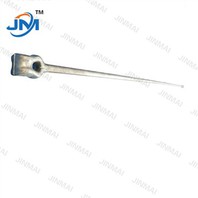
The Pig tail ball head is available in different sizes. Smaller ones, with a shank diameter of around 1/8 inch (3.2 mm), are used in light - duty applications where the load is relatively low, such as in some decorative lighting installations. Medium - sized pig tail ball heads with a shank diameter of 1/4 inch (6.4 mm) are suitable for general industrial use, like connecting small motors or sensors. Larger pig tail ball heads with a shank diameter of 1/2 inch (12.7 mm) or more are used in heavy - duty applications where a strong and reliable connection is required, such as in large machinery or construction equipment.
Pigtail Hook Bolts also come in a variety of sizes. Small pigtail hook bolts with a thread diameter of 1/4 inch are often used in light - duty rigging or in home DIY projects. Medium - sized ones with a 3/8 - inch thread diameter are used in industrial maintenance and some small - scale construction. Larger pigtail hook bolts with a 1/2 - inch or larger thread diameter are used in heavy - duty lifting and rigging operations.
4. Cable Pole Hook Sizes
Cable pole hooks are used to hang cables on poles, and their size is determined by the size of the pole and the cable they need to support.
Small Cable Pole Hook sizes, with a hook opening of around 1 inch (25.4 mm), are suitable for small - diameter cables and thinner poles, such as those used in residential areas for low - voltage power lines or telephone cables.
Medium - sized cable pole hooks with a hook opening of 2 inches (50.8 mm) are commonly used in industrial parks or medium - sized commercial areas where the cables are thicker and the poles are more substantial.
Large cable pole hooks with a hook opening of 4 inches (101.6 mm) or more are used in large - scale power transmission projects, where the cables are very thick and the poles are massive.
5. Terminal Block Sizes
Terminal blocks are used to connect multiple cables together. They come in different sizes based on the number of connections they can handle and the size of the cables they are designed for.
Small terminal blocks, which can handle 2 - 3 connections and are suitable for small - diameter cables, are often used in control panels of small machines or in home automation systems.
Medium - sized terminal blocks that can handle 4 - 8 connections and are compatible with medium - sized cables are used in industrial control cabinets.
Large terminal blocks, capable of handling 10 or more connections and designed for large - diameter cables, are used in power distribution centers and large - scale electrical installations.
When it comes to choosing the right size of cable components for your project, it's essential to consider all these factors. You don't want to end up with components that are too small and can't handle the load or too large and don't fit properly.


If you're in the market for cable components, I'm here to help. Whether you need a specific size of connector, a particular type of pig tail component, or the right cable pole hook, I can provide you with high - quality products. Don't hesitate to reach out for a consultation and let's discuss your requirements. We can work together to find the perfect cable components for your project.
References
- Electrical Wiring Handbook, various editions
- Industrial Cable Installation Guide, industry - specific publications
- Standards and Guidelines for Cable Components, international and national standards organizations