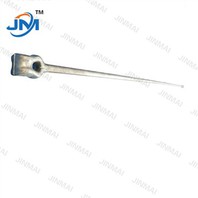
Hey there, folks! As a supplier of Pin Type Insulators, I often get asked about the acoustic properties of these little power - grid heroes. So, let's dive right in and explore what makes these insulators tick from an acoustic perspective.
First off, let's understand what a Pin Type Insulator is. You can check out more details about it here: Pin Type Insulator. These insulators are commonly used in overhead power lines, mainly to support and insulate the conductors from the poles. They're made from various materials like porcelain, glass, or composite polymers, and each material has a different set of acoustic characteristics.
Acoustic Basics
Sound is all about vibrations. When an object vibrates, it creates pressure waves in the surrounding medium (usually air), and our ears pick up these waves as sound. In the case of Pin Type Insulators, there are several factors that can cause them to vibrate and produce sound.
Wind - Induced Vibrations
One of the most common sources of acoustic activity in Pin Type Insulators is wind. As the wind blows across the insulator, it creates turbulence. This turbulence causes the insulator to vibrate at certain frequencies. The shape and size of the insulator play a big role here. For example, a larger insulator with a more complex shape will have a different vibration pattern compared to a smaller, simpler one.
The frequency of these wind - induced vibrations can vary widely. Low - frequency vibrations might result in a deep humming sound, while high - frequency vibrations can produce a whistling or screeching noise. These sounds can be a nuisance to nearby residents, and in some cases, they can even indicate potential problems with the insulator's installation or structural integrity.
Electrical Discharges
Another important source of acoustic activity is electrical discharges. When there's a high - voltage difference across the insulator, it can lead to partial discharges or even corona discharges. These discharges are accompanied by the release of energy, which in the form of sound waves.
The sound of electrical discharges is often described as a crackling or hissing sound. It's a tell - tale sign that there might be issues with the electrical insulation. If the discharges are severe, they can damage the insulator over time, reducing its effectiveness and potentially leading to power outages.
Acoustic Properties of Different Materials
As I mentioned earlier, Pin Type Insulators can be made from different materials, and each material has its own unique acoustic properties.
Porcelain Insulators
Porcelain is a traditional material for insulators. It's known for its high mechanical strength and excellent electrical insulation properties. From an acoustic perspective, porcelain insulators tend to have a more "damped" sound. This means that when they vibrate, the sound waves are absorbed to some extent by the porcelain material itself. As a result, the sounds produced by porcelain insulators are usually less intense compared to other materials.
However, porcelain can be brittle. If it develops cracks or chips, it can change the way it vibrates and produce different sounds. A cracked porcelain insulator might produce a more irregular, rattling sound, which can be a sign of impending failure.
Glass Insulators
Glass insulators are another popular choice. They have a smooth surface, which affects the way wind flows around them. Glass is a very stiff material, so it can transmit vibrations quite efficiently. This means that glass insulators can produce relatively high - pitched sounds when they vibrate.
The transparency of glass also allows for easy visual inspection, but from an acoustic point of view, it can sometimes be a challenge to distinguish between normal and abnormal sounds. For example, a small crack in a glass insulator might not produce a distinct enough sound to be easily detected, especially in a noisy environment like a busy power grid.
Composite Polymer Insulators
Composite polymer insulators are a more recent innovation. They're made from a combination of polymers and other materials. These insulators are lightweight and have good resistance to environmental factors.
In terms of acoustics, composite polymer insulators can have a wide range of sound characteristics. Their flexibility can cause them to vibrate in different ways compared to porcelain and glass. They might produce a more "rubbery" or "muffled" sound, depending on the specific polymer used and the design of the insulator.
Impact of Acoustic Properties on Performance and Maintenance
The acoustic properties of Pin Type Insulators aren't just interesting from a scientific perspective; they also have real - world implications for performance and maintenance.
Performance
Excessive noise can be a sign of poor performance. For example, if an insulator is producing a loud humming or screeching sound due to wind - induced vibrations, it might be experiencing excessive stress. This stress can lead to mechanical failure over time, which can compromise the safety of the power line.
Electrical discharge sounds are even more concerning. They indicate that the insulation is breaking down, which can lead to power losses, short - circuits, and other electrical problems. Monitoring the acoustic properties of insulators can help in early detection of these issues, allowing for timely maintenance and repairs.
Maintenance
Acoustic monitoring is a valuable tool for maintenance crews. By listening to the sounds produced by insulators, they can quickly identify potential problems. For example, a maintenance worker can use a simple stethoscope - like device to listen for abnormal sounds. If they hear a crackling sound, they know that there might be an electrical discharge issue, and they can take appropriate action, such as replacing the insulator or checking the electrical connections.


Related Hardware and Their Acoustic Influence
When it comes to Pin Type Insulators, they're often used in conjunction with other hardware components, and these can also have an impact on the overall acoustic environment.
For example, the Hot - dip Galvanizing Bolt used to attach the insulator to the pole can affect the vibration transfer. If the bolt is loose, it can cause additional vibrations and noise. A loose bolt might produce a rattling sound, which can be easily detected if you're listening carefully.
Similarly, Hot Dip Galvanized Strand Ground Clamps are used to provide a grounding connection. If these clamps are not properly installed or are corroded, they can cause electrical problems that might be accompanied by acoustic signals.
Wrapping Up and Invitation to Connect
Well, that's a pretty in - depth look at the acoustic properties of Pin Type Insulators. As you can see, these properties are not only fascinating but also crucial for the proper functioning and maintenance of power lines.
If you're in the market for high - quality Pin Type Insulators or any of the related hardware, I'd love to have a chat with you. Whether you have questions about acoustic properties or just want to discuss your specific requirements, don't hesitate to reach out. We're here to provide you with the best products and solutions for your power grid needs.
References
- Electrical Insulation Handbook, McGraw - Hill
- Power System Engineering Textbook, Wiley
- Journal of Electrical and Electronics Engineering Research