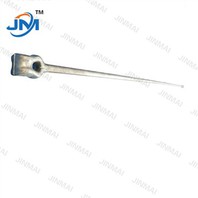
Yo, fellow power enthusiasts! I'm an Overhead Line Fitting supplier, and today, I wanna chat about something super crucial: backup plans for overhead line fittings in case of failures.
Overhead line fittings are like the unsung heroes of the power grid. They hold everything together, making sure electricity flows smoothly from point A to point B. But let's face it, just like any other equipment, they can fail. And when they do, it can lead to some serious headaches, like power outages and safety hazards. So, having a solid backup plan is a must.
Common Causes of Overhead Line Fitting Failures
Before we dive into the backup plans, let's take a quick look at what can cause these fittings to fail. One of the most common reasons is corrosion. Over time, exposure to the elements can eat away at the metal, weakening the fittings and eventually causing them to break. Extreme weather conditions, like strong winds, heavy rain, and lightning strikes, can also put a lot of stress on the fittings and lead to failures.
Another culprit is mechanical wear and tear. As the lines are constantly vibrating and moving, the fittings can start to loosen or crack. And let's not forget about human error. Improper installation or maintenance can also lead to premature failures.
Backup Plans for Overhead Line Fittings
Stockpile Spare Parts
One of the simplest and most effective backup plans is to keep a stockpile of spare parts on hand. This way, if a fitting fails, you can quickly replace it and get the power back up and running. When deciding which parts to stockpile, it's important to consider the most common types of failures and the criticality of the fittings. For example, you might want to keep extra insulators, connectors, and clamps, as these are some of the most commonly replaced parts.
Redundancy in Design
Another way to prepare for failures is to build redundancy into the design of the overhead line system. This means using multiple fittings or components to perform the same function. For example, instead of using a single cross arm, you could use two or more cross arms to support the lines. This way, if one cross arm fails, the others can still hold the lines in place.
Regular Maintenance and Inspection
Prevention is always better than cure, right? That's why regular maintenance and inspection are so important. By regularly checking the fittings for signs of wear and tear, corrosion, and other issues, you can catch problems early and take corrective action before they turn into major failures. This might involve things like tightening loose bolts, replacing worn-out parts, and applying protective coatings to prevent corrosion.
Remote Monitoring and Predictive Maintenance
Thanks to advances in technology, we now have the ability to monitor overhead line fittings remotely. By using sensors and other monitoring devices, we can collect data on the condition of the fittings in real-time and detect potential problems before they occur. This allows us to schedule maintenance and repairs more effectively and reduce the risk of unexpected failures.
Specific Backup Plans for Different Types of Fittings
Overhead Pole Line Hardware
Overhead pole line hardware, such as Overhead Pole Line Hardware, plays a crucial role in supporting the lines and keeping them in place. To prepare for failures, it's important to have a stockpile of spare hardware on hand, including bolts, nuts, washers, and brackets. Regular inspection and maintenance of the hardware is also essential to ensure that it's in good condition and properly tightened.
Steel Angle Cross Arm
Steel angle cross arms, like Steel Angle Cross Arm, are commonly used to support the conductors on overhead lines. To prevent failures, it's important to choose high-quality cross arms that are designed to withstand the expected loads and environmental conditions. Regular inspection for signs of corrosion, bending, or cracking is also necessary. In case of failure, having spare cross arms available for quick replacement is a must.
Galvanized Cross Arm
Galvanized cross arms, such as Galvanized Cross Arm, are coated with a layer of zinc to protect them from corrosion. However, over time, the zinc coating can wear off, leaving the cross arm vulnerable to rust and other forms of corrosion. To prevent this, regular inspection and maintenance of the galvanized coating is important. If the coating is damaged, it should be repaired or reapplied as soon as possible. Having spare galvanized cross arms in stock is also a good idea in case of failure.
Conclusion
In conclusion, having a backup plan for overhead line fittings is essential for ensuring the reliability and safety of the power grid. By stockpiling spare parts, building redundancy into the design, performing regular maintenance and inspection, and using remote monitoring and predictive maintenance, we can minimize the impact of failures and keep the electricity flowing.


If you're in the market for high-quality overhead line fittings or need help developing a backup plan for your power grid, don't hesitate to reach out. We're here to help you find the right solutions for your needs. Let's work together to keep the lights on!
References
- Electrical Power Systems Engineering Handbook
- Overhead Transmission Line Engineering Manual