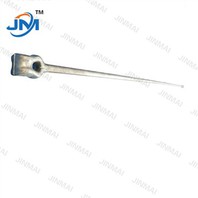
As a leading supplier of overhead line fittings, I understand the diverse needs of our clients in the electrical power industry. Overhead line fittings play a crucial role in ensuring the safe and efficient transmission of electricity. In this blog, I will explore the various customization options available for overhead line fittings, highlighting how these options can meet specific project requirements.
Material Selection
The choice of material for overhead line fittings is a fundamental customization option. Different materials offer distinct properties that can impact the performance and durability of the fittings.
Hot - Dip Galvanized Steel
Hot - Dip Galvanized Overhead Line Hardware is a popular choice due to its excellent corrosion resistance. The hot - dip galvanizing process involves coating the steel with a layer of zinc, which protects the underlying metal from rust and environmental damage. This makes it suitable for outdoor applications, especially in areas with high humidity, saltwater exposure, or industrial pollution. For more information on hot - dip galvanized overhead line hardware, you can visit Hot Dip Galvanized Overhead Line Hardware.
Aluminum
Aluminum is lightweight and has good electrical conductivity. It is often used in applications where weight reduction is a priority, such as in long - span transmission lines. Aluminum fittings are also resistant to corrosion, although they may require special treatment in certain environments to prevent galvanic corrosion when in contact with other metals.
Stainless Steel
Stainless steel offers high strength and superior corrosion resistance, even in harsh environments. It is more expensive than other materials but is ideal for applications where long - term durability and low maintenance are essential, such as in coastal areas or chemical plants.
Design and Configuration
Overhead line fittings can be customized in terms of their design and configuration to suit specific installation requirements.
Size and Dimensions
The size and dimensions of the fittings can be tailored to fit the specific conductors, insulators, and structures used in a project. For example, the diameter of a clevis or the length of a tension clamp can be adjusted to ensure a proper fit and secure connection. This is particularly important for ensuring the mechanical stability of the overhead line system.
Shape and Geometry
The shape and geometry of the fittings can also be customized. Some projects may require fittings with unique shapes to accommodate specific installation angles or to fit into limited spaces. For instance, a Hot Dip Galvanized Secondary Clevis can be designed with a specific bend or curvature to meet the requirements of a particular line configuration.
Connection Types
There are various connection types available for overhead line fittings, including bolted connections, welded connections, and compression connections. The choice of connection type depends on factors such as the load requirements, the ease of installation, and the maintenance needs of the project. Bolted connections are often preferred for their ease of installation and disassembly, while compression connections provide a more permanent and reliable connection for high - voltage applications.
Surface Treatment
In addition to hot - dip galvanizing, there are other surface treatment options available for overhead line fittings.
Powder Coating
Powder coating can provide an additional layer of protection and aesthetic appeal to the fittings. It is available in a wide range of colors, which can be useful for color - coding or for matching the fittings to the surrounding environment. Powder - coated fittings are also resistant to scratches and abrasion.
Anti - Corrosion Paints
Anti - corrosion paints can be applied to the fittings to enhance their corrosion resistance. These paints are formulated to withstand specific environmental conditions, such as high humidity, acid rain, or chemical exposure.
Special Features and Functions
Depending on the project requirements, overhead line fittings can be customized with special features and functions.


Insulation
Some fittings may require insulation to prevent electrical leakage or to provide electrical isolation. Insulated fittings are commonly used in areas where there is a risk of electrical contact, such as near buildings or in urban areas.
Monitoring and Sensor Integration
With the advancement of technology, overhead line fittings can be integrated with monitoring devices and sensors. These sensors can be used to measure parameters such as temperature, tension, and vibration, providing real - time data on the condition of the overhead line system. This helps in early detection of potential problems and enables proactive maintenance.
Fire Resistance
In certain applications, such as in areas prone to wildfires or near industrial facilities with fire hazards, fire - resistant overhead line fittings may be required. These fittings are designed to withstand high temperatures and prevent the spread of fire.
Customization for Electric Power Stringing
Electric power stringing is a critical process in the installation of overhead lines, and the fittings used in this process can be customized to improve efficiency and safety. For more information on electric power stringing and related fittings, you can visit Electric Power Stringing.
Stringing Blocks
Stringing blocks can be customized in terms of their size, shape, and material to accommodate different types of conductors and to ensure smooth and efficient stringing. They can also be equipped with special features, such as anti - rotation devices, to prevent the conductors from twisting during the stringing process.
Tensioners and Pullers
Tensioners and pullers are used to apply the appropriate tension to the conductors during stringing. These devices can be customized to provide the required pulling force and to ensure accurate tension control.
Importance of Customization
Customization of overhead line fittings is essential for several reasons. Firstly, it allows for the optimization of the overhead line system's performance. By choosing the right materials, design, and features, the fittings can better withstand the environmental conditions and operational loads, reducing the risk of failures and downtime.
Secondly, customization can improve the safety of the overhead line system. Special features such as insulation and fire resistance can protect against electrical hazards and fire risks, ensuring the safety of personnel and the surrounding environment.
Finally, customization can lead to cost savings in the long run. By selecting the most suitable fittings for a project, the need for frequent replacements and maintenance can be reduced, resulting in lower overall costs.
Contact for Customization and Procurement
If you are in need of customized overhead line fittings for your project, I encourage you to reach out to us. Our team of experts has extensive experience in designing and manufacturing high - quality overhead line fittings. We can work closely with you to understand your specific requirements and provide tailored solutions that meet your needs. Whether you are involved in a small - scale distribution project or a large - scale transmission network, we have the capabilities to deliver the right fittings for your application.
References
- Electrical Transmission and Distribution Reference Book, Westinghouse Electric Corporation
- Handbook of Electrical Power Systems, McGraw - Hill Education
- Standards for Overhead Line Fittings, International Electrotechnical Commission (IEC)