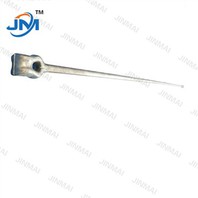
Hey there! I'm a supplier of Steel Angle Cross Arms, and I've seen my fair share of these things in action. In this blog, I'm gonna talk about the possible failures of a steel angle cross arm. These bad boys are crucial in overhead power lines, so it's super important to know what can go wrong with them.
1. Corrosion
One of the most common failures of a steel angle cross arm is corrosion. Steel, as we all know, is prone to rust when it comes into contact with moisture and oxygen. Over time, this rust can eat away at the cross arm, weakening its structure.
The environment plays a huge role here. If the cross arm is installed in a coastal area, where the air is full of salt, the corrosion process can be even faster. Salt is a great conductor of electricity, and it can accelerate the electrochemical reactions that lead to rust.
Another factor is the quality of the coating on the cross arm. We offer Hot Dip Galvanized Overhead Line Hardware, which provides a protective layer on the steel. But if the galvanizing process isn't done properly, or if the coating gets damaged during installation or over time, the steel is left exposed and vulnerable to corrosion.
Once corrosion sets in, it can cause the cross arm to lose its strength. The rust can make the steel thinner in some areas, creating weak spots. This can lead to the cross arm bending or even breaking under the weight of the power lines or other equipment it's supporting.
2. Mechanical Overloading
Steel angle cross arms are designed to handle a certain amount of weight and stress. But sometimes, they can be overloaded. This can happen for a few reasons.
First, if there are changes in the power line system. Maybe new lines are added, or the weight of the existing lines increases due to ice or wind. The cross arm might not have been designed to handle this extra load, and it can start to fail.
Second, improper installation can also lead to mechanical overloading. If the cross arm isn't installed correctly, it might not be able to distribute the weight evenly. For example, if it's not level or if the bolts aren't tightened properly, some parts of the cross arm will bear more stress than others. This can cause premature failure.
When a cross arm is overloaded, it can deform. It might start to bend or twist, and in severe cases, it can break completely. This can cause the power lines to sag or even fall, which is a major safety hazard.
3. Fatigue
Just like us, steel can get tired too. Fatigue failure occurs when a cross arm is subjected to repeated loading and unloading over time. This can happen due to wind, vibrations from passing vehicles, or even the normal movement of the power lines.
Each time the cross arm is loaded and unloaded, tiny cracks can start to form in the steel. These cracks are usually too small to see at first, but over time, they can grow. Eventually, the cracks can become large enough to cause the cross arm to fail.
The frequency and magnitude of the loading are important factors in fatigue failure. If the cross arm is exposed to high-frequency vibrations or large loads on a regular basis, the fatigue process will be faster.


4. Material Defects
Sometimes, the problem can start right at the source - the material itself. There could be defects in the steel used to make the cross arm. These defects can include things like inclusions (foreign particles in the steel), porosity (tiny holes in the steel), or improper heat treatment.
Inclusions can act as stress concentrators, meaning they cause the stress to be concentrated in one area of the cross arm. This can make the cross arm more likely to fail under normal loading conditions. Porosity can also weaken the steel, as it reduces the effective cross-sectional area of the material.
Improper heat treatment can affect the mechanical properties of the steel. For example, if the steel isn't hardened or tempered correctly, it might not have the right strength and toughness. This can make the cross arm more prone to failure from corrosion, overloading, or fatigue.
5. Environmental Factors
Apart from corrosion, there are other environmental factors that can cause a steel angle cross arm to fail. Extreme temperatures can have an impact. In very cold weather, the steel can become more brittle. This means it's more likely to crack or break under stress. On the other hand, in very hot weather, the steel can expand. If the cross arm isn't designed to accommodate this expansion, it can lead to internal stresses and eventually failure.
Lightning strikes are another environmental hazard. A direct lightning strike can cause a huge amount of heat and energy to be transferred to the cross arm. This can melt or vaporize parts of the steel, weakening the cross arm and potentially causing it to fail.
How to Prevent These Failures
As a supplier, I know how important it is to prevent these failures. That's why we offer high-quality Steel Angle Cross Arms and Galvanized Cross Arms. Our products are made from high-quality steel and go through a strict quality control process to ensure they're free from defects.
Regular inspections are also crucial. By checking the cross arms regularly, you can spot signs of corrosion, overloading, or fatigue early on and take action to prevent further damage. If you notice any problems, it's important to replace the cross arm or make the necessary repairs as soon as possible.
Proper installation is key. Make sure the cross arm is installed according to the manufacturer's instructions. This includes using the right tools and techniques, and ensuring that the cross arm is level and properly secured.
Let's Talk
If you're in the market for steel angle cross arms or have any questions about preventing these failures, I'd love to chat. Whether you're a power company, an installer, or anyone else involved in overhead power lines, I can provide you with the products and advice you need. Don't hesitate to reach out and start a conversation about your specific needs.
References
- "Overhead Power Line Engineering" by E. W. Kuffel
- "Materials Science and Engineering: An Introduction" by William D. Callister Jr. and David G. Rethwisch