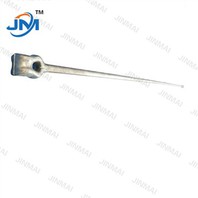
When it comes to operating within a cleanroom environment, every piece of equipment and tool must meet stringent requirements to ensure the integrity of the controlled space. As a supplier of Insulated Wedge Clamps, I understand the critical nature of these requirements and the importance of providing products that adhere to the highest standards. In this blog post, I will delve into the key requirements for using an Insulated Wedge Clamp in a cleanroom environment.
1. Material Compatibility
The first and foremost requirement for an Insulated Wedge Clamp in a cleanroom is material compatibility. Cleanrooms are designed to minimize the presence of particles, contaminants, and chemicals that could potentially affect the processes or products being handled within. Therefore, the materials used in the construction of the Insulated Wedge Clamp must be carefully selected to prevent any shedding, outgassing, or chemical reactions.
- Non - Shedding Materials: The clamp should be made from materials that do not shed particles. This includes the insulating material as well as the metal components. For example, high - grade polymers that have been specifically formulated for cleanroom use are often preferred for insulation. These polymers are engineered to have a smooth surface finish and low particle generation characteristics.
- Low Outgassing: Outgassing refers to the release of volatile organic compounds (VOCs) from a material. In a cleanroom, even small amounts of outgassing can contaminate the environment. The Insulated Wedge Clamp should be made from materials with low outgassing rates. This can be achieved by using materials that have been degassed during the manufacturing process or by choosing materials that inherently have low VOC content.
- Chemical Resistance: Cleanrooms may use various chemicals for cleaning and sterilization purposes. The Insulated Wedge Clamp must be resistant to these chemicals to prevent degradation or contamination. For instance, if the cleanroom uses strong oxidizing agents or solvents, the clamp should be able to withstand exposure without losing its mechanical or insulating properties.
2. Insulation Performance
The primary function of an Insulated Wedge Clamp is to provide electrical insulation. In a cleanroom environment, the insulation performance is even more critical due to the sensitive nature of the equipment and processes.


- High Dielectric Strength: The insulating material of the clamp should have a high dielectric strength, which is the maximum electric field that the material can withstand without breaking down. This ensures that the clamp can effectively isolate electrical components and prevent electrical leakage or short - circuits.
- Stable Insulation Resistance: The insulation resistance of the clamp should remain stable over time and under different environmental conditions. Fluctuations in insulation resistance can lead to inconsistent electrical performance and potential safety hazards. Factors such as temperature, humidity, and contamination can affect insulation resistance, so the clamp should be designed to minimize these effects.
- Electrical Isolation: The Insulated Wedge Clamp should provide complete electrical isolation between the conductors it holds. This is essential for preventing electrical interference and ensuring the proper functioning of sensitive electronic equipment in the cleanroom.
3. Mechanical Stability and Durability
In a cleanroom, the Insulated Wedge Clamp needs to maintain its mechanical stability and durability to ensure long - term performance.
- Secure Clamping Force: The clamp should be able to provide a secure clamping force to hold the conductors firmly in place. This prevents movement or displacement of the conductors, which could lead to electrical problems or physical damage. The clamping force should be consistent and reliable over the lifespan of the clamp.
- Resistance to Vibration and Shock: Cleanrooms may be subject to vibrations from equipment or external sources. The Insulated Wedge Clamp should be able to withstand these vibrations without loosening or losing its clamping force. Similarly, it should also be resistant to shock to ensure that it can maintain its integrity in case of accidental impacts.
- Long - Term Durability: The clamp should be designed to have a long service life. This requires the use of high - quality materials and proper manufacturing processes. For example, the metal components of the clamp should be corrosion - resistant to prevent degradation over time.
4. Cleanability
Maintaining a clean environment is the primary goal of a cleanroom. Therefore, the Insulated Wedge Clamp must be easy to clean.
- Smooth Surface Finish: The clamp should have a smooth surface finish to prevent the accumulation of particles and contaminants. A smooth surface is also easier to clean, as it allows for more effective removal of dirt and debris.
- Compatibility with Cleaning Agents: The Insulated Wedge Clamp should be compatible with the cleaning agents used in the cleanroom. This means that it should not be damaged or degraded by the cleaning process. Different cleanrooms may use different types of cleaning agents, such as water - based detergents or alcohol - based solutions, so the clamp should be tested and approved for use with these agents.
- Ease of Disassembly and Reassembly: In some cases, the clamp may need to be disassembled for thorough cleaning. It should be designed in such a way that it can be easily disassembled and reassembled without losing its functionality or integrity.
5. Compliance with Standards
The Insulated Wedge Clamp must comply with relevant industry standards and regulations for use in a cleanroom environment.
- Cleanroom Class Standards: Different cleanrooms have different cleanliness classes, which are defined by the maximum allowable number of particles per cubic meter of air. The clamp should be suitable for use in the specific cleanroom class where it will be installed. For example, a Class 100 cleanroom has more stringent particle requirements than a Class 10000 cleanroom.
- Electrical Safety Standards: The clamp should comply with electrical safety standards to ensure the safety of personnel and equipment. These standards may include requirements for insulation resistance, dielectric strength, and grounding.
- Material and Manufacturing Standards: The materials used in the clamp and the manufacturing processes employed should meet recognized standards. This ensures the quality and consistency of the product.
As a supplier of Insulated Wedge Clamps, we understand the importance of meeting these requirements. Our products are carefully designed and tested to ensure that they are suitable for use in cleanroom environments. We also offer a range of related products, such as Galvanized Pole Hook, Pin Type Insulator, and Stay Rod Stay Plate, which also comply with high - quality standards for cleanroom applications.
If you are in need of Insulated Wedge Clamps or other related products for your cleanroom environment, we invite you to contact us for procurement and further discussions. Our team of experts is ready to assist you in finding the most suitable solutions for your specific needs.
References
- "Cleanroom Technology Handbook", edited by Michael J. Santoleri.
- "Electrical Insulation Handbook", by James H. Dakin.
- Industry standards and guidelines for cleanroom equipment and electrical components.