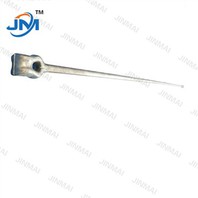
Bolts might seem like small, insignificant parts, but in the oil and gas industry, they play a crucial role. As a bolts supplier, I've seen firsthand how these little guys keep the oil and gas pipelines up and running. Let's dive into the various uses of bolts in oil and gas pipelines.
1. Pipeline Assembly
One of the most basic uses of bolts in oil and gas pipelines is for assembly. Pipelines are made up of multiple sections that need to be connected securely. Bolts are used to join flanges together, which are flat, circular discs with holes around the edge. When two flanges are aligned, bolts are inserted through the holes and tightened with nuts. This creates a strong, leak - proof connection between pipeline sections.
For example, in a large - scale oil transportation pipeline, hundreds or even thousands of flange connections are required. Each connection relies on high - quality bolts to ensure the integrity of the pipeline. If a bolt fails, it can lead to leaks, which are not only a waste of valuable resources but also pose a significant safety hazard.
We offer a wide range of bolts suitable for pipeline assembly, like Hexagon Bolts and Nuts. These are commonly used because their hexagonal shape makes them easy to grip with wrenches, allowing for efficient installation and removal.
2. Equipment Mounting
Oil and gas pipelines are often accompanied by various pieces of equipment such as pumps, valves, and meters. These pieces of equipment need to be securely mounted to the pipeline or a support structure. Bolts are used to fasten this equipment in place.
Pumps, for instance, need to be firmly attached to the pipeline to ensure that they can operate smoothly and transfer the oil or gas effectively. If the pump is not properly mounted, it can vibrate excessively, leading to premature wear and tear and potentially causing damage to the pipeline itself.
Our High Strength Square Head Bolt is an excellent choice for equipment mounting. The square head provides a large surface area for tools to grip, and its high - strength properties can withstand the forces exerted by the equipment during operation.
3. Structural Support
In addition to joining pipeline sections and mounting equipment, bolts are also used for structural support. Oil and gas pipelines may need to be supported above the ground, especially in areas where the terrain is uneven or where there are other obstacles. Bolts are used to attach the pipeline to support structures such as brackets, frames, and towers.
These support structures need to be strong enough to hold the weight of the pipeline, the fluid inside it, and any external forces such as wind or seismic activity. Bolts play a key role in ensuring that the support structures are firmly connected to the pipeline and the ground.
Hot - dip Galvanized Anchor Bolts are ideal for this purpose. The hot - dip galvanizing process provides a protective coating that prevents corrosion, which is essential for bolts that are exposed to the elements for long periods.
4. Sealing and Pressure Containment
Oil and gas pipelines operate under high pressure, and it's crucial to maintain a proper seal to prevent leaks. Bolts are used in conjunction with gaskets to create a tight seal between pipeline components.
When a flange connection is tightened with bolts, the gasket is compressed, filling any gaps between the two flanges. This ensures that the high - pressure fluid inside the pipeline does not escape. The torque applied to the bolts is carefully controlled to achieve the right amount of compression on the gasket.
If the bolts are not tightened correctly or if they are of poor quality, the gasket may not seal properly, leading to leaks. That's why we provide high - quality bolts that are precisely manufactured to meet the strict requirements of the oil and gas industry.
5. Maintenance and Repair
Over time, oil and gas pipelines require maintenance and repair. Bolts make it easier to disassemble and reassemble pipeline components during these processes. When a section of the pipeline needs to be replaced or a piece of equipment needs to be serviced, the bolts can be removed, allowing for easy access.


During maintenance, it's also important to inspect the bolts for signs of wear, corrosion, or damage. If any bolts are found to be defective, they should be replaced immediately to ensure the continued safety and performance of the pipeline.
As a bolts supplier, we understand the importance of providing bolts that are easy to install and remove, as well as those that have a long service life. Our bolts are designed to meet these needs, making them a reliable choice for maintenance and repair work in the oil and gas industry.
Why Choose Our Bolts?
We take pride in being a leading bolts supplier in the oil and gas industry. Our bolts are made from high - quality materials, such as stainless steel and alloy steel, which offer excellent strength, corrosion resistance, and durability.
We also have a strict quality control system in place. Every bolt that leaves our factory is thoroughly inspected to ensure that it meets the highest standards. Whether you need bolts for pipeline assembly, equipment mounting, structural support, sealing, or maintenance, we have the right products for you.
If you're in the oil and gas industry and are looking for reliable bolts for your pipelines, don't hesitate to get in touch with us. We're here to provide you with the best products and services. Our team of experts can help you choose the right bolts for your specific needs and answer any questions you may have. Start a conversation with us today and let's work together to keep your oil and gas pipelines running smoothly.
References
- "Handbook of Oil and Gas Pipelines: Design and Construction"
- "Pipeline Engineering for the Oil and Gas Industries"