What is the fatigue life of pigtail hook bolts?
As a supplier of Pigtail Hook Bolts, I often encounter questions from customers regarding the fatigue life of these crucial components. Understanding the fatigue life of pigtail hook bolts is essential for ensuring the safety and reliability of various applications, especially in industries such as electrical and construction.
What are Pigtail Hook Bolts?
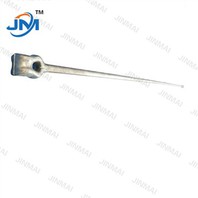
Pigtail Hook Bolts are specialized fasteners that feature a unique pigtail-shaped hook at one end and a bolt at the other. They are commonly used in conjunction with other hardware components, such as the Hardware Pole Line Hook, for securing cables and wires to poles or other structures. The pigtail design allows for easy installation and provides flexibility in positioning the cables.
These bolts are also often paired with Pig tail ball head to form a complete cable attachment system. The combination of different components ensures a secure and stable connection, which is vital in high-stress environments.
Factors Affecting Fatigue Life
The fatigue life of pigtail hook bolts is influenced by several factors, which can be broadly categorized into material properties, environmental conditions, and loading conditions.
Material Properties
The material used to manufacture pigtail hook bolts plays a significant role in determining their fatigue life. High-quality materials, such as stainless steel or galvanized steel, offer better resistance to corrosion and fatigue. Stainless steel, for example, is known for its excellent durability and ability to withstand harsh environmental conditions without rusting. The chemical composition and heat treatment of the material also affect its mechanical properties, such as strength and ductility, which are crucial for fatigue resistance.
Environmental Conditions
The environment in which pigtail hook bolts are used can have a profound impact on their fatigue life. Exposure to moisture, saltwater, and chemicals can accelerate corrosion, leading to the formation of cracks and weakening the bolts over time. In coastal areas or industrial environments, where the air contains high levels of pollutants, the rate of corrosion can be significantly higher. Temperature fluctuations can also cause thermal expansion and contraction, which may induce additional stress on the bolts and contribute to fatigue failure.
Loading Conditions
The type and magnitude of the loads applied to pigtail hook bolts are critical factors in determining their fatigue life. Cyclic loading, which involves repeated application and removal of loads, is particularly damaging to the bolts. For example, in electrical transmission lines, the wind can cause the cables to sway, resulting in cyclic loading on the pigtail hook bolts. The frequency and amplitude of the cyclic loads, as well as the static loads acting on the bolts, need to be carefully considered. Overloading the bolts beyond their design capacity can significantly reduce their fatigue life and increase the risk of failure.
Testing and Evaluation of Fatigue Life
To accurately determine the fatigue life of pigtail hook bolts, various testing methods are employed. Laboratory testing involves subjecting the bolts to controlled cyclic loading conditions using specialized equipment. The number of cycles to failure is recorded, and the data is analyzed to establish the fatigue life curve for the bolts.
Field testing is also conducted to evaluate the performance of pigtail hook bolts in real-world applications. This involves monitoring the bolts over an extended period in actual operating conditions. Sensors can be used to measure the stresses and strains experienced by the bolts, providing valuable insights into their fatigue behavior.
Importance of Fatigue Life in Applications
The fatigue life of pigtail hook bolts is of utmost importance in ensuring the safety and reliability of the structures and systems in which they are used. In electrical power distribution networks, for example, the failure of a single pigtail hook bolt can lead to the disconnection of cables, resulting in power outages and safety hazards. In construction projects, the proper functioning of pigtail hook bolts is essential for maintaining the structural integrity of the buildings and ensuring the safety of the occupants.
Extending the Fatigue Life of Pigtail Hook Bolts
There are several measures that can be taken to extend the fatigue life of pigtail hook bolts. Proper installation is crucial, as incorrect installation can lead to uneven loading and premature failure. The bolts should be tightened to the recommended torque values, and any signs of damage or wear should be addressed immediately.
Regular inspection and maintenance are also essential. Inspecting the bolts for signs of corrosion, cracks, or deformation can help detect potential problems early and prevent failure. If corrosion is detected, appropriate measures, such as applying protective coatings or replacing the bolts, should be taken.
Conclusion
In conclusion, the fatigue life of pigtail hook bolts is a complex topic that is influenced by multiple factors. As a supplier of Pigtail Hook Bolts, we are committed to providing high-quality products that meet the highest standards of safety and reliability. By understanding the factors that affect the fatigue life of these bolts and taking appropriate measures to extend it, we can ensure the long-term performance of our products in various applications.


If you are in need of pigtail hook bolts for your project, we invite you to contact us for a detailed discussion on your requirements. Our team of experts is ready to assist you in selecting the right products and providing technical support to ensure the success of your project.
References
- ASME Boiler and Pressure Vessel Code, Section VIII, Division 2 - Alternative Rules for Construction of Pressure Vessels
- ASTM A193/A193M - Standard Specification for Alloy - Steel and Stainless Steel Bolting Materials for High - Temperature Service
- Shigley, J. E., & Mischke, C. R. (2001). Mechanical Engineering Design. McGraw - Hill.