Hey there! As a supplier of cable components, I've seen firsthand the importance of cable impedance matching. It might sound like a technical jargon, but trust me, it's a big deal in the world of cable components. In this blog, I'm gonna break down what cable impedance matching is and why it's so crucial for your cable setups.
Let's start with the basics. Impedance, in simple terms, is the measure of opposition that a circuit presents to the flow of alternating current (AC). When we talk about cable impedance matching, we're referring to the process of ensuring that the impedance of the cable is the same as the impedance of the source and the load connected to it. This might seem like a small detail, but it has a huge impact on the performance of your cable components.
One of the main reasons why cable impedance matching is so important is signal integrity. When the impedance of the cable, source, and load are not matched, a phenomenon called signal reflection occurs. Signal reflection is like an echo in a room. When a signal travels through a cable and encounters an impedance mismatch, some of the signal bounces back towards the source. This reflected signal can interfere with the original signal, causing distortion, loss of signal strength, and even data errors.
For example, in high - speed data transmission cables, like those used in Ethernet networks or fiber - optic systems, signal reflection can lead to packet loss and reduced data transfer rates. If you're running a business that relies on fast and reliable data transfer, a simple impedance mismatch can cost you a lot in terms of productivity and efficiency.


Another important aspect is power transfer. In an electrical circuit, maximum power transfer occurs when the impedance of the source is equal to the impedance of the load. When it comes to cables, proper impedance matching ensures that the maximum amount of power from the source is transferred to the load. This is especially critical in power cables, where inefficient power transfer can result in energy loss, increased heat generation, and even damage to the cable components over time.
Let's say you're using a power cable to supply electricity to a high - power device. If the impedance of the cable is not matched correctly, a significant amount of power can be wasted as heat. This not only increases your energy bills but also shortens the lifespan of the cable and the connected device.
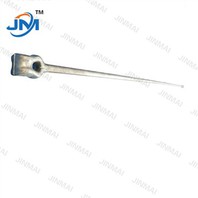
Now, let's talk about how impedance matching affects the different types of cable components we supply. We offer a wide range of cable components, including Pig tail ball head, Pigtail Hook Bolts, and Hardware Pole Line Hook.
Pig tail ball heads are often used in electrical connections where a flexible and secure connection is required. Proper impedance matching in these components ensures that the electrical signals can flow smoothly without any disruptions. If there's an impedance mismatch in a pig tail ball head connection, it can lead to arcing, which is not only dangerous but can also cause damage to the equipment.
Pigtail hook bolts are commonly used in overhead power lines and telecommunications cables. In these applications, impedance matching is essential for maintaining the stability of the electrical signals. A mismatch can result in signal degradation, which can affect the quality of communication or power supply.
Hardware pole line hooks are used to support and secure cables on poles. These components need to have the right impedance characteristics to ensure that the cables they hold can function properly. An impedance mismatch in the hardware can cause problems such as signal interference and reduced cable performance.
In addition to signal integrity and power transfer, cable impedance matching also plays a role in electromagnetic compatibility (EMC). When there's an impedance mismatch, it can generate electromagnetic interference (EMI). EMI can interfere with other electronic devices in the vicinity, causing malfunctions and reducing the overall reliability of the system. By ensuring proper impedance matching in our cable components, we help our customers minimize EMI and comply with EMC standards.
Now, you might be wondering how we ensure impedance matching in our cable components. Well, we use advanced manufacturing techniques and high - quality materials. Our engineers carefully design each component to have the right impedance characteristics. We also conduct rigorous testing to make sure that the components meet the required impedance specifications.
For example, we use impedance analyzers to measure the impedance of our cables and components during the manufacturing process. This allows us to identify any potential impedance mismatches early on and make the necessary adjustments. We also follow industry standards and best practices to ensure that our products are of the highest quality.
If you're in the market for cable components, you need to consider impedance matching. Choosing the right cable components with proper impedance matching can save you a lot of headaches in the long run. Whether you're setting up a new network, upgrading your power system, or working on a telecommunications project, our cable components can provide you with the reliability and performance you need.
We understand that every project is unique, and you might have specific requirements. That's why we offer customized cable components. Our team of experts can work with you to design and manufacture cable components that meet your exact impedance and performance needs.
If you're interested in learning more about our cable components or have any questions about cable impedance matching, we'd love to hear from you. Whether you're a small business owner, an engineer, or a contractor, we're here to help you find the best cable solutions for your project. Reach out to us to start a conversation about your cable component needs, and let's work together to ensure your cable systems are running at their best.
References
- "Electrical Engineering: Principles and Applications" by Allan R. Hambley
- "High - Speed Digital Design: A Handbook of Black Magic" by Howard W. Johnson and Martin Graham
- Industry standards and guidelines related to cable impedance and electromagnetic compatibility.