Hey there! As a supplier of steel angle cross arms, I often get asked about the installation height limit of these crucial components. In this blog, I'm gonna break it down for you in plain English, sharing some insights based on industry knowledge and experience.
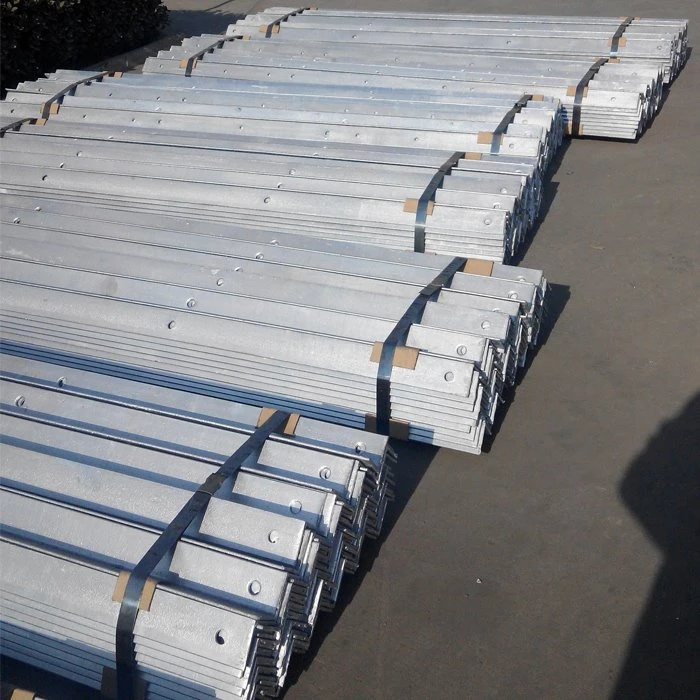
First off, let's understand what a steel angle cross arm is. It's a key part in overhead power line systems. These cross arms are usually made of steel, which gives them the strength and durability needed to support power lines. They're like the unsung heroes of the electrical infrastructure, holding up those lines so that electricity can be safely transmitted from one place to another. You can check out our Galvanized Cross Arm for some great examples of high - quality cross arms.
Now, to the main question: what's the installation height limit? Well, there isn't a one - size - fits - all answer. The installation height of a steel angle cross arm depends on a bunch of factors.
Factors Affecting Installation Height
1. Voltage Level of the Power Lines
The voltage of the power lines that the cross arm will support is a major factor. Higher voltage lines need to be installed at greater heights to ensure safety. For example, low - voltage distribution lines, say those around 120 - 240 volts used in residential areas, can be installed at relatively lower heights. These might typically be installed at heights ranging from 8 to 12 feet above the ground. On the other hand, high - voltage transmission lines, which can carry hundreds of thousands of volts, need to be much higher. Heights for these lines can go up to 50 feet or even more. This is because higher voltages pose a greater risk of electrical arcing and electrocution, so more clearance is required.
2. Location and Surroundings
The area where the cross arm is being installed also matters a lot. In urban areas, there are more restrictions due to the presence of buildings, roads, and people. The cross arms need to be installed at a height that won't interfere with traffic, pedestrians, or nearby structures. For instance, in a busy city street, the cross arms might be installed at a height of 15 - 20 feet to avoid any contact with vehicles or people.
In rural areas, the rules are a bit different. There's more open space, so the height can be adjusted based on other factors like the type of terrain and the presence of trees. If there are tall trees in the vicinity, the cross arms need to be installed high enough to prevent the branches from coming into contact with the power lines. This could mean installation heights of 20 - 30 feet or more.
3. Type of Pole Used
The type of pole that the cross arm is attached to can also influence the installation height. Wooden poles are commonly used for low - to medium - voltage lines. They come in different lengths, and the cross arm is usually installed at a height that makes sense for the overall stability of the pole and the line. Concrete poles are stronger and can support heavier loads, allowing for the installation of cross arms at greater heights. Steel poles are often used for high - voltage transmission lines, and they can be designed to support cross arms at very high elevations.
4. Safety Regulations
Safety regulations set by local and national authorities play a huge role in determining the installation height. These regulations are in place to protect the public and the workers who maintain the power lines. They specify the minimum clearances required between the power lines and the ground, buildings, and other objects. For example, the National Electrical Safety Code (NESC) in the United States has detailed guidelines on the installation heights of power lines and cross arms. Violating these regulations can result in fines and legal issues, so it's crucial to follow them.
Typical Height Ranges
Based on the factors mentioned above, here are some typical height ranges for steel angle cross arms:
- Residential Areas: For low - voltage distribution lines in residential neighborhoods, the cross arms are usually installed at heights between 8 and 15 feet. This provides enough clearance for people and vehicles while still being practical for installation and maintenance.
- Commercial Areas: In commercial areas, where there's more traffic and activity, the cross arms are typically installed at heights of 15 - 20 feet. This helps to prevent any interference with businesses and the movement of goods and people.
- Industrial Areas: Industrial areas often have higher - voltage lines. The cross arms here can be installed at heights ranging from 20 to 30 feet or more, depending on the specific requirements of the industrial site and the voltage of the power lines.
- Transmission Lines: High - voltage transmission lines require the cross arms to be installed at the highest heights. These can range from 50 feet to over 100 feet, especially in areas where there are no obstructions and the lines need to span long distances.
Installation Considerations
When installing a steel angle cross arm, it's not just about getting the height right. There are other important considerations as well.

- Proper Mounting: The cross arm needs to be securely mounted on the pole. This involves using the right hardware and following the manufacturer's instructions. Loose or improperly mounted cross arms can lead to instability and pose a safety risk.
- Alignment: The cross arm must be aligned correctly to ensure that the power lines are evenly spaced and supported. Misaligned cross arms can cause the lines to sag unevenly, which can lead to problems with power transmission and even damage to the lines.
- Maintenance Access: The installation height should also allow for easy access for maintenance workers. They need to be able to reach the cross arm and the power lines safely to perform inspections and repairs.
Our Role as a Supplier
As a steel angle cross arm supplier, we understand the importance of providing high - quality products that meet the requirements of different installation scenarios. Our cross arms are made from top - grade steel and are designed to be strong and durable. We also offer a range of sizes and configurations to suit various voltage levels and installation heights.
We work closely with our customers to understand their specific needs and provide them with the right cross arms for their projects. Whether it's a small residential installation or a large - scale transmission line project, we've got you covered. You can also explore our Electric Power Stringing and Overhead Pole Line Hardware products to complete your power line installation.
Let's Connect
If you're in the market for steel angle cross arms or have any questions about installation heights or other aspects of power line hardware, don't hesitate to reach out. We're here to help you make the right choices for your project. Whether you're an electrician, a utility company, or a contractor, we can provide you with the expertise and products you need. Let's start a conversation and see how we can work together to get your power line project up and running safely and efficiently.
References
- National Electrical Safety Code (NESC)
- Industry standards and guidelines for power line installation and maintenance.