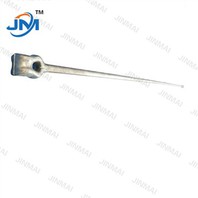
As a supplier of Parallel Groove Clamps, one of the most frequently asked questions I receive from customers is about the installation time for these essential electrical components. Understanding the installation time is crucial for project planning, budgeting, and ensuring that electrical systems are up and running efficiently. In this blog post, I will delve into the factors that influence the installation time of parallel groove clamps and provide some insights to help you estimate the time required for your specific project.
Factors Affecting Installation Time
1. Type and Size of the Clamps
Parallel groove clamps come in various types and sizes to accommodate different cable diameters and applications. Smaller clamps designed for low - voltage cables are generally quicker to install than larger ones used for high - voltage transmission lines. For instance, a small parallel groove clamp for a 10 - mm² cable can be installed in a matter of minutes, while a large clamp for a 500 - mm² cable may take significantly longer. The complexity of the clamp design also plays a role. Some clamps have simple bolt - on designs, while others may require more intricate assembly steps, which can add to the installation time.
2. Number of Clamps
The total number of parallel groove clamps needed for a project is a straightforward factor in determining the overall installation time. A project that requires only a few clamps can be completed relatively quickly, perhaps within an hour or less. However, large - scale electrical projects, such as those in industrial complexes or power distribution networks, may require hundreds or even thousands of clamps. In such cases, the installation time can stretch over several days or weeks, depending on the available workforce and installation efficiency.
3. Cable Accessibility
The ease of accessing the cables where the parallel groove clamps will be installed is another critical factor. If the cables are readily accessible, such as those in an open electrical panel or on a well - organized cable rack, the installation process can proceed smoothly. On the other hand, if the cables are located in hard - to - reach areas, such as underground ducts, inside walls, or on tall pole towers, additional time will be needed for setup and access. Specialized equipment, such as ladders, cable pullers, or man - lifts, may be required, which can further increase the installation time.
4. Skill and Experience of the Installers
The proficiency of the installation team has a significant impact on the installation time. Experienced electricians who are familiar with parallel groove clamps and their installation procedures can work more efficiently than inexperienced workers. They are likely to make fewer mistakes, have a better understanding of the proper torque requirements for the bolts, and be able to troubleshoot any issues that arise during the installation process. A well - trained team can complete the installation in a shorter time compared to a less experienced group.
5. Environmental Conditions
Environmental factors can also affect the installation time. Adverse weather conditions, such as rain, snow, high winds, or extreme temperatures, can slow down the installation process. For example, working in wet conditions may require additional safety precautions and can make it more difficult to handle the clamps and cables. In cold weather, the materials may become more brittle, and workers may need to take more breaks to stay warm. On the other hand, ideal weather conditions, such as mild temperatures and low humidity, can facilitate a faster and more efficient installation.
Estimating Installation Time
To estimate the installation time for parallel groove clamps, it is advisable to break down the project into smaller tasks and calculate the time required for each task. Here is a general guide:


1. Preparation
This includes gathering the necessary tools and materials, such as wrenches, torque wrenches, safety equipment, and of course, the parallel groove clamps themselves. The preparation time can range from 15 minutes to an hour, depending on the complexity of the project and the availability of the tools and materials.
2. Cable Preparation
The cables need to be cleaned, stripped, and prepared for the installation of the clamps. This involves removing any insulation, dirt, or oxidation from the cable surface. The time required for cable preparation depends on the number of cables and their condition. For a small number of cables, this step may take around 10 - 15 minutes per cable.
3. Clamp Installation
Once the cables are prepared, the parallel groove clamps can be installed. As mentioned earlier, the installation time for a single clamp can vary from a few minutes for small clamps to 10 - 15 minutes for larger ones. If there are multiple clamps, multiply the time per clamp by the total number of clamps.
4. Testing and Inspection
After the clamps are installed, it is essential to test the electrical connection and inspect the installation for any defects. This step may take around 30 minutes to an hour, depending on the size of the project and the testing equipment available.
For example, let's assume a project that requires the installation of 50 parallel groove clamps on easily accessible cables. If each clamp takes an average of 5 minutes to install, the total installation time for the clamps would be 50 x 5 = 250 minutes or approximately 4 hours and 10 minutes. Adding 30 minutes for preparation, 10 minutes per cable for cable preparation (assuming 50 cables, so 50 x 10 = 500 minutes or 8 hours and 20 minutes), and 1 hour for testing and inspection, the total estimated installation time for the project would be around 13 hours and 30 minutes.
Related Products and Their Impact on Installation
When considering the installation of parallel groove clamps, it is also important to look at related products that can affect the overall project timeline. For example, a Cable Storage Assembly for Pole Tower can be used to organize and store the cables before the installation of the clamps. This can improve cable accessibility and potentially reduce the installation time. Similarly, a Square Steel Cross Arm can provide a stable support structure for the cables, making the installation of the clamps more straightforward. A Mounting Clamp Adapter can be used to ensure a proper fit between the clamp and the cable or the support structure, which can also contribute to a more efficient installation.
Conclusion
The installation time for parallel groove clamps is influenced by a variety of factors, including the type and size of the clamps, the number of clamps, cable accessibility, the skill of the installers, and environmental conditions. By carefully considering these factors and breaking down the installation process into smaller tasks, it is possible to estimate the installation time for a specific project.
If you are planning an electrical project that requires parallel groove clamps or any of the related products mentioned above, I encourage you to contact us for more information. Our team of experts can provide you with detailed product specifications, installation guidelines, and help you estimate the installation time for your project. We are committed to providing high - quality products and excellent customer service to ensure the success of your electrical projects.
References
- Electrical Installation Handbook, Siemens AG
- National Electrical Code (NEC)
- IEEE Standards for Electrical Installations and Equipment