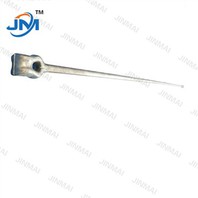
Hey there, folks! As a supplier of Insulated Wedge Clamps, I often get asked about the insulation rating of these nifty little devices. So, let's dive right in and break it down.
First off, what exactly is an Insulated Wedge Clamp? Well, it's a piece of hardware used in electrical and telecommunications applications. It's designed to securely hold cables in place while providing insulation. This insulation is crucial as it helps prevent electrical leakage, short - circuits, and other potential hazards.
The insulation rating of an Insulated Wedge Clamp is a measure of its ability to resist the flow of electric current through the insulation material. It's usually expressed in terms of voltage, like kilovolts (kV). For example, you might see an insulation rating of 1 kV, 5 kV, or even higher.
Why does this rating matter? Imagine you're working on an electrical system where the voltage can reach high levels. If you use an Insulated Wedge Clamp with an insufficient insulation rating, there's a risk that the insulation could break down. This could lead to a short - circuit, which not only damages the equipment but also poses a serious safety risk to anyone in the vicinity.
Now, how is the insulation rating determined? Manufacturers conduct a series of tests on the insulation material used in the clamp. They subject it to increasing levels of voltage until the point where the insulation starts to fail. The highest voltage at which the insulation can still function properly is then assigned as the insulation rating.
There are different types of insulation materials used in Insulated Wedge Clamps, and each has its own characteristics that affect the insulation rating. Some common materials include rubber, silicone, and certain types of plastics. Rubber, for instance, is known for its flexibility and good electrical insulating properties. Silicone, on the other hand, can withstand a wide range of temperatures and is resistant to moisture and chemicals, which can all contribute to a higher insulation rating.
When choosing an Insulated Wedge Clamp for your project, it's essential to consider the specific requirements of your electrical system. You need to know the maximum voltage that the clamp will be exposed to and then select a clamp with an insulation rating that exceeds this value. This provides a safety margin and ensures reliable performance over time.
Let's talk a bit about the factors that can affect the insulation rating over the lifespan of the clamp. Environmental conditions play a big role. Exposure to extreme temperatures, humidity, and UV radiation can all degrade the insulation material. For example, if a clamp is installed outdoors in a hot and humid climate, the insulation might start to break down faster than if it were in a more controlled indoor environment.
Mechanical stress is another factor. If the clamp is subjected to excessive vibrations or physical impacts, it can cause cracks or damage to the insulation. This can reduce the insulation rating and compromise the safety and performance of the electrical system.
As a supplier, I always recommend regular inspections of Insulated Wedge Clamps. Check for any signs of wear, damage to the insulation, or loose connections. If you notice any issues, it's best to replace the clamp as soon as possible to avoid potential problems.
Now, I also want to mention some related products that might come in handy for your electrical projects. If you're working on poles, you might be interested in the Galvanized Pole Hook. It's a useful tool for hanging cables and other equipment on poles. Another great product is the Pole Line Hardware Forged Thimble Eye, which can be used for securing cables and providing a stable connection. And for those projects that require strong and durable fasteners, don't forget about the Hot-dip Galvanizing Bolt. It offers excellent corrosion resistance.


If you're in the market for Insulated Wedge Clamps or any of these related products, I'm here to help. I can provide you with detailed information about different insulation ratings, sizes, and specifications to ensure you get the right product for your needs. Whether you're a small - scale DIY enthusiast or a professional in the electrical industry, I've got the inventory and expertise to meet your requirements.
Don't hesitate to reach out if you have any questions or if you're ready to start a purchase. We can have a great discussion about your project, and I'll do my best to offer the best solutions and prices.
References
- Electrical Insulation Handbook: This handbook provides in - depth knowledge about different insulation materials and their properties, which is useful for understanding how insulation ratings are determined.
- Standards for Electrical Hardware: There are various industry standards related to electrical hardware that specify the testing procedures and requirements for insulation ratings of clamps and other components.