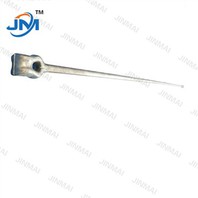
Hey there! As a supplier of Galvanized Cross Arms, I often get asked about the magnetic properties of these essential pieces of equipment. So, let's dive right in and explore what makes galvanized cross arms tick in the magnetic department.
First off, let's understand what a galvanized cross arm is. It's a crucial component in overhead power lines. You can find more about Hot Dip Galvanized Overhead Line Hardware on our website. These cross arms are typically made of steel and then coated with a layer of zinc through a process called galvanization. This zinc coating not only protects the steel from corrosion but also gives the cross arm a longer lifespan.
Now, onto the magnetic property. Steel, which is the base material of most galvanized cross arms, is ferromagnetic. That means it can be magnetized and is attracted to magnets. Ferromagnetism is a property where certain materials can form permanent magnets or are attracted to magnetic fields. When a magnetic field is applied to the steel in the cross arm, the magnetic domains within the steel align in the direction of the field, creating a net magnetic moment.
But here's the thing. The zinc coating on the galvanized cross arm doesn't have significant magnetic properties on its own. Zinc is a diamagnetic material. Diamagnetic materials are those that are weakly repelled by magnetic fields. However, the thickness of the zinc coating is usually quite thin compared to the steel core of the cross arm. So, the overall magnetic behavior of the galvanized cross arm is still dominated by the ferromagnetic properties of the steel.


In practical applications, the magnetic property of the galvanized cross arm can have both advantages and disadvantages. On the positive side, the ferromagnetic nature of the steel can be useful in some electrical systems. For example, in Electric Power Stringing, the magnetic field generated by the current - carrying wires can interact with the cross arm. This interaction can help in maintaining the stability of the wires to some extent. The magnetic attraction between the wires and the cross arm can prevent excessive swaying of the wires due to wind or other external forces.
On the flip side, there are some potential drawbacks. In areas with strong external magnetic fields, such as near large power transformers or industrial equipment, the galvanized cross arm can be affected. The alignment of the magnetic domains in the steel can cause the cross arm to become magnetized. This magnetized cross arm can then attract ferromagnetic debris like iron filings or small metal objects. Over time, this accumulation of debris can cause issues such as corrosion under the debris or interference with the electrical insulation of the wires attached to the cross arm.
Another aspect to consider is the impact of the magnetic property on the installation and maintenance of the cross arms. When installing a galvanized cross arm, workers need to be aware of the magnetic forces at play. For instance, if there are other ferromagnetic tools or equipment nearby, they can be attracted to the cross arm, which might cause accidents or make the installation process more difficult.
In terms of maintenance, the magnetic property can also complicate things. Inspectors need to be careful when using magnetic inspection tools. These tools can be affected by the magnetic field of the cross arm, leading to inaccurate readings. Additionally, if the cross arm has become magnetized due to external magnetic fields, it might require demagnetization before certain maintenance procedures can be carried out.
Now, let's talk about how we, as a supplier, ensure the quality of our galvanized cross arms in relation to their magnetic properties. We use high - quality steel in the manufacturing process. The steel we source has consistent ferromagnetic properties, which means that the cross arms we produce have predictable magnetic behavior.
During the galvanization process, we carefully control the thickness of the zinc coating. A proper zinc coating not only protects the steel from corrosion but also helps in minimizing any potential negative effects related to the magnetic property. We also conduct regular quality checks on our cross arms. These checks include tests to measure the magnetic strength and the stability of the magnetic domains in the steel.
If you're in the market for Cable Accessories Iron Cross Arm, it's important to understand the magnetic properties of the product. Whether you're an electrical engineer, a power line installer, or involved in the maintenance of overhead power systems, knowing how the cross arm behaves magnetically can help you make better decisions.
We're here to provide you with the best - quality galvanized cross arms. Our products are designed to meet the highest industry standards in terms of both magnetic properties and overall performance. If you have any questions about our galvanized cross arms or want to discuss your specific requirements, don't hesitate to reach out. We're always ready to have a chat and help you find the right solution for your project.
In conclusion, the magnetic property of a galvanized cross arm is mainly determined by the ferromagnetic steel core, with the zinc coating having a relatively minor influence. While it has some useful applications, it also presents certain challenges in installation, maintenance, and operation. As a supplier, we strive to ensure that our cross arms offer the best balance of magnetic and non - magnetic properties to meet your needs.
References:
- "Electrical Power Systems" by John J. Grainger and William D. Stevenson
- "Materials Science and Engineering: An Introduction" by William D. Callister Jr. and David G. Rethwisch