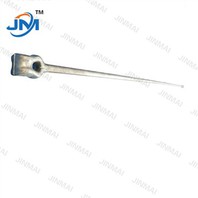
What is the Poisson's ratio of steel flat arms?
As a supplier of Steel Flat Arms, I often encounter various technical inquiries from customers. One question that frequently comes up is about the Poisson's ratio of steel flat arms. In this blog post, I'll delve into what the Poisson's ratio is, its significance for steel flat arms, and how it impacts the performance of these crucial components.
Understanding Poisson's Ratio
Poisson's ratio, denoted by the Greek letter ν (nu), is a fundamental material property that describes the relationship between the transverse strain and the axial strain of a material when it is subjected to an axial load. When a material is stretched or compressed in one direction (the axial direction), it will also deform in the perpendicular (transverse) directions. Poisson's ratio quantifies this lateral contraction or expansion relative to the axial deformation.
Mathematically, Poisson's ratio is defined as the negative ratio of the transverse strain (εt) to the axial strain (εa):
ν = - εt / εa
For most materials, Poisson's ratio ranges between 0 and 0.5. A value of 0 would mean that the material does not contract or expand laterally when axially loaded, while a value of 0.5 indicates that the volume of the material remains constant during deformation, which is the case for an ideal incompressible fluid.
Poisson's Ratio of Steel
Steel is a widely used material in various industries, including construction, automotive, and manufacturing. The Poisson's ratio of steel typically falls within the range of 0.25 to 0.33. This value can vary slightly depending on the specific type of steel, its composition, and the manufacturing process.
For example, carbon steels, which are commonly used in structural applications, generally have a Poisson's ratio around 0.28 - 0.30. Stainless steels, on the other hand, may have a Poisson's ratio closer to 0.30 - 0.31 due to their different alloying elements and microstructures.
Significance for Steel Flat Arms
Steel flat arms are essential components in many mechanical and structural systems. They are often used to transmit forces, support loads, or provide a connection between different parts. Understanding the Poisson's ratio of steel flat arms is crucial for several reasons:
-
Design and Engineering: When designing steel flat arms, engineers need to consider the material's Poisson's ratio to accurately predict how the arms will deform under load. This information is used to ensure that the arms can withstand the expected forces without failing or experiencing excessive deformation.
-
Stress Analysis: Poisson's ratio affects the distribution of stresses within the steel flat arms. A higher Poisson's ratio means that the material will experience more lateral contraction or expansion, which can lead to higher stresses in certain areas. By taking Poisson's ratio into account, engineers can perform more accurate stress analyses and optimize the design of the arms.
-
Material Selection: Different applications may require steel flat arms with specific mechanical properties. The Poisson's ratio can be an important factor in selecting the appropriate type of steel for a particular application. For example, in applications where dimensional stability is critical, a steel with a lower Poisson's ratio may be preferred.
Impact on Performance
The Poisson's ratio of steel flat arms can have a significant impact on their performance in real-world applications. Here are some examples:
-
Buckling Resistance: When a steel flat arm is subjected to an axial compressive load, it may buckle if the load exceeds a certain critical value. The Poisson's ratio affects the critical buckling load by influencing the lateral contraction of the arm. A higher Poisson's ratio can reduce the critical buckling load, making the arm more susceptible to buckling.
-
Fatigue Life: Repeated loading and unloading can cause fatigue in steel flat arms, leading to crack initiation and propagation. The Poisson's ratio can affect the fatigue life of the arms by influencing the stress distribution and the development of stress concentrations. A more accurate understanding of Poisson's ratio can help engineers design arms with better fatigue resistance.
-
Connection Integrity: Steel flat arms are often connected to other components using bolts, welds, or other fastening methods. The Poisson's ratio can affect the integrity of these connections by influencing the deformation of the arms and the forces transmitted to the fasteners. By considering Poisson's ratio, engineers can ensure that the connections are strong and reliable.
Our Steel Flat Arms
At our company, we offer a wide range of Steel Flat Arms made from high-quality steel. Our steel flat arms are carefully engineered to meet the specific requirements of our customers, taking into account factors such as load capacity, dimensional accuracy, and corrosion resistance.
We understand the importance of Poisson's ratio in the design and performance of steel flat arms, and we work closely with our customers to ensure that our products meet their expectations. Whether you need steel flat arms for a simple mechanical application or a complex structural project, we have the expertise and resources to provide you with the right solution.
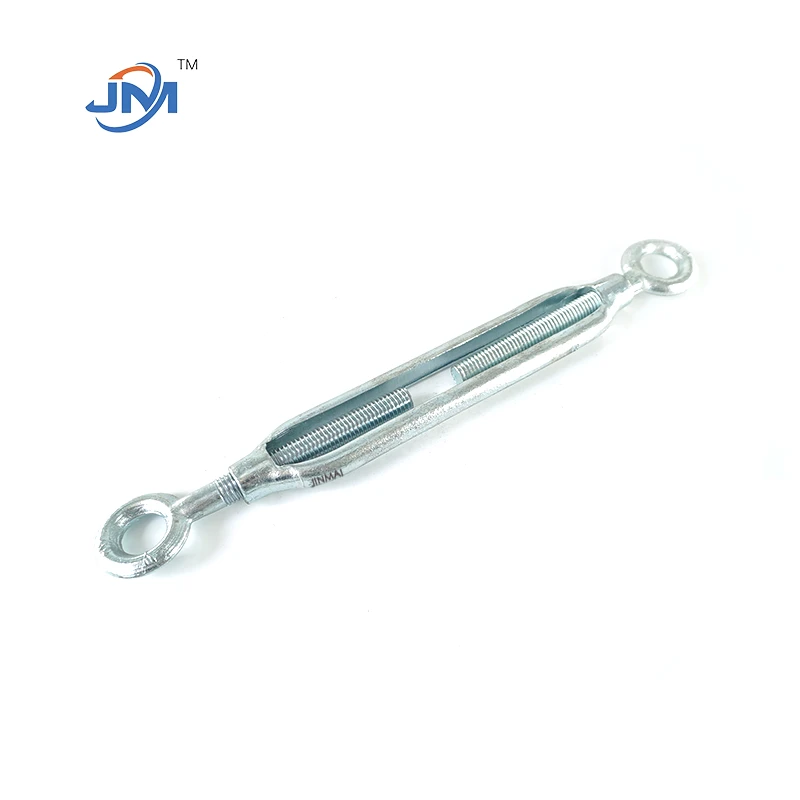
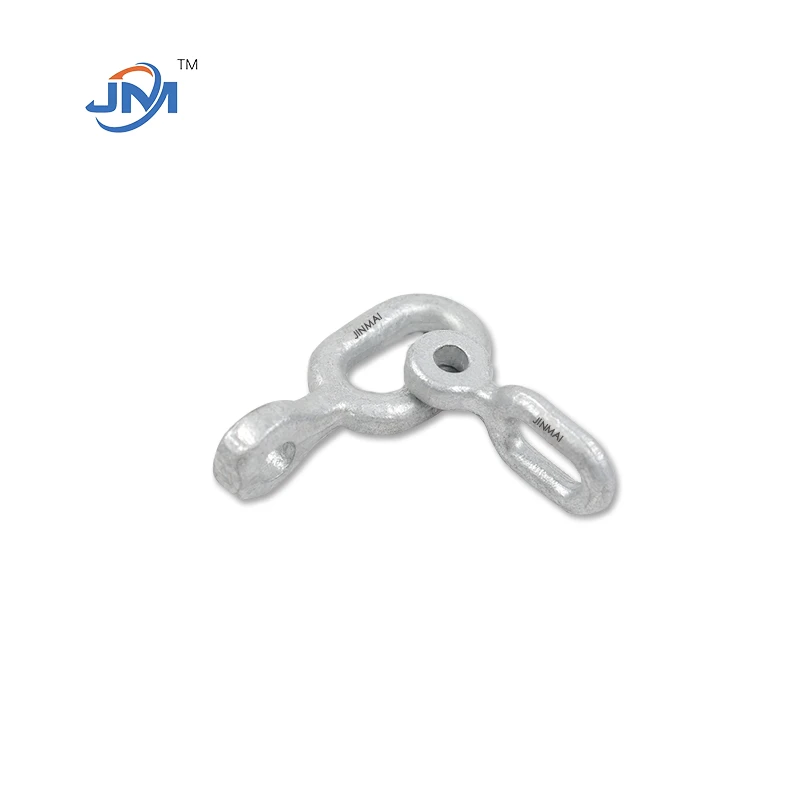
In addition to our steel flat arms, we also offer other related products, such as Split Body Turnbuckle Bolts Hot Dip Galvanized / Electro Galvanized and ZH Right Angle Hanging Ring Power Fittings. These products are designed to work seamlessly with our steel flat arms, providing you with a complete solution for your project.
Contact Us for Procurement
If you are interested in purchasing our steel flat arms or any of our other products, we encourage you to contact us for a detailed quote. Our sales team is ready to assist you with your procurement needs and provide you with the information you need to make an informed decision.
Whether you are a small business or a large corporation, we are committed to providing you with the highest level of service and support. We look forward to working with you and helping you achieve your project goals.
References
- Callister, W. D., & Rethwisch, D. G. (2011). Materials Science and Engineering: An Introduction. Wiley.
- Timoshenko, S. P., & Goodier, J. N. (1970). Theory of Elasticity. McGraw-Hill.
- Budynas, R. G., & Nisbett, J. K. (2011). Shigley's Mechanical Engineering Design. McGraw-Hill.