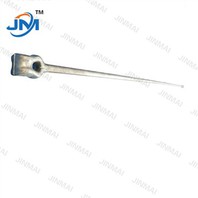
What is the shear strength of an insulator spindle?
As a trusted supplier of insulator spindles, I often receive inquiries about the shear strength of these crucial components. Understanding the shear strength of an insulator spindle is essential for ensuring the reliability and safety of electrical systems. In this blog post, I will delve into the concept of shear strength, its significance in insulator spindles, and factors that influence it.
Understanding Shear Strength
Shear strength refers to the maximum amount of shear stress that a material can withstand before it fails. In the context of an insulator spindle, shear stress occurs when a force is applied parallel to the cross - sectional area of the spindle, causing one part of the material to slide relative to another. This can happen due to various factors such as mechanical vibrations, wind loads, or sudden impacts in the electrical infrastructure.
The shear strength of an insulator spindle is measured in units of force per unit area, typically in pounds per square inch (psi) or megapascals (MPa). A higher shear strength indicates that the spindle can better resist forces that would cause it to break or deform under shear stress.
Significance of Shear Strength in Insulator Spindles
Insulator spindles play a vital role in electrical systems by providing mechanical support to insulators and isolating electrical conductors from the supporting structure. They are subjected to a variety of mechanical stresses during normal operation and in extreme conditions.
In overhead power lines, for example, insulator spindles must withstand the weight of the insulators and the tension in the conductors. Wind can exert significant lateral forces on the lines, leading to shear stress on the spindles. If the shear strength of the spindle is insufficient, it may break, causing the insulator to detach and potentially leading to power outages, equipment damage, and safety hazards.
In substations, insulator spindles are used to support high - voltage equipment. The electrical and mechanical stresses in these environments are complex, and the spindles need to have adequate shear strength to ensure the stability and integrity of the entire system.
Factors Influencing the Shear Strength of Insulator Spindles
Material Properties
The material used to manufacture the insulator spindle has a significant impact on its shear strength. Common materials for insulator spindles include steel, galvanized steel, and composite materials.
Steel is known for its high strength and durability. It can withstand relatively high shear forces, making it a popular choice for applications where high mechanical loads are expected. Galvanized steel, which is steel coated with a layer of zinc, not only has good strength but also offers corrosion resistance. This is important in outdoor environments where the spindle may be exposed to moisture and other corrosive elements.
Composite materials, on the other hand, are lightweight and can be designed to have specific mechanical properties. They can offer a good balance between strength and weight, and their shear strength can be tailored by adjusting the composition and manufacturing process.
Manufacturing Process
The way an insulator spindle is manufactured also affects its shear strength. Precision machining, for example, can ensure that the spindle has a uniform cross - section and smooth surface, which helps to distribute the shear stress evenly. Heat treatment processes can be used to improve the material's hardness and strength, thereby increasing the shear strength of the spindle.
Design and Geometry
The design and geometry of the insulator spindle play a crucial role in determining its shear strength. The diameter, length, and shape of the spindle can all influence how it responds to shear stress. A spindle with a larger diameter generally has a higher shear strength because it has a larger cross - sectional area to resist the shear force. However, increasing the diameter also increases the weight and cost of the spindle, so a balance needs to be struck.
The shape of the spindle can also affect its shear strength. For example, a spindle with a tapered design may distribute the shear stress more effectively than a spindle with a uniform cross - section.
Measuring and Testing Shear Strength
To ensure that insulator spindles meet the required shear strength standards, they undergo rigorous testing. One common method for testing shear strength is the shear test, where a sample of the spindle is placed in a testing machine and a shear force is applied until the sample fails. The maximum shear force at failure is recorded, and the shear strength is calculated by dividing this force by the cross - sectional area of the sample.
Standards organizations such as the International Electrotechnical Commission (IEC) and the American National Standards Institute (ANSI) have established guidelines and standards for the shear strength of insulator spindles. These standards help to ensure the quality and reliability of the spindles used in electrical systems.


Our Product Range
At our company, we offer a wide range of insulator spindles with different shear strengths to meet the diverse needs of our customers. Our Hardware Galvanized Pole Top Pin Spindle is made of high - quality galvanized steel, providing excellent corrosion resistance and high shear strength. It is suitable for use in overhead power lines and other outdoor applications.
Our Voltage Insulator Spindle is designed to handle high - voltage applications. It is carefully engineered to have the right balance of electrical and mechanical properties, including sufficient shear strength to withstand the stresses in high - voltage environments.
We also offer the Steel Pin of Pin Insulator, which is a critical component of pin insulators. This steel pin has been tested to ensure it meets the required shear strength standards, providing reliable support for the insulator.
Conclusion
The shear strength of an insulator spindle is a critical factor in the performance and safety of electrical systems. By understanding the concept of shear strength, its significance, and the factors that influence it, customers can make informed decisions when selecting insulator spindles for their applications.
At our company, we are committed to providing high - quality insulator spindles with excellent shear strength. Our products are manufactured using the latest technologies and strict quality control measures to ensure they meet or exceed industry standards.
If you are in the market for insulator spindles and want to discuss your specific requirements, we invite you to contact us. Our team of experts is ready to assist you in finding the right solution for your electrical infrastructure needs.
References
- International Electrotechnical Commission (IEC) standards on electrical insulators.
- American National Standards Institute (ANSI) standards for mechanical components in electrical systems.
- Textbooks on materials science and mechanical engineering related to the study of shear strength.