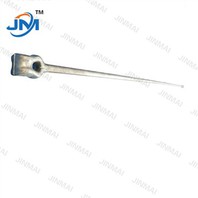
As a supplier of insulator spindles, I often receive inquiries from customers about the chemical resistance of our products. This is a crucial aspect, especially considering the diverse environments where insulator spindles are deployed. In this blog, I will delve into the question of whether insulator spindles are resistant to chemicals, exploring the factors that influence their chemical resistance and how we ensure the performance of our products.
Understanding Insulator Spindles and Their Applications
Insulator spindles play a vital role in electrical systems. They are used to support and insulate electrical conductors, preventing the flow of current to unwanted paths. These spindles come in various types, such as Pole Top Pins Spindle, POLE TOP, and Cross - arm Insulator Pins, each designed for specific applications in power distribution and transmission networks.
Pole top pins spindles are typically used at the top of utility poles to support overhead lines. POLE TOP insulators are also placed at the pole tops, providing insulation and mechanical support. Cross - arm insulator pins are installed on cross - arms of poles to hold insulators that carry electrical conductors. Given their outdoor and sometimes harsh working conditions, they are often exposed to a variety of chemicals.
Chemical Exposure in the Field
Insulator spindles can be exposed to different chemicals in their operating environments. For example, in industrial areas, they may be exposed to acidic or alkaline pollutants released from factories. In coastal regions, they are likely to encounter saltwater spray, which contains sodium chloride and other salts. Additionally, environmental factors like acid rain, which is caused by the presence of sulfur dioxide and nitrogen oxides in the atmosphere, can also pose a threat to the integrity of insulator spindles.
Factors Affecting Chemical Resistance
The chemical resistance of insulator spindles depends on several factors, including the material used in their construction, the surface finish, and the manufacturing process.
Material Selection
The choice of material is perhaps the most critical factor. Common materials for insulator spindles include porcelain, glass, and composite materials.
- Porcelain: Porcelain is a traditional material for insulators. It has good mechanical strength and electrical insulation properties. Porcelain is generally resistant to many chemicals, especially those with a neutral or slightly acidic/alkaline pH. However, in highly acidic or alkaline environments, it may experience surface corrosion over time. The chemical composition of porcelain, mainly consisting of clay, feldspar, and quartz, gives it a certain level of chemical stability. But prolonged exposure to strong acids or alkalis can break down the surface layer of porcelain, leading to a decrease in its electrical and mechanical performance.
- Glass: Glass insulators are also known for their excellent electrical insulation. They are highly resistant to most chemicals, including acids and alkalis. Glass has a smooth surface, which makes it difficult for chemicals to adhere and penetrate. However, glass is brittle and can be easily damaged by mechanical impacts.
- Composite Materials: Composite insulators are made of a core material, usually fiberglass, and a weather - shed housing made of silicone rubber or ethylene propylene diene monomer (EPDM). Composite materials offer several advantages in terms of chemical resistance. Silicone rubber, for example, has excellent hydrophobicity and resistance to environmental aging. It can repel water and prevent the formation of conductive paths on the surface. EPDM also has good chemical resistance and can withstand a wide range of temperatures and environmental conditions.
Surface Finish
The surface finish of insulator spindles can affect their chemical resistance. A smooth surface finish reduces the area for chemical adhesion and makes it easier for water and contaminants to run off. For example, in the case of composite insulators, the silicone rubber housing is often treated to have a smooth and hydrophobic surface. This not only helps in repelling water but also reduces the deposition of chemicals on the surface.


Manufacturing Process
The manufacturing process can also influence the chemical resistance of insulator spindles. Proper firing of porcelain insulators can improve their density and chemical stability. In the case of composite insulators, the quality of the bonding between the core and the housing is crucial. A well - bonded structure can prevent chemicals from penetrating into the core and causing internal damage.
Testing Chemical Resistance
To ensure the chemical resistance of our insulator spindles, we conduct a series of tests. These tests simulate the real - world chemical exposure scenarios that the products may encounter.
Laboratory Tests
In the laboratory, we expose samples of insulator spindles to different chemicals under controlled conditions. For example, we may immerse samples in solutions with different pH values for a certain period of time. After the exposure, we measure the changes in the physical and electrical properties of the samples, such as weight loss, surface roughness, and electrical insulation resistance.
Field Tests
Field tests are also conducted to evaluate the long - term performance of insulator spindles in real - world environments. We install test samples in different locations, including industrial areas, coastal regions, and areas prone to acid rain. Over time, we monitor the condition of these samples, looking for signs of chemical damage or degradation.
Ensuring Chemical Resistance in Our Products
As a supplier, we take several measures to ensure the chemical resistance of our insulator spindles.
Quality Material Sourcing
We carefully select high - quality materials from reliable suppliers. For porcelain insulators, we source clays and other raw materials with consistent chemical compositions. For composite insulators, we use high - grade fiberglass and silicone rubber or EPDM with excellent chemical resistance properties.
Advanced Manufacturing Techniques
We employ advanced manufacturing techniques to improve the quality and chemical resistance of our products. For example, in the production of porcelain insulators, we use precise firing processes to ensure uniform density and chemical stability. In the case of composite insulators, we use state - of - the - art molding and bonding techniques to ensure a strong and durable structure.
Quality Control
We have a strict quality control system in place. Every batch of insulator spindles undergoes thorough testing before leaving the factory. This includes both laboratory tests for chemical resistance and other performance parameters, as well as visual inspections to ensure the surface finish and overall quality of the products.
Conclusion
In general, insulator spindles can be resistant to chemicals, but the level of resistance depends on various factors. By carefully selecting materials, optimizing the manufacturing process, and implementing strict quality control, we can ensure that our insulator spindles can withstand the chemical challenges in different operating environments.
If you are in need of high - quality insulator spindles with excellent chemical resistance, we are here to provide you with the best solutions. Our products, including Pole Top Pins Spindle, POLE TOP, and Cross - arm Insulator Pins, are designed and manufactured to meet the highest standards. Contact us for more information and to discuss your specific requirements. We look forward to working with you to ensure the reliable operation of your electrical systems.
References
- IEEE Std 605 - 2008, IEEE Guide for Design of Substations
- IEC 61109 - 2012, Insulators for overhead lines with a nominal voltage greater than 1000 V - Composite insulators for a.c. systems - Definitions, test methods and acceptance criteria
- ASTM D2122 - 16, Standard Test Methods for Sampling and Testing Glass - Fiber - Reinforced Thermosetting Resin Pipe and Fittings