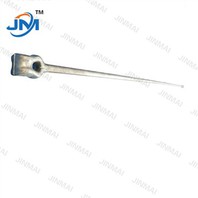
Hey there! As a bolts supplier, I often get asked about the strength grade of bolts. It's a crucial topic, especially for those in construction, manufacturing, and other industries where bolts are used extensively. So, let's dive right in and explore what the strength grade of bolts is all about.
Understanding Bolt Strength Grades
Bolt strength grades are a way to classify bolts based on their mechanical properties, mainly their tensile strength and yield strength. Tensile strength refers to the maximum amount of pulling force a bolt can withstand before it breaks, while yield strength is the point at which the bolt starts to deform permanently.
These grades are standardized, which means that bolts of the same grade from different manufacturers should have similar mechanical properties. In the United States, the most common standard for bolt strength grades is the Society of Automotive Engineers (SAE) system, while in Europe, the International Organization for Standardization (ISO) system is widely used.
SAE Bolt Strength Grades
The SAE system uses a numbering system to indicate the strength grade of bolts. Here are some of the most common SAE grades:
- Grade 2: These are the most basic and commonly used bolts. They are made of low - carbon steel and have a relatively low tensile strength. Grade 2 bolts are often used in non - critical applications where the load requirements are not very high, like in some household furniture or light - duty machinery.
- Grade 5: Grade 5 bolts are made of medium - carbon steel and are heat - treated to increase their strength. They have a higher tensile strength compared to Grade 2 bolts and are commonly used in automotive and construction applications where moderate strength is required.
- Grade 8: These are high - strength bolts. They are made of medium - carbon alloy steel and are quenched and tempered for maximum strength. Grade 8 bolts are used in heavy - duty applications such as bridges, large machinery, and high - stress structural connections.
ISO Bolt Strength Grades
The ISO system uses a two - part number to indicate the strength grade of bolts. For example, a bolt with a grade of 8.8:
- The first number (8 in this case) multiplied by 100 gives the approximate tensile strength in megapascals (MPa). So, an 8.8 bolt has a tensile strength of around 800 MPa.
- The second number (8 in this case) divided by 10 gives the ratio of the yield strength to the tensile strength. So, an 8.8 bolt has a yield strength that is approximately 0.8 times its tensile strength.
ISO grades also range from lower - strength bolts like 4.6 to higher - strength ones like 12.9, which are among the strongest bolts available and are used in extremely high - stress applications.


Why Strength Grades Matter
Choosing the right strength grade of bolts is crucial for several reasons:
- Safety: Using a bolt with the wrong strength grade can lead to bolt failure, which can be extremely dangerous, especially in structural or high - load applications. For example, if a Grade 2 bolt is used in a heavy - duty construction connection where a Grade 8 bolt is required, the bolt may break under the load, causing the structure to collapse.
- Performance: The right strength grade ensures that the bolt can perform its intended function properly. A high - strength bolt will be able to handle higher loads without deforming or breaking, which is essential for the long - term performance of the structure or machinery it is used in.
- Cost - effectiveness: Using a higher - strength bolt than necessary can be wasteful and expensive. On the other hand, using a lower - strength bolt where a higher - strength one is needed can lead to frequent replacements and potential safety hazards, which can end up costing more in the long run.
Our Range of Bolts Based on Strength Grades
As a bolts supplier, we offer a wide range of bolts with different strength grades to meet the diverse needs of our customers. Whether you need High Strength Hexagon Bolts for a heavy - duty construction project or High Strength Square Head Bolt for a specific machinery application, we've got you covered.
Our high - strength bolts are carefully manufactured to meet the strictest quality standards. We source the best materials and use advanced manufacturing processes to ensure that each bolt has the right mechanical properties for its strength grade.
In addition to standard bolts, we also offer Metal Power Line Accessories Shackle which are designed to withstand high - stress conditions in power line applications. These shackles are made with high - strength materials and are tested rigorously to ensure their reliability.
Factors Affecting Bolt Strength
It's important to note that several factors can affect the actual strength of a bolt in a real - world application:
- Installation: Proper installation is crucial for a bolt to achieve its rated strength. Over - tightening or under - tightening a bolt can significantly reduce its strength. For example, over - tightening can cause the bolt to stretch beyond its yield point, leading to permanent deformation and a weakened bolt.
- Corrosion: Bolts exposed to corrosive environments can lose their strength over time. Corrosion can eat away at the metal, reducing its cross - sectional area and thus its ability to withstand loads. We offer bolts with different coatings and finishes to protect them from corrosion, depending on the application environment.
- Temperature: Extreme temperatures can also affect the strength of bolts. High temperatures can cause the bolt material to soften, reducing its strength, while very low temperatures can make the bolt more brittle and prone to cracking.
How to Choose the Right Bolt Strength Grade
When choosing the right bolt strength grade for your application, consider the following:
- Load requirements: Determine the maximum load that the bolt will be subjected to. If it's a light - load application, a lower - strength bolt may be sufficient. For heavy - load applications, a high - strength bolt is necessary.
- Environmental conditions: Consider the environment where the bolt will be used. If it's a corrosive environment, choose a bolt with appropriate corrosion - resistant coatings. If it's a high - or low - temperature environment, select a bolt material that can withstand those temperature extremes.
- Industry standards: Check if there are any industry - specific standards or codes that dictate the use of certain bolt strength grades. For example, in the construction of bridges, there are strict standards regarding the type and strength of bolts to be used.
Conclusion
In conclusion, understanding the strength grade of bolts is essential for anyone involved in applications where bolts are used. As a bolts supplier, we are committed to providing our customers with high - quality bolts of different strength grades to meet their specific needs. Whether you're working on a small DIY project or a large - scale industrial construction, we can help you find the right bolts for the job.
If you're in the market for high - quality bolts or need more information about bolt strength grades, don't hesitate to reach out. We're here to assist you in making the right choice for your application. Contact us for procurement and let's start a great business relationship.
References
- Machinery's Handbook, 31st Edition
- SAE Standards Manual
- ISO Standards for Bolts and Fasteners