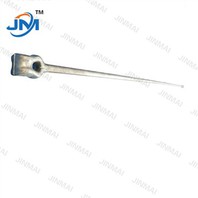
Hey there! As a supplier of Pigtail Eye Bolts, I often get asked about the tensile strength of these nifty little components. So, let's dive right in and break down what tensile strength is all about when it comes to pigtail eye bolts.
First off, what's tensile strength? In simple terms, it's the maximum amount of pulling force a material can handle before it breaks or fails. Think of it like trying to stretch a rubber band. There's only so much you can pull it before it snaps. For pigtail eye bolts, tensile strength is crucial because these bolts are often used in applications where they need to withstand significant pulling or stretching forces.
Now, the tensile strength of a pigtail eye bolt depends on several factors. One of the most important is the material it's made from. Common materials for pigtail eye bolts include steel, stainless steel, and alloy steel. Each of these materials has different properties that affect their tensile strength.
Steel is a popular choice because it's strong and relatively inexpensive. However, its tensile strength can vary depending on the grade of steel used. For example, low - carbon steel might have a lower tensile strength compared to high - carbon steel. Stainless steel, on the other hand, is known for its corrosion resistance. It may have a slightly lower tensile strength than some high - strength steels, but it's great for applications where the bolt will be exposed to moisture or harsh environments. Alloy steel is a mix of different metals, which can be engineered to have very high tensile strengths. It's often used in heavy - duty applications where maximum strength is required.
The design of the pigtail eye bolt also plays a big role in its tensile strength. The size of the bolt, the diameter of the eye, and the thread pitch all affect how much force the bolt can handle. A thicker bolt generally has a higher tensile strength than a thinner one. Similarly, a larger - diameter eye can distribute the pulling force more evenly, reducing the stress on any one point of the bolt.
Let's talk about some real - world applications. Pigtail eye bolts are used in a wide range of industries. In the construction industry, they're often used to secure cables or ropes. For example, when building a suspension bridge, pigtail eye bolts might be used to attach the cables that support the bridge deck. In this case, the bolts need to have a high tensile strength to withstand the enormous pulling forces exerted by the weight of the bridge and the traffic on it.
In the marine industry, pigtail eye bolts are used on boats and ships. They can be used to secure mooring lines, which need to hold the vessel in place against the force of the waves and the wind. Since the marine environment is corrosive, stainless steel pigtail eye bolts are commonly used. The tensile strength of these bolts is critical to ensure the safety of the vessel.
If you're interested in other related products, we also offer Pig tail ball head and Pigtail Hook Bolts. These products have their own unique features and applications. The pig tail ball head can provide a flexible connection, while the pigtail hook bolts are great for quick and easy attachment. And for those in the pole line industry, our Hardware Pole Line Hook is a reliable option.


When it comes to determining the exact tensile strength of a pigtail eye bolt, it's important to refer to the manufacturer's specifications. These specs will tell you the maximum load the bolt can handle under different conditions. However, it's always a good idea to add a safety factor. This means that you should never use the bolt at its maximum rated tensile strength. A common safety factor is 2 or 3, which means you should only load the bolt to half or a third of its maximum capacity. This gives you a margin of safety in case of unexpected loads or stress.
As a supplier, we take great care in ensuring the quality of our pigtail eye bolts. We source our materials from reputable suppliers and use advanced manufacturing processes to ensure that each bolt meets the highest standards of strength and durability. Our quality control team conducts rigorous testing to verify the tensile strength and other properties of the bolts before they leave our facility.
If you're in the market for pigtail eye bolts, whether it's for a small DIY project or a large - scale industrial application, we're here to help. We can provide you with the right bolt for your needs, based on the required tensile strength, material, and size. Our team of experts can also offer advice on installation and usage to ensure that you get the most out of your pigtail eye bolts.
So, if you're interested in learning more about our pigtail eye bolts or have any questions about tensile strength, don't hesitate to reach out. We're eager to start a conversation and work with you to find the perfect solution for your project. Whether you're a contractor, an engineer, or a hobbyist, we've got the products and the knowledge to meet your requirements.
In conclusion, understanding the tensile strength of pigtail eye bolts is essential for anyone using these components. By considering the material, design, and application, you can choose the right bolt for your needs. And as your trusted supplier, we're committed to providing you with high - quality products that meet and exceed your expectations. So, let's get in touch and start discussing your next project!
References
- "Mechanical Engineering Handbook" - A comprehensive guide on mechanical properties of materials and fasteners.
- "Steel Construction Manual" - Provides information on the use of steel fasteners in construction applications.
- Manufacturer's specifications for pigtail eye bolts.