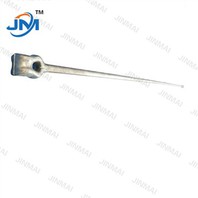
What is the torsional strength of an insulator spindle?
As a leading supplier of insulator spindles, I often get asked about the torsional strength of these crucial electrical components. Torsional strength plays a vital role in the performance and reliability of insulator spindles, and understanding its significance is essential for both electrical engineers and those involved in the procurement of these products.
Let's start by defining torsional strength. Torsional strength refers to the ability of a material or a structural component to resist twisting forces. In the case of an insulator spindle, which is commonly used in electrical power systems to support and isolate conductors, this resistance to twisting is crucial. When an insulator spindle is installed in a power line, it is subject to various mechanical stresses, including torsional forces. These forces can be caused by wind, ice loading, or even vibrations from the movement of electrical conductors.


One of the key factors affecting the torsional strength of an insulator spindle is the material it is made from. At our company, we offer insulator spindles made from a variety of materials, each with its own unique properties. For instance, some of our products are made from high - strength steel. Steel is known for its excellent mechanical properties, including high torsional strength. The Steel Pin of Pin Insulator, which is one of our popular offerings, is designed to withstand significant torsional loads. The atomic structure of steel allows it to distribute the twisting forces evenly throughout its cross - section, preventing premature failure due to torsion.
Another important aspect is the design of the insulator spindle. A well - designed insulator spindle can enhance its torsional strength. For example, the shape and dimensions of the spindle can influence how it responds to torsional forces. Our engineers carefully consider the geometry of the insulator spindle to ensure optimal performance. The Voltage Insulator Spindle features a design that takes into account both electrical insulation requirements and mechanical strength, including torsional resistance. The diameter, length, and the presence of any grooves or ridges on the spindle are all optimized to provide the best possible torsional strength within the constraints of the application.
The manufacturing process also has a significant impact on the torsional strength of an insulator spindle. Our state - of - the - art manufacturing facilities use advanced techniques to produce insulator spindles with consistent quality. Heat treatment, for example, can be used to improve the mechanical properties of the material. By carefully controlling the heating and cooling processes, we can enhance the hardness and toughness of the spindle, which in turn increases its torsional strength. Furthermore, precise machining ensures that the dimensions of the spindle are accurate, reducing the stress concentrations that can lead to failure under torsion.
Testing is an integral part of our quality control process. We subject our insulator spindles to rigorous torsional testing to ensure that they meet or exceed industry standards. During these tests, the spindles are fixed at one end and a twisting force is applied at the other end. The amount of torque required to cause failure is measured, and this data is used to determine the torsional strength of the spindle. Only those spindles that pass our strict testing criteria are released for sale.
In practical applications, the torsional strength of an insulator spindle is directly related to the safety and reliability of the electrical power system. If an insulator spindle fails due to insufficient torsional strength, it can lead to the collapse of the conductor, resulting in power outages, damage to equipment, and even pose a risk to human safety. Therefore, it is crucial for power utility companies and other end - users to select insulator spindles with adequate torsional strength for their specific applications.
The Cross - arm Insulator Pins are another type of insulator spindle that we supply. These pins are used to support insulators on cross - arms in power distribution systems. They are also subject to torsional forces, especially during high - wind conditions. Our cross - arm insulator pins are designed and manufactured to have high torsional strength, ensuring the long - term stability of the power distribution network.
When choosing an insulator spindle, it is important to consider the specific requirements of the application. Factors such as the magnitude of the torsional forces, the environmental conditions, and the voltage levels all need to be taken into account. Our team of experts is always available to provide guidance and advice on selecting the most suitable insulator spindle for your needs.
At our company, we are committed to providing high - quality insulator spindles with excellent torsional strength. Our products are trusted by electrical engineers and power utility companies around the world. We continuously invest in research and development to improve the performance of our insulator spindles, including enhancing their torsional strength.
If you are in the market for insulator spindles and are interested in learning more about our products, or if you have specific requirements regarding torsional strength, we encourage you to contact us. Our sales team is ready to engage in procurement discussions with you, understand your needs, and provide you with the best possible solutions. We look forward to the opportunity to work with you and contribute to the success of your electrical projects.
References
- "Electrical Insulation Handbook" - A comprehensive guide on electrical insulation materials and components, which provides in - depth knowledge on the mechanical properties of insulator spindles.
- Industry standards and specifications related to electrical insulators, which outline the requirements for torsional strength and other mechanical properties.