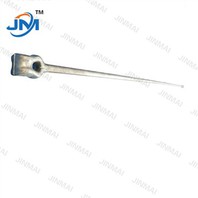
As a supplier of Bolt Wire Clamps, I often encounter inquiries about the suitability of our products for use in oil and gas facilities. This blog post aims to delve into this topic, exploring the various aspects that determine whether Bolt Wire Clamps are a good fit for such demanding environments.
Understanding the Oil and Gas Environment
Oil and gas facilities are known for their harsh operating conditions. These environments are often exposed to extreme temperatures, high pressures, corrosive substances, and potentially explosive atmospheres. Equipment used in these facilities must meet stringent safety and performance standards to ensure reliable operation and prevent accidents.
Temperature variations in oil and gas operations can range from extremely cold in offshore or arctic regions to very high temperatures near processing equipment. High - pressure systems are common, whether it's in pipelines transporting oil and gas or in well - head operations. Corrosion is a significant concern due to the presence of moisture, saltwater, and acidic gases such as hydrogen sulfide. Moreover, the risk of explosion is ever - present due to the flammable nature of hydrocarbons.
Key Features of Bolt Wire Clamps
Bolt Wire Clamps are designed to secure wires, cables, or rods in place. They typically consist of a clamp body, bolts, and nuts. The clamp body is usually made of materials such as steel or aluminum, which offer different properties in terms of strength, weight, and corrosion resistance.
The clamping mechanism of Bolt Wire Clamps provides a reliable and adjustable grip on the wire or cable. This allows for easy installation and removal, as well as the ability to make adjustments if necessary. The bolts and nuts are tightened to apply the required clamping force, ensuring that the wire remains securely in place.
Suitability Factors for Oil and Gas Facilities
1. Material Compatibility
The choice of material for Bolt Wire Clamps is crucial in oil and gas environments. Steel clamps offer high strength and durability, making them suitable for applications where heavy loads need to be supported. However, steel is prone to corrosion, especially in the presence of moisture and corrosive chemicals. To mitigate this, steel clamps can be coated with anti - corrosion materials such as zinc or epoxy.
Aluminum clamps, on the other hand, are lightweight and have good corrosion resistance. They are less likely to rust compared to steel, making them a good choice for applications where weight is a concern or where corrosion is a significant issue. However, aluminum is not as strong as steel, so it may not be suitable for applications with very high loads.
2. Corrosion Resistance
As mentioned earlier, corrosion is a major challenge in oil and gas facilities. Bolt Wire Clamps must be able to withstand the corrosive effects of the environment to ensure long - term reliability. In addition to material selection, surface treatments can also enhance corrosion resistance. For example, galvanizing steel clamps can provide a protective layer that prevents rusting. Epoxy coatings can also be applied to both steel and aluminum clamps to provide an extra barrier against corrosion.
3. Temperature and Pressure Resistance
Oil and gas operations can involve extreme temperatures and pressures. Bolt Wire Clamps need to maintain their structural integrity under these conditions. High - temperature applications may require clamps made of materials with high melting points and good thermal stability. For high - pressure applications, the clamps must be designed to withstand the forces exerted on them without failing.
4. Safety in Explosive Atmospheres
In areas where there is a risk of explosion, Bolt Wire Clamps must meet specific safety standards. They should be designed to prevent the generation of sparks, which could ignite flammable gases or vapors. This may involve using non - sparking materials or incorporating design features that minimize the risk of sparking during installation or operation.
Applications in Oil and Gas Facilities
1. Electrical Systems
In oil and gas facilities, electrical systems are used for a variety of purposes, including power distribution, control systems, and lighting. Bolt Wire Clamps can be used to secure electrical cables in place, ensuring that they are properly supported and protected. They can also be used in grounding systems to provide a reliable connection between the electrical equipment and the ground.
2. Instrumentation and Control Systems
Instrumentation and control systems are essential for monitoring and controlling the operations in oil and gas facilities. Bolt Wire Clamps can be used to secure the cables and wires associated with these systems, ensuring that they are not damaged and that the signals are transmitted accurately.
3. Structural Support
In some cases, Bolt Wire Clamps can be used for structural support purposes. For example, they can be used to secure stay rods in place, providing additional stability to structures such as platforms or towers. You can learn more about Stay Rod Assembly on our website.
Comparing with Other Clamping Solutions
There are other types of clamping solutions available in the market, such as Electric Hook - type Wire Clamp/Splint and Bolts Aluminium Clamp Tension Clamp. Each type of clamp has its own advantages and disadvantages.
Electric Hook - type Wire Clamps are easy to install and can provide a quick and simple solution for securing wires. However, they may not offer the same level of adjustability and reliability as Bolt Wire Clamps. Bolts Aluminium Clamp Tension Clamps are designed for high - tension applications and can provide a strong grip on the wire. However, they may be more expensive and less versatile compared to Bolt Wire Clamps.
Conclusion
In conclusion, Bolt Wire Clamps can be suitable for use in oil and gas facilities, provided that they are properly designed and selected based on the specific requirements of the application. The choice of material, corrosion resistance, temperature and pressure resistance, and safety features are all important factors to consider.
If you are in the oil and gas industry and are looking for reliable Bolt Wire Clamps, we are here to help. Our team of experts can assist you in selecting the right clamps for your specific needs. We offer a wide range of Bolt Wire Clamps with different materials, sizes, and features to meet the diverse requirements of oil and gas facilities. Contact us to start a procurement discussion and find the best clamping solution for your operations.


References
- API Standards for Oil and Gas Equipment
- ASTM Standards for Materials in Harsh Environments
- NACE International Publications on Corrosion Prevention