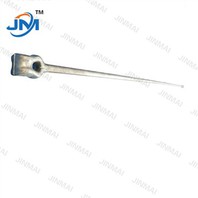
Parallel groove clamps are essential components in electrical power systems, used for connecting electrical conductors in a reliable and efficient manner. As a leading supplier of parallel groove clamps, one question that often comes up from our customers is, "Are parallel groove clamps available in different colors?" In this blog post, we will explore this question in detail, considering the technical aspects, practical implications, and market demand for colored parallel groove clamps.


Understanding Parallel Groove Clamps
Parallel groove clamps are designed to provide a low - resistance electrical connection between two or more conductors. They are typically made from materials such as aluminum, copper, or a combination of both. The main function of these clamps is to ensure a strong mechanical and electrical bond, which is crucial for the safe and efficient operation of power distribution networks.
Technical Requirements
The performance of a parallel groove clamp is mainly determined by its electrical conductivity, mechanical strength, and corrosion resistance. These factors are closely related to the material used and the manufacturing process. For example, aluminum clamps are lightweight and have good conductivity, while copper clamps offer even higher conductivity but are more expensive.
The Color of Parallel Groove Clamps
In general, the standard color of parallel groove clamps is the natural color of the base material. Aluminum clamps usually have a silver - gray appearance, and copper clamps are a reddish - brown color. However, there are indeed cases where parallel groove clamps are available in different colors.
Reasons for Colored Clamps
- Identification and Coding: In large - scale electrical installations, it can be very helpful to use color - coded clamps for easy identification. For example, different colors can represent different voltage levels, phases, or circuit functions. This can significantly improve the efficiency of installation, maintenance, and troubleshooting.
- Aesthetic Considerations: In some cases, especially in indoor or visible electrical installations, the color of the clamps may be chosen to match the overall aesthetic of the environment. For instance, in a modern building with a specific color scheme, colored clamps can blend in better and enhance the visual appeal of the electrical system.
How to Achieve Different Colors
There are several methods to change the color of parallel groove clamps:
- Coating: Applying a special coating on the surface of the clamp is a common way. The coating can not only change the color but also provide additional protection against corrosion. For example, a powder - coating process can be used to apply a durable and uniform color layer on the clamp.
- Anodizing: This process is mainly used for aluminum clamps. Anodizing can form a protective oxide layer on the aluminum surface, and by adding certain dyes during the anodizing process, different colors can be achieved.
Our Product Offerings
As a supplier of parallel groove clamps, we understand the diverse needs of our customers. That's why we offer a range of parallel groove clamps in different colors. Our JBT Parallel Groove Clamp is one of our popular products. These clamps are available in various colors, which can meet your requirements for identification and aesthetic purposes.
In addition to the standard parallel groove clamps, we also provide Copper - aluminum Transition Equipment Clamp. These clamps are designed for applications where copper and aluminum conductors need to be connected. We can also offer them in different colors to suit your specific needs.
Our Bolts Aluminium Clamp Tension Clamp is another product that can be customized in color. This type of clamp is widely used in overhead power lines and can be color - coded to improve the safety and management of the power system.
Market Demand and Trends
The demand for colored parallel groove clamps is increasing in recent years. With the development of smart grids and the improvement of electrical installation standards, the need for clear identification and efficient management of electrical components has become more prominent. Color - coding is a simple yet effective way to achieve this goal.
Moreover, in the construction industry, especially in high - end buildings and commercial complexes, the aesthetic requirements for electrical installations are also rising. Colored parallel groove clamps can play an important role in meeting these aesthetic needs.
Quality Assurance of Colored Clamps
When it comes to colored parallel groove clamps, we never compromise on quality. The color - changing processes we use are all carefully selected to ensure that they do not affect the electrical and mechanical properties of the clamps. For example, our coating materials are chosen for their high adhesion and corrosion - resistance, and the anodizing process is precisely controlled to ensure uniform color and reliable protection.
Before delivery, each colored clamp undergoes a series of strict quality inspections, including electrical conductivity tests, mechanical strength tests, and corrosion resistance tests. Only those clamps that meet our high - quality standards can pass the inspection and be shipped to our customers.
Contact Us for Procurement
If you are interested in our parallel groove clamps, whether you need the standard ones or the colored options, we are here to provide you with the best solutions. We have a professional sales team that can offer detailed product information, technical support, and competitive pricing.
We can understand the different requirements of various projects, and we are committed to providing customized products to meet your specific needs. Whether you are working on a small - scale electrical project or a large - scale power distribution system, we can help. Don't hesitate to contact us for procurement and let's start our first business cooperation.
References
- Electrical Power Systems Handbook, by John G. Kassakian, Markus F. Schlecht, and George C. Verghese.
- Handbook of Electrical Installation Technology, by David J. Hibberd.