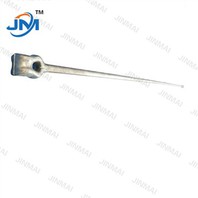
When it comes to industrial applications, the selection of appropriate hardware is crucial, especially in high - temperature environments. As a supplier of forged eye bolts, I often encounter questions from customers regarding the suitability of our products in such demanding conditions. In this blog, I will delve into the factors that determine whether forged eye bolts can be used in high - temperature environments.
Understanding Forged Eye Bolts
Forged eye bolts are mechanical fasteners with a loop or "eye" at one end and a threaded shank at the other. They are commonly used for lifting, pulling, and securing loads. The forging process involves shaping metal under high pressure, which results in a stronger and more durable product compared to cast or machined eye bolts. This enhanced strength makes them a popular choice in various industries, including construction, manufacturing, and transportation.
The Impact of High Temperatures on Forged Eye Bolts
High - temperature environments can have several effects on forged eye bolts. One of the primary concerns is the loss of strength. As the temperature rises, the metal in the eye bolt begins to soften. This softening reduces the yield strength and ultimate tensile strength of the material, making it more prone to deformation and failure under load.
For example, steel, a common material for forged eye bolts, experiences a significant decrease in strength at temperatures above 400°C (752°F). At around 600°C (1112°F), the yield strength of steel can drop to less than half of its room - temperature value. This means that an eye bolt that can safely support a certain load at room temperature may fail at a much lower load in a high - temperature environment.
Another issue is thermal expansion. Metals expand when heated, and this expansion can cause problems in applications where the eye bolt is part of a fixed or constrained system. If the expansion is not accounted for, it can lead to increased stress on the bolt, which may result in cracking or loosening.
Factors Affecting the Use of Forged Eye Bolts in High - Temperature Environments
Material Selection
The choice of material plays a vital role in determining the suitability of forged eye bolts for high - temperature applications. Some materials are more heat - resistant than others. For instance, stainless steel grades such as 316 and 304 have better heat resistance compared to regular carbon steel. These stainless steels can maintain their strength at higher temperatures and are less likely to oxidize or corrode in hot and humid environments.

In addition, special high - temperature alloys like Inconel and Hastelloy are designed to withstand extreme heat. These alloys can retain their mechanical properties at temperatures well above 1000°C (1832°F) and are often used in aerospace, power generation, and chemical processing industries. However, they are also more expensive than traditional steel materials.
Surface Treatment
Surface treatments can also enhance the performance of forged eye bolts in high - temperature environments. One common treatment is hot - dip galvanizing. This process involves coating the eye bolt with a layer of zinc, which provides corrosion protection. While hot - dip galvanizing is effective at normal temperatures, the zinc coating can start to melt at around 420°C (788°F). Therefore, it may not be suitable for extremely high - temperature applications.
Another option is to use ceramic coatings or high - temperature paints. These coatings can provide a barrier against heat and oxidation, helping to maintain the integrity of the eye bolt. They can also reduce the rate of heat transfer to the metal, which can slow down the softening process.
Design Considerations
The design of the forged eye bolt can impact its performance in high - temperature environments. For example, a larger - diameter eye bolt may be able to withstand higher loads at elevated temperatures compared to a smaller one. This is because the larger cross - sectional area provides more material to resist deformation.
Additionally, the shape of the eye and the thread design can affect the stress distribution within the bolt. A well - designed eye bolt will distribute stress evenly, reducing the risk of localized failure. It is also important to consider the fit and tolerance of the eye bolt in its application. A loose fit may allow for thermal expansion without causing excessive stress, while a tight fit could lead to binding and premature failure.
Applications of Forged Eye Bolts in High - Temperature Environments
Despite the challenges, there are situations where forged eye bolts can be used in high - temperature environments. In the power generation industry, for example, eye bolts are used in boiler systems and turbine installations. These components often operate at high temperatures, but with the right material selection and design, forged eye bolts can provide reliable support.
In the automotive industry, eye bolts are used in exhaust systems and engine components. These areas can reach high temperatures, and eye bolts made from heat - resistant materials can ensure the proper functioning of these parts.
Case Studies
Let's take a look at a real - world example. A manufacturing plant was using forged eye bolts made from carbon steel in a high - temperature drying oven. The oven operated at around 350°C (662°F). Over time, the eye bolts started to show signs of deformation, and some even failed under load. After consulting with our team, the plant switched to eye bolts made from stainless steel 316. These new eye bolts were able to withstand the high temperature without significant loss of strength, and the problem of deformation and failure was resolved.

Conclusion
In conclusion, whether forged eye bolts can be used in high - temperature environments depends on several factors, including material selection, surface treatment, and design. While high temperatures pose challenges such as loss of strength and thermal expansion, with the right approach, forged eye bolts can be a reliable solution.
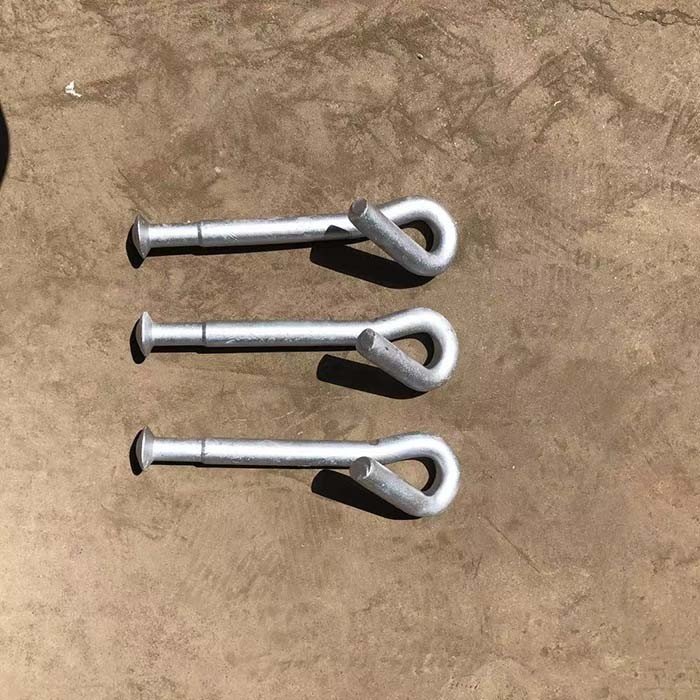
As a supplier of forged eye bolts, we offer a wide range of products to meet different requirements. Our Eye Bolt Eye Bolt Hook is a popular choice for general lifting applications, and our Cross Arm Connector is suitable for structural connections. For more specialized needs, our Pig Tail Bolts provide unique solutions.
If you are considering using forged eye bolts in a high - temperature environment, we encourage you to contact us for more information. Our team of experts can help you select the right product for your specific application and provide guidance on installation and maintenance. We are committed to providing high - quality products and excellent customer service. Let's work together to find the best solution for your industrial needs.
References
- ASM Handbook, Volume 2: Properties and Selection: Nonferrous Alloys and Special - Purpose Materials. ASM International.
- Machinery's Handbook, 31st Edition. Industrial Press.
- Standards for Forged Fasteners, ASTM International.