Pin type insulators have long been a staple in the electrical power industry, offering a cost - effective and reliable solution for insulating conductors from supporting structures. As a supplier of pin type insulators, I often receive inquiries about their suitability for rural power systems. In this blog, we will explore whether pin type insulators can indeed be used in rural power systems, taking into account various factors such as cost, performance, and environmental conditions.
Cost - Effectiveness
One of the primary advantages of pin type insulators in rural power systems is their cost - effectiveness. Rural areas typically have a lower population density and a more spread - out infrastructure compared to urban areas. This means that the cost of installing and maintaining the power grid is a significant concern. Pin type insulators are relatively inexpensive to manufacture and install. They require less complex installation procedures compared to some other types of insulators, which can save on labor costs.
For rural power systems with limited budgets, the affordability of pin type insulators makes them an attractive option. A lower upfront cost allows for more extensive grid expansion in rural areas, bringing electricity to more households and businesses. Moreover, the long - term maintenance costs of pin type insulators are also relatively low. They are simple in design, which means that repairs and replacements can be carried out with minimal technical expertise and at a lower cost.


Performance in Rural Conditions
Rural power systems often operate under different conditions compared to urban ones. The voltage levels in rural areas are generally lower, and the load requirements are less demanding. Pin type insulators are well - suited for these lower - voltage applications. They can effectively insulate conductors at distribution voltages, which are commonly used in rural power systems.
In terms of mechanical performance, pin type insulators are designed to withstand various environmental stresses. They are typically made of materials such as porcelain or glass, which have good mechanical strength. In rural areas, where there may be less human interference and fewer high - rise buildings, the risk of mechanical damage to the insulators is relatively low. However, it is important to note that in areas prone to strong winds, storms, or seismic activity, additional measures may need to be taken to ensure the stability of the pin type insulators.
Environmental Adaptability
Rural environments can present a range of environmental challenges. For example, rural areas may have higher levels of pollution in the form of dust, agricultural chemicals, or industrial emissions from nearby farms or small - scale industries. Pin type insulators made of porcelain or glass have good resistance to chemical corrosion and can withstand the effects of these pollutants.
In addition, rural areas may experience extreme temperature variations. Pin type insulators are designed to operate within a wide temperature range. Porcelain insulators, for instance, can maintain their electrical and mechanical properties over a broad temperature spectrum. This makes them suitable for use in rural areas where the temperature can fluctuate significantly between seasons.
Compatibility with Rural Infrastructure
Rural power systems often rely on a network of poles and towers to support the conductors. Pin type insulators are easy to install on these structures. They can be directly mounted on the cross - arms of poles using a simple pin - mounting mechanism. This compatibility with existing rural infrastructure makes them a practical choice for rural power system upgrades and expansions.
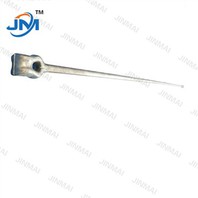
Furthermore, when it comes to the integration of other hardware components, pin type insulators work well in conjunction with other common rural power system hardware. For example, they can be used in combination with Galvanized Pole Hook, which is used to support the conductors on the poles. The Hot Dip Galvanized Strand Ground Clamps can also be used to ensure proper grounding of the system, enhancing the safety and reliability of the rural power grid. And the Stay Rod Stay Plate can be used to provide additional support to the poles, further improving the overall stability of the power system.
Limitations and Considerations
While pin type insulators offer many advantages for rural power systems, there are also some limitations that need to be considered. One of the main limitations is their relatively low flashover voltage compared to some other types of insulators. In areas with high levels of pollution or in the presence of wet conditions, the risk of flashover may increase. To mitigate this risk, regular cleaning and maintenance of the insulators are required.
Another consideration is the limited mechanical flexibility of pin type insulators. In areas where there may be significant movement of the conductors due to thermal expansion or wind - induced vibrations, the pin type insulators may experience additional stress. This can potentially lead to cracking or failure of the insulators over time.
Conclusion
In conclusion, pin type insulators can be effectively used in rural power systems. Their cost - effectiveness, performance in rural conditions, environmental adaptability, and compatibility with rural infrastructure make them a viable option for rural power distribution. However, it is important to carefully assess the specific requirements and conditions of each rural area before making a decision.
As a supplier of pin type insulators, I am committed to providing high - quality products that meet the needs of rural power systems. If you are involved in the planning, installation, or maintenance of a rural power system and are considering using pin type insulators, I encourage you to contact us for more information. We can offer expert advice on product selection, installation, and maintenance to ensure the reliable operation of your rural power grid. Whether you need assistance with choosing the right type of pin type insulators or integrating them with other hardware components such as Galvanized Pole Hook, Hot Dip Galvanized Strand Ground Clamps, or Stay Rod Stay Plate, we are here to help.
References
- "Electrical Insulators: Theory, Design, and Applications" by M. S. Sachdev.
- "Power System Engineering" by C. L. Wadhwa.
- Industry reports on rural power system development and insulator technology.