Hey there! As a supplier of metal stamping parts, I've been getting a lot of questions lately about the requirements for the creep resistance of these parts in long - term stress applications. So, I thought I'd write this blog to share some insights on this topic.
First off, let's talk about what creep is. Creep is the gradual deformation of a material over time under a constant load or stress. In long - term stress applications, this can be a real problem for metal stamping parts. For example, if a part is used in a machine that runs continuously, the constant stress can cause it to deform slowly, which may lead to a decrease in performance or even failure of the entire system.
Now, let's dig into the requirements for creep resistance. One of the key factors is the material selection. Different metals have different creep properties. For instance, stainless steel is known for its relatively good creep resistance, especially at high temperatures. It can maintain its shape and strength under long - term stress better than some other metals. On the other hand, aluminum alloys may have lower creep resistance, but they are lighter and more cost - effective in some cases. So, when choosing a material for metal stamping parts in long - term stress applications, we need to balance factors like creep resistance, weight, and cost.
Another important aspect is the design of the part. A well - designed part can distribute stress more evenly, reducing the likelihood of creep. For example, adding ribs or fillets to the part can help to strengthen it and prevent stress concentrations. Also, the thickness of the part matters. A thicker part is generally more resistant to creep, but it may also add unnecessary weight and cost. So, we need to find the optimal thickness based on the specific application requirements.
Heat treatment is also a crucial step in improving the creep resistance of metal stamping parts. By subjecting the parts to specific heat treatment processes, we can change their microstructure, which in turn enhances their mechanical properties. For example, annealing can relieve internal stresses in the part, while quenching and tempering can increase its hardness and strength. These heat treatment processes can significantly improve the creep resistance of the parts.
Surface treatment is another factor that can affect creep resistance. A good surface treatment can protect the part from corrosion, which can accelerate creep. For example, coating the part with a layer of zinc or other anti - corrosion materials can prevent rust and oxidation, thus maintaining the integrity of the part under long - term stress.
Let's take a look at some of our products and how they meet the creep resistance requirements. We have a High Temperature Resistant Insulator Bracket that is designed for applications where high temperatures and long - term stress are involved. This bracket is made of a special stainless steel alloy that has excellent creep resistance at elevated temperatures. The design of the bracket is optimized to distribute stress evenly, and it has undergone a series of heat and surface treatments to ensure its performance.
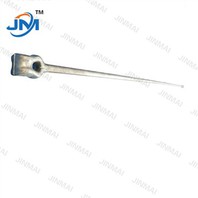
Our Hot Dip Galvanized Extension Rod is another product that meets the creep resistance requirements in long - term stress applications. The hot - dip galvanizing process provides a thick and durable anti - corrosion layer, which protects the rod from environmental factors that could cause creep. The material used for the rod is carefully selected to have good mechanical properties and creep resistance.


The Electrical Crossarm is also a great example. It is used in electrical transmission systems where it is subjected to long - term stress from the weight of the cables and environmental forces. The crossarm is designed with a special shape to distribute stress evenly, and it is made of a high - strength metal with good creep resistance.
In addition to the above factors, the manufacturing process also plays a role in creep resistance. Precision stamping techniques can ensure that the parts have consistent dimensions and quality, which is essential for maintaining their performance under long - term stress. Any defects or inconsistencies in the manufacturing process can lead to stress concentrations and reduce the creep resistance of the parts.
When it comes to quality control, we have a strict system in place. We test each batch of parts for their mechanical properties, including creep resistance. We use advanced testing equipment to simulate long - term stress conditions and measure the deformation of the parts over time. Only the parts that meet our strict quality standards are shipped to our customers.
As a metal stamping parts supplier, we understand the importance of creep resistance in long - term stress applications. We are committed to providing our customers with high - quality parts that meet their specific requirements. Whether you need parts for automotive, aerospace, electrical, or other industries, we can offer customized solutions to ensure the best performance of your products.
If you're interested in our metal stamping parts and want to discuss your specific needs for long - term stress applications, don't hesitate to reach out. We're here to help you find the perfect solution for your project.
References
- "Metals Handbook: Properties and Selection: Irons, Steels, and High - Performance Alloys"
- "Mechanical Behavior of Materials"
- Industry research reports on metal stamping and material properties