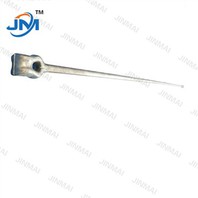
When it comes to setting up an ADSS (All-Dielectric Self-Supporting) cable network, one of the most critical decisions is choosing the right fittings for different cable diameters. As a seasoned ADSS Cable Fittings supplier, I understand the intricacies involved in this process and am here to guide you through it.
Understanding ADSS Cable Diameters
ADSS cables come in a variety of diameters, typically ranging from a few millimeters to over 20 millimeters. The diameter of the cable is determined by several factors, including the number of fiber strands, the type of insulation, and the overall design of the cable. Different applications may require different cable diameters. For example, in a small - scale local network, a thinner cable with a smaller diameter may be sufficient. On the other hand, in a long - distance, high - capacity transmission network, a thicker cable with a larger diameter is often necessary to accommodate more fiber strands and ensure better signal transmission.
Importance of Correct Fitting Selection
Selecting the appropriate ADSS cable fittings for the cable diameter is of utmost importance. Incorrect fittings can lead to a range of problems. Firstly, if the fitting is too large for the cable, it may not provide a secure connection. This can result in the cable moving within the fitting, which can cause damage to the cable over time due to friction and vibration. Secondly, if the fitting is too small, it may cause excessive stress on the cable, leading to cable breakage or signal loss. Additionally, improper fittings can also affect the overall safety and reliability of the cable network, increasing the risk of outages and maintenance issues.
Types of ADSS Cable Fittings and Their Compatibility
Suspension Clamps
Suspension clamps are used to support the ADSS cable along its route. They are available in different sizes to accommodate various cable diameters. When choosing a suspension clamp, it is essential to match the inner diameter of the clamp to the outer diameter of the cable. Most suspension clamps have a specified range of cable diameters they can handle. For example, a suspension clamp may be suitable for cables with diameters ranging from 10mm to 15mm. As an ADSS Cable Fittings supplier, we offer a wide range of suspension clamps with different size specifications to meet the needs of various cable diameters. ADSS Cable Fittings


Dead - End Fittings
Dead - end fittings are used to terminate the ADSS cable at the end of a span or at a pole. Similar to suspension clamps, dead - end fittings also need to be carefully selected according to the cable diameter. A proper dead - end fitting will ensure a strong and stable termination, preventing the cable from pulling out under tension. There are different types of dead - end fittings, such as pre - formed dead - end grips and compression dead - end fittings. Each type has its own requirements for cable diameter compatibility.
Spacer Grips
Spacer grips are used to keep multiple ADSS cables separated at a certain distance. They are especially important in a multi - cable installation. The size of the spacer grip should be selected based on the diameter of the cables it will hold. A spacer grip that is too large may not keep the cables properly separated, while one that is too small may damage the cables.
Measuring Cable Diameter
Before selecting ADSS cable fittings, it is crucial to accurately measure the cable diameter. The most common method is to use a caliper. Place the caliper jaws around the cable at several points along its length and take multiple measurements. This is because the cable diameter may vary slightly along its length due to manufacturing tolerances. Calculate the average of these measurements to get a more accurate value of the cable diameter. Make sure to measure the outer diameter of the cable, as this is the dimension that the fittings will interact with.
Considering Environmental Factors
In addition to the cable diameter, environmental factors also play a role in fitting selection. For example, in areas with high wind speeds, stronger and more secure fittings may be required. The fittings should be able to withstand the additional forces exerted by the wind on the cable. In regions with extreme temperatures, the materials of the fittings need to be able to expand and contract without losing their grip on the cable. For instance, some fittings are made of materials that are resistant to corrosion, which is important in coastal or industrial areas where the cable may be exposed to saltwater or chemicals.
Quality Assurance
As an ADSS Cable Fittings supplier, we understand the importance of quality. All our fittings are manufactured using high - quality materials and strict quality control processes. We ensure that each fitting meets the industry standards for strength, durability, and compatibility with different cable diameters. Our products are tested to withstand various environmental conditions and mechanical stresses.
Cost - Effectiveness
While quality is crucial, cost - effectiveness is also an important consideration. When choosing fittings, it is important to find a balance between quality and cost. As a supplier, we offer a range of fittings at different price points to meet the budget requirements of our customers. We believe that by providing high - quality fittings at competitive prices, we can help our customers build reliable and cost - effective ADSS cable networks.
Installation and Maintenance
Proper installation of the fittings is just as important as the selection process. Incorrect installation can negate the benefits of choosing the right fittings. It is recommended that installation be carried out by trained professionals who are familiar with ADSS cable systems. After installation, regular maintenance is necessary to ensure the long - term performance of the fittings. This includes inspecting the fittings for signs of wear, corrosion, or damage and replacing any worn - out parts in a timely manner.
Conclusion
Choosing the right ADSS cable fittings for different cable diameters is a complex but essential task. It requires a thorough understanding of the cable characteristics, the types of fittings available, and the environmental factors involved. As an ADSS Cable Fittings supplier, we are committed to providing our customers with high - quality, compatible fittings that meet their specific needs. If you are in the process of setting up an ADSS cable network or need to replace existing fittings, we invite you to contact us for more information and to discuss your requirements. We can help you select the most suitable fittings for your cable diameters and ensure the success of your project.
References
- "ADSS Cable Installation and Maintenance Guide", Industry Standard Publication
- "Cable Fitting Design and Selection Principles", Technical Manual
Remember, a well - chosen set of ADSS cable fittings is the key to a reliable and efficient cable network. Let's work together to build a better cable infrastructure.