Hey there! I'm an industry insider working with cable components. In the world of cable components, understanding how to measure their electrical properties is super crucial. Whether you're an engineer, a technician, or just someone interested in this field, getting a grasp of these measurement methods can make a huge difference in ensuring the quality and performance of cable components.
First off, let's talk about why measuring electrical properties matters. Cable components are used in a wide range of applications, from power transmission to telecommunications. If the electrical properties aren't up to par, it can lead to all sorts of problems, like signal loss, power inefficiencies, and even safety hazards. So, being able to accurately measure these properties is key to delivering reliable cable systems.
One of the most fundamental electrical properties we need to measure is resistance. Resistance is basically a measure of how much a material opposes the flow of electric current. To measure the resistance of cable components, we commonly use an ohmmeter. It's a pretty straightforward process. You just connect the ohmmeter to the two ends of the cable component, and it gives you a reading of the resistance.
But here's the thing, the resistance can vary depending on factors like temperature and the length of the cable. For example, as the temperature goes up, the resistance of most materials also increases. So, when taking measurements, it's important to note the temperature and make any necessary adjustments.
Another important property is capacitance. Capacitance is the ability of a component to store electrical energy in an electric field. Measuring capacitance is a bit more complex than measuring resistance. We usually use a capacitance meter for this.
When measuring the capacitance of cable components, we need to consider the geometry of the cable. The distance between the conductors, the dielectric material used, and the surface area of the conductors all affect the capacitance. For instance, if the conductors are closer together, the capacitance will be higher.
Now, let's move on to inductance. Inductance is the property of a conductor by which a change in current flowing through it induces an electromotive force in both the conductor itself and in any nearby conductors. To measure inductance, we use an inductance meter.
Inductance is also influenced by the physical characteristics of the cable component. Things like the number of turns in a coil (if it's a coiled cable), the cross - sectional area of the coil, and the permeability of the core material all play a role.
In addition to these basic electrical properties, we also need to measure things like impedance. Impedance is a combination of resistance, capacitance, and inductance. It's a complex quantity that describes how a cable component behaves in an alternating current (AC) circuit. Measuring impedance often requires specialized equipment, such as a network analyzer.


A network analyzer can send a range of frequencies through the cable component and measure the reflected and transmitted signals. This allows us to calculate the impedance at different frequencies. Understanding the impedance of cable components is crucial, especially in high - frequency applications like radio and telecommunications.
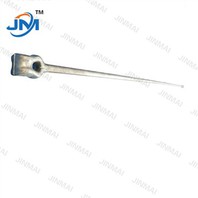
Now, let me introduce you to some of the cable components we offer at our company. We have some really cool products like Pigtail Hook Bolts. These are great for making secure connections in various cable systems. They're designed to be durable and reliable, and they can handle different electrical loads.
Another product is the Pig tail ball head. This component is often used in applications where flexibility and a good connection are needed. It's made with high - quality materials to ensure long - term performance.
And then there's the Hardware Pole Line Hook. These hooks are essential for supporting cables on poles. They're strong and can withstand harsh environmental conditions.
When it comes to measuring the electrical properties of these components, we follow strict quality control procedures. We use the latest measurement equipment to ensure accurate and reliable results. For example, before we ship out a batch of Pigtail Hook Bolts, we measure their resistance, capacitance, and impedance to make sure they meet the required standards.
In the process of measuring these electrical properties, we also keep detailed records. This helps us track the performance of our products over time and make any necessary improvements. We believe that by providing high - quality cable components with well - measured electrical properties, we can help our customers build more reliable and efficient cable systems.
If you're in the market for cable components, we'd love to have a chat with you. Whether you need help understanding the electrical properties of our products or you're ready to place an order, we're here to assist. Measuring the electrical properties of cable components is not just a technical task for us; it's a commitment to quality and customer satisfaction. So, don't hesitate to reach out and start a conversation about your cable component needs.
References
- Electrical Engineering Handbook, Third Edition
- Principles of Electric Circuits: Conventional Current Version, Tenth Edition