Metal stamping is a crucial manufacturing process used to shape metal sheets into various parts with high precision and efficiency. As a leading supplier of metal stamping parts, I have extensive experience in different types of metal stamping processes. In this blog, I will explore the various metal stamping processes commonly used in the industry and their applications.
1. Progressive Stamping
Progressive stamping is one of the most widely used metal stamping processes. It involves a series of stamping operations performed in a single die as the metal strip moves through the press. Each station in the die performs a specific operation, such as punching, bending, or forming. The final part is produced at the end of the progressive die.
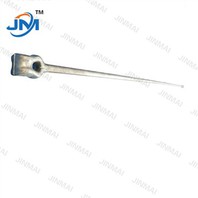
The advantages of progressive stamping include high production rates, consistent quality, and the ability to produce complex parts with tight tolerances. It is suitable for large - volume production of small to medium - sized parts. For example, many electrical connectors and automotive components are produced using progressive stamping. Our company has successfully produced MESSENGER GROUND CLAMP using progressive stamping. This process ensures that each clamp has the same dimensions and performance, meeting the high - quality requirements of the market.
2. Transfer Stamping
Transfer stamping is similar to progressive stamping in that it also involves multiple operations to form a part. However, in transfer stamping, the metal blanks are transferred from one station to another by a transfer system, rather than being part of a continuous strip as in progressive stamping.
Transfer stamping is more flexible than progressive stamping as it can handle larger and more complex parts. It is suitable for medium - to high - volume production of parts that require more complex forming operations. The transfer system allows for greater flexibility in the design of the stamping operations, enabling the production of parts with features that may be difficult to achieve in a progressive die. For instance, Angle Thimble Eyelet can be efficiently produced using transfer stamping. This process can ensure the accurate formation of the angle and the eyelet, providing high - quality parts for various industries.
3. Single - Operation Stamping
Single - operation stamping is the simplest form of metal stamping. It involves performing a single stamping operation, such as punching, blanking, or bending, on a metal sheet or blank. This process is often used for low - volume production or for parts that require only a single operation.
Single - operation stamping is cost - effective for small - scale production because it does not require the complex and expensive tooling associated with progressive or transfer stamping. It is also useful for prototyping, allowing for quick and easy production of sample parts. For example, if a customer needs a small number of D - type Iron Bracket for a special project, single - operation stamping can be a suitable choice. This process can quickly produce the required brackets with relatively low cost.
4. Deep Drawing
Deep drawing is a metal stamping process used to form a flat metal sheet into a three - dimensional part with a depth greater than its diameter. The process involves using a punch to force the metal sheet into a die cavity, causing the metal to flow and stretch.
Deep drawing is commonly used to produce cylindrical or box - shaped parts, such as cans, cups, and automotive body panels. It requires careful control of the process parameters, such as the drawing force, blank holder pressure, and lubrication, to prevent defects such as wrinkling, cracking, or thinning of the metal. Our company has advanced deep - drawing technology, which can produce high - quality deep - drawn parts with smooth surfaces and accurate dimensions.
5. Coining
Coining is a precision stamping process that involves applying high pressure to a metal blank to produce a part with precise dimensions and a smooth surface finish. The process is similar to forging in that it compresses the metal to shape it, but it is performed at room temperature.
Coining is often used for parts that require high precision and a fine surface finish, such as coins, medals, and some electronic components. The high pressure applied during coining can also improve the mechanical properties of the metal, such as hardness and strength. Our coining process can ensure that the parts we produce have excellent dimensional accuracy and surface quality, meeting the strict requirements of various industries.
6. Embossing
Embossing is a stamping process used to create raised or recessed designs on a metal surface. It involves using a die with a pattern that is pressed into the metal sheet, creating a three - dimensional effect.
Embossing can be used for decorative purposes, such as adding logos or patterns to metal parts, or for functional purposes, such as improving the grip or appearance of a part. It is commonly used in the jewelry, automotive, and consumer goods industries. Our embossing technology can produce clear and detailed patterns on metal parts, enhancing their aesthetic and functional value.
Material Considerations in Metal Stamping
The choice of metal material is also crucial in the metal stamping process. Different metals have different properties, such as ductility, strength, and hardness, which can affect the stamping process and the quality of the final part.
Common metals used in metal stamping include steel, aluminum, copper, and brass. Steel is strong and durable, making it suitable for parts that require high strength, such as automotive components and structural parts. Aluminum is lightweight and corrosion - resistant, making it a popular choice for aerospace and automotive applications. Copper and brass are good conductors of electricity and heat, and they are often used in electrical and electronic components.
Quality Control in Metal Stamping
Quality control is an essential part of the metal stamping process. At our company, we implement a comprehensive quality control system to ensure that all metal stamping parts meet the highest standards.

We use advanced inspection equipment, such as coordinate measuring machines (CMMs) and optical inspection systems, to measure the dimensions and surface quality of the parts. We also perform mechanical testing, such as tensile testing and hardness testing, to ensure that the parts have the required mechanical properties. In addition, we have a strict quality management system that includes in - process inspection and final inspection to detect and correct any defects before the parts are shipped to the customers.
Conclusion
As a supplier of metal stamping parts, we have a deep understanding of the different types of metal stamping processes and their applications. Whether you need high - volume production of small parts using progressive stamping, or low - volume production of custom - designed parts using single - operation stamping, we have the expertise and capabilities to meet your needs.
If you are interested in our metal stamping parts or have any specific requirements, please feel free to contact us for procurement and negotiation. We are committed to providing you with high - quality products and excellent service.
References
- Dieter, G. E. (1988). Mechanical Metallurgy. McGraw - Hill.
- Kalpakjian, S., & Schmid, S. R. (2008). Manufacturing Engineering and Technology. Pearson Prentice Hall.
- Groover, M. P. (2010). Fundamentals of Modern Manufacturing: Materials, Processes, and Systems. Wiley.