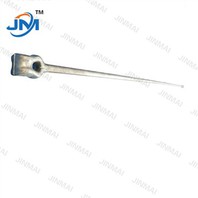
As a supplier of NXJG Wire Clamps, I am frequently asked about the bending resistance of these essential electrical components. Understanding the bending resistance of NXJG Wire Clamps is crucial for ensuring their proper application and performance in various electrical systems. In this blog post, I will delve into the concept of bending resistance, factors that influence it, and why it matters in the context of NXJG Wire Clamps.
What is Bending Resistance?
Bending resistance refers to the ability of a material or component to withstand bending forces without undergoing permanent deformation or failure. In the case of NXJG Wire Clamps, bending resistance is a critical property as they are often subjected to various mechanical stresses during installation, operation, and maintenance. These stresses can include bending, torsion, and tension, which can potentially compromise the integrity of the wire clamp if it does not have sufficient bending resistance.
Factors Affecting the Bending Resistance of NXJG Wire Clamps
Several factors influence the bending resistance of NXJG Wire Clamps. These factors can be broadly categorized into material properties, design features, and manufacturing processes.
Material Properties
The choice of material plays a significant role in determining the bending resistance of NXJG Wire Clamps. Typically, these wire clamps are made from high - strength metals such as steel or aluminum alloys. Steel wire clamps, for example, offer excellent strength and durability, which contribute to their high bending resistance. The carbon content and heat treatment of the steel can also affect its mechanical properties, including bending resistance. Aluminum alloy wire clamps, on the other hand, are lightweight and corrosion - resistant, but their bending resistance may be different from that of steel wire clamps due to the inherent properties of aluminum.
Design Features
The design of NXJG Wire Clamps also impacts their bending resistance. Features such as the shape, thickness, and cross - sectional area of the wire clamp can influence how it responds to bending forces. For instance, a wire clamp with a thicker cross - section is generally more resistant to bending than one with a thinner cross - section. Additionally, the design of the clamping mechanism can affect the distribution of stress within the wire clamp, which in turn affects its bending resistance. A well - designed clamping mechanism can ensure that the bending forces are evenly distributed, reducing the risk of localized stress concentration and failure.
Manufacturing Processes
The manufacturing processes used to produce NXJG Wire Clamps can have a significant impact on their bending resistance. Precision manufacturing techniques, such as forging and machining, can ensure that the wire clamps have consistent dimensions and mechanical properties. Forging, in particular, can improve the grain structure of the metal, enhancing its strength and bending resistance. Heat treatment processes, such as quenching and tempering, can also be used to optimize the mechanical properties of the wire clamps, including their bending resistance.
Importance of Bending Resistance in NXJG Wire Clamps
The bending resistance of NXJG Wire Clamps is of utmost importance in electrical systems for several reasons.
Ensuring Electrical Continuity
In an electrical system, NXJG Wire Clamps are used to secure wires and cables, ensuring reliable electrical continuity. If a wire clamp fails due to insufficient bending resistance, it can lead to loose connections, which can cause electrical arcing, overheating, and even electrical fires. By having high bending resistance, wire clamps can maintain their clamping force over time, ensuring that the electrical connections remain secure and reliable.
Withstanding Environmental Stresses
Electrical systems are often exposed to various environmental stresses, such as wind, vibration, and temperature fluctuations. These stresses can exert bending forces on the wire clamps. A wire clamp with good bending resistance can withstand these environmental stresses without deforming or failing, ensuring the long - term performance of the electrical system.
Compatibility with Other Components
In many electrical installations, NXJG Wire Clamps are used in conjunction with other electrical components such as Thimble Eye Rods, Stainless Steel Strip, and Square Steel Cross Arm. The bending resistance of the wire clamps must be compatible with the mechanical properties of these other components to ensure proper installation and operation. For example, if the wire clamp cannot withstand the bending forces exerted by a thimble eye rod during installation, it may fail, leading to a faulty connection.
Testing the Bending Resistance of NXJG Wire Clamps
To ensure the quality and performance of NXJG Wire Clamps, it is essential to test their bending resistance. Various testing methods can be used, including the three - point bending test and the four - point bending test.
In a three - point bending test, the wire clamp is supported at two points and a load is applied at the mid - point. The test measures the maximum load that the wire clamp can withstand before it starts to deform or fail. The four - point bending test, on the other hand, applies a load at two points between the supports, which can provide a more realistic simulation of the bending forces that the wire clamp may experience in actual use.


Conclusion
In conclusion, the bending resistance of NXJG Wire Clamps is a critical property that affects their performance and reliability in electrical systems. It is influenced by factors such as material properties, design features, and manufacturing processes. Ensuring high bending resistance is essential for maintaining electrical continuity, withstanding environmental stresses, and being compatible with other electrical components.
As a supplier of NXJG Wire Clamps, we are committed to providing high - quality products with excellent bending resistance. Our wire clamps are manufactured using advanced materials and precision manufacturing techniques to ensure consistent performance. If you are in the market for NXJG Wire Clamps or have any questions about their bending resistance, please feel free to contact us for more information and to discuss your specific requirements. We look forward to working with you to meet your electrical power fitting needs.
References
- "Mechanical Properties of Metals" - A textbook on the mechanical behavior of metals, which provides in - depth knowledge about factors affecting bending resistance.
- "Electrical Power Fitting Standards" - Industry standards that outline the requirements for the performance and testing of electrical power fittings, including NXJG Wire Clamps.