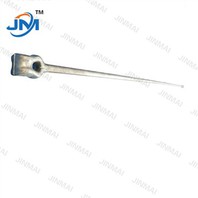
As a reputable supplier of Pin Type Insulators, I often encounter inquiries regarding the maximum current these insulators can withstand. This topic is crucial in the electrical industry as it directly impacts the safety and efficiency of power transmission and distribution systems. In this blog, I will delve into the factors that determine the maximum current capacity of pin type insulators and provide insights based on industry knowledge and experience.
Understanding Pin Type Insulators
Pin type insulators are one of the most common types of insulators used in overhead power lines. They are typically made of porcelain or composite materials and are designed to support and insulate the conductors from the supporting structures. The pin type insulator is mounted on a pin that is fixed to the cross - arm of the transmission or distribution tower.
The primary function of a pin type insulator is to prevent the flow of current from the conductor to the supporting structure. However, it is also important to understand that under certain conditions, a small amount of current can flow through the insulator, known as leakage current. This leakage current is usually very small and is mainly due to surface contamination, humidity, and other environmental factors.
Factors Affecting the Maximum Current Capacity
Several factors influence the maximum current that a pin type insulator can withstand. Let's explore these factors in detail:
1. Material Properties
The material of the insulator plays a significant role in determining its current - carrying capacity. Porcelain insulators have been used for many years due to their excellent electrical and mechanical properties. They have high dielectric strength, which means they can withstand high voltages without breaking down. However, porcelain is a brittle material and can be prone to cracking under mechanical stress.


Composite insulators, on the other hand, are made of materials such as silicone rubber or ethylene propylene diene monomer (EPDM). These materials offer better hydrophobicity, which reduces the leakage current caused by surface contamination. Composite insulators are also lighter and more flexible than porcelain insulators, making them easier to install and maintain.
2. Temperature
Temperature has a profound impact on the performance of pin type insulators. As the temperature increases, the resistance of the insulator material decreases, which can lead to an increase in the leakage current. High temperatures can also cause thermal expansion of the insulator, which may result in mechanical stress and potential damage.
Most insulators are designed to operate within a specific temperature range. For example, porcelain insulators can typically operate at temperatures between - 40°C and + 40°C, while composite insulators can often withstand a wider temperature range, from - 50°C to + 50°C.
3. Surface Contamination
Surface contamination is a major factor that can increase the leakage current of a pin type insulator. Contaminants such as dust, salt, and industrial pollutants can accumulate on the surface of the insulator, forming a conductive layer. This conductive layer can reduce the surface resistance of the insulator and allow more current to flow.
To mitigate the effects of surface contamination, insulators are often designed with a hydrophobic surface or are periodically cleaned. Some insulators also have a special coating that repels water and prevents the formation of a continuous conductive layer.
4. Voltage Level
The voltage level of the power line also affects the maximum current that the insulator can withstand. Higher voltage levels require insulators with a higher dielectric strength to prevent electrical breakdown. As the voltage increases, the electric field around the insulator becomes stronger, which can increase the risk of corona discharge and other electrical phenomena.
Pin type insulators are available in different voltage ratings, typically ranging from a few kilovolts to several hundred kilovolts. The higher the voltage rating, the more robust the insulator needs to be to handle the electrical stress.
Calculating the Maximum Current
Determining the exact maximum current that a pin type insulator can withstand is a complex process that requires considering all the factors mentioned above. In general, the maximum current is limited by the insulator's ability to dissipate the heat generated by the leakage current. If the heat cannot be dissipated effectively, the temperature of the insulator will rise, which can lead to thermal breakdown.
Manufacturers usually provide specifications for their insulators, including the maximum continuous operating current. These specifications are based on extensive testing and research to ensure the safe and reliable operation of the insulators in different environments.
Importance of Choosing the Right Insulator
Selecting the appropriate pin type insulator for a specific application is crucial for the safety and efficiency of the power system. Using an insulator with a lower current - carrying capacity than required can lead to overheating, electrical breakdown, and even power outages. On the other hand, using an insulator with a much higher current - carrying capacity than necessary can be costly and may not be the most efficient solution.
When choosing a pin type insulator, it is important to consider the voltage level, environmental conditions, and expected current of the power line. It is also advisable to consult with a professional electrical engineer or an experienced insulator supplier to ensure that the selected insulator meets all the requirements.
Related Products
In addition to pin type insulators, our company also offers a wide range of related products such as Stay Rod Stay Plate, Hot Dip Galvanized Strand Ground Clamps, and High Voltage Line Insulator. These products are designed to work together to provide a comprehensive solution for power transmission and distribution systems.
Conclusion
The maximum current that a pin type insulator can withstand is determined by a combination of factors, including material properties, temperature, surface contamination, and voltage level. As a supplier of pin type insulators, we understand the importance of providing high - quality products that meet the specific needs of our customers.
If you are in the process of selecting insulators for your power system or have any questions about the maximum current capacity of our products, we encourage you to contact us for a detailed consultation. Our team of experts is ready to assist you in making the right choice and ensuring the safe and efficient operation of your power lines.
References
- Electrical Insulation Handbook, Second Edition, by John M. Schetzina
- Power System Engineering, by Nagrath and Kothari
- IEEE Standards for Insulators in Overhead Power Lines