What is the production efficiency of metal stamping parts?
As a provider of metal stamping parts, I've witnessed firsthand the critical role production efficiency plays in our industry. Metal stamping is a manufacturing process used to convert flat sheet metal into various shapes. This process is used to create a wide range of products, from simple brackets to complex automotive components. Understanding production efficiency in metal stamping is essential for businesses to remain competitive, meet customer demands, and optimize their operations.
Factors Affecting Production Efficiency
Equipment and Technology
The quality and capabilities of stamping equipment are fundamental to production efficiency. Modern stamping presses offer higher speeds, greater precision, and more advanced control systems. For instance, servo - driven presses can adjust the ram speed and motion profile according to the specific requirements of each stamping operation, reducing cycle times and improving part quality.

Automation also plays a significant role. Automated feeding systems can continuously supply sheet metal to the stamping press, eliminating the need for manual loading and unloading. This not only speeds up the production process but also reduces the risk of human error. Additionally, robotic arms can be used for part transfer, inspection, and stacking, further streamlining the production line.
Die Design and Maintenance
The design of stamping dies is crucial. Well - designed dies can produce parts with high accuracy and repeatability. A die that is optimized for a specific part geometry can reduce the number of strokes required to form the part, thereby increasing the production speed. For example, progressive dies are designed to perform multiple operations in a single pass, such as punching, bending, and blanking. This allows for the continuous production of complex parts with high efficiency.
Regular die maintenance is equally important. Worn - out or damaged dies can lead to poor part quality, increased scrap rates, and machine downtime. By implementing a proactive die maintenance schedule, we can ensure that the dies are always in good working condition, minimizing disruptions to the production process.
Material Selection and Handling
The choice of material has a direct impact on production efficiency. High - quality materials with consistent thickness and mechanical properties are easier to stamp and result in fewer defects. For example, using pre - coated or lubricated metals can reduce friction during the stamping process, improving tool life and part quality.
Efficient material handling is also essential. Proper storage and retrieval systems can ensure that the right materials are available at the right time. Minimizing the distance that materials need to be transported within the factory can save time and energy, improving overall production efficiency.
Measuring Production Efficiency
Throughput
Throughput is one of the most common metrics used to measure production efficiency in metal stamping. It refers to the number of parts produced per unit of time. A high throughput indicates that the production line is running smoothly and can meet customer demand in a timely manner. However, it's important to note that throughput alone does not necessarily reflect the quality of the parts produced.
Overall Equipment Effectiveness (OEE)
OEE is a comprehensive metric that takes into account three key factors: availability, performance, and quality. Availability measures the percentage of time that the equipment is available for production, taking into account downtime for maintenance, breakdowns, and changeovers. Performance measures how fast the equipment is running compared to its maximum speed. Quality measures the percentage of good parts produced.
By calculating OEE, we can identify areas for improvement in the production process. For example, if the OEE is low due to a high rate of machine breakdowns, we can focus on improving the maintenance program. If the performance factor is low, we can look into optimizing the stamping parameters or upgrading the equipment.
Strategies to Improve Production Efficiency
Lean Manufacturing Principles
Lean manufacturing focuses on eliminating waste in the production process. This includes waste in the form of overproduction, waiting time, transportation, processing, inventory, motion, and defects. By implementing lean principles, such as 5S (Sort, Set in order, Shine, Standardize, Sustain), we can organize the workplace more efficiently, reduce setup times, and improve overall productivity.
For example, by reducing the amount of inventory on the shop floor, we can free up space and reduce the time spent searching for materials. Implementing a just - in - time (JIT) inventory system can ensure that materials are delivered to the production line exactly when they are needed, minimizing waste and improving cash flow.
Continuous Improvement
Continuous improvement is an ongoing process of identifying and implementing small changes to improve the production process. This can involve collecting data on production performance, analyzing the data to identify trends and problems, and implementing solutions to address these issues.
For instance, we can use statistical process control (SPC) techniques to monitor the quality of the parts produced. By analyzing the data collected from SPC, we can detect early signs of process variation and take corrective actions before defects occur. This not only improves the quality of the parts but also reduces scrap rates and rework, increasing production efficiency.
Examples of Our High - Efficiency Products
We offer a wide range of metal stamping parts that are produced with high efficiency. For example, our Stainless Steel Drop Cable Clamps are designed with precision dies and manufactured using advanced stamping equipment. These clamps are used in the telecommunications industry to secure cables, and their production process is optimized for high throughput and low defect rates.
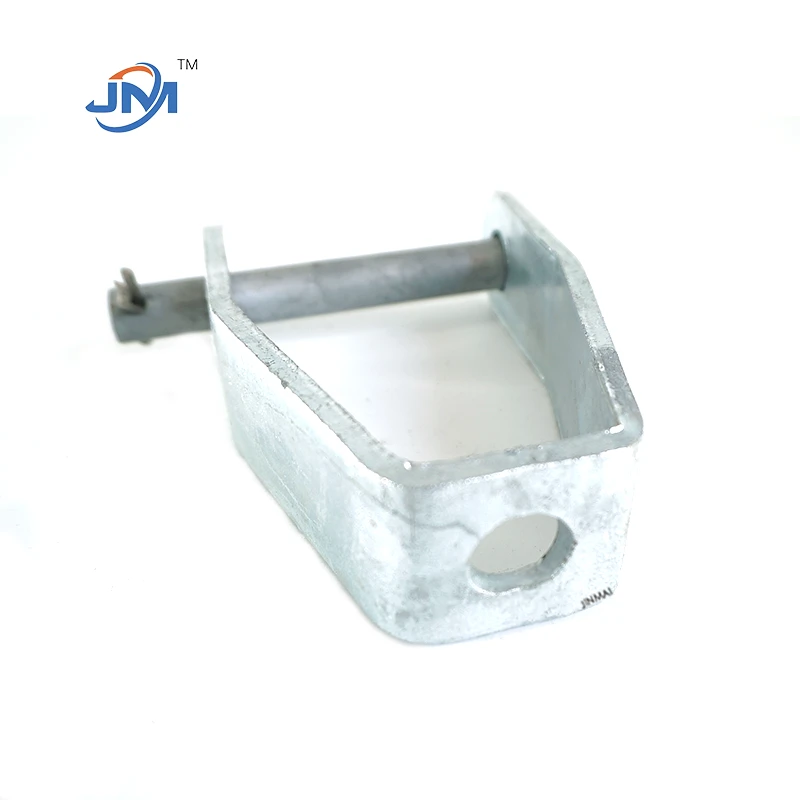
Another example is our Secondary Clevis Bracket Hot DIP Galvanized Pole Line Hardware. These brackets are essential components in power distribution systems. Our production process for these brackets involves using progressive dies and automated feeding systems, which allows us to produce a large number of high - quality brackets in a short period.
Our Hot Dip Galvanized Pole Band Mounting Clamp is also a product that demonstrates our commitment to production efficiency. The stamping process for these clamps is carefully designed to ensure accurate dimensions and excellent surface finish. We use state - of - the - art equipment and quality control measures to ensure that each clamp meets the highest standards.
Conclusion
Production efficiency in metal stamping is a complex but crucial aspect of our business. By focusing on factors such as equipment and technology, die design and maintenance, material selection and handling, and implementing strategies like lean manufacturing and continuous improvement, we can achieve high levels of efficiency. Our high - quality products, such as Stainless Steel Drop Cable Clamps, Secondary Clevis Bracket Hot DIP Galvanized Pole Line Hardware, and Hot Dip Galvanized Pole Band Mounting Clamp, are a testament to our commitment to efficient production.
If you are in the market for high - quality metal stamping parts, we invite you to contact us for a detailed discussion on your specific requirements. We are confident that our expertise and efficient production processes can meet your needs and provide you with the best value for your investment.
References
- "Metal Stamping Handbook" by Tooling and Manufacturing Association International
- "Lean Manufacturing: Tools and Techniques" by James P. Womack and Daniel T. Jones
- "Statistical Process Control for Quality Improvement" by Douglas C. Montgomery