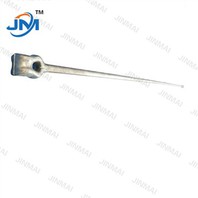
What materials are used to make an insulator spindle? Well, that's a question I get asked a lot as a supplier of insulator spindles. I'm here to break it down for you and give you the lowdown on the different materials that go into making these essential components.
Let's start with the basics. An insulator spindle is a key part in electrical systems. It's used to support and insulate electrical conductors, keeping things safe and preventing unwanted electrical currents from flowing where they shouldn't. The materials used in making an insulator spindle need to have some specific properties. They need to be good electrical insulators, of course, but they also need to be strong enough to hold up under the mechanical stress of the electrical equipment they're part of.
One of the most common materials used in insulator spindles is porcelain. Porcelain has been used in the electrical industry for ages, and for good reason. It's got excellent electrical insulation properties, which means it can stop electricity from leaking out or short - circuiting. It's also pretty tough and can withstand a fair amount of mechanical force. Porcelain insulator spindles are often used in high - voltage applications because they can handle the stress of the high electrical fields. They're also resistant to environmental factors like moisture and chemicals, which makes them a reliable choice for outdoor use. For example, in power transmission lines, porcelain insulator spindles are used to support the high - voltage conductors on poles. You can find some great Hardware Galvanized Pole Top Pin Spindle options that use porcelain in their construction.
Another popular material is glass. Glass insulator spindles have some unique advantages. They're very smooth on the surface, which helps prevent the buildup of dirt and other contaminants. This is important because a dirty insulator can lose its insulating properties. Glass is also a great electrical insulator, and it can be made in different shapes and sizes relatively easily. It's also quite transparent, which can be useful for visual inspections. In some cases, glass insulator spindles are used in low - voltage applications or in areas where a more aesthetically pleasing look is desired. For instance, in some older electrical installations, glass insulators give a bit of a vintage charm while still doing their job effectively.
Composite materials are also becoming more and more common in insulator spindle manufacturing. These are made by combining different materials to get the best of both worlds. For example, a composite insulator spindle might have a fiberglass core for strength and a silicone rubber outer layer for its excellent insulating and weather - resistant properties. Composite insulators are lightweight, which makes them easier to install and handle. They're also more flexible than porcelain or glass, which can be an advantage in some applications where there might be some movement or vibration. You can check out Voltage Insulator Spindle options that use composite materials for a modern and efficient solution.
Now, let's talk about metal components that are sometimes used in insulator spindles. Galvanized steel is often used for the hardware parts of the insulator spindle, like the pins or the brackets. Galvanization is a process where a layer of zinc is applied to the steel to protect it from rust and corrosion. This is crucial because the metal parts need to be strong and durable over a long period of time. The galvanized steel provides the necessary mechanical support for the insulator part of the spindle. For those looking for POLE TOP applications, the galvanized steel components play a vital role in holding everything together securely.
Ceramic materials are another option. Ceramics are similar to porcelain in many ways, but they can have different properties depending on how they're made. Some ceramics can have even higher resistance to heat and chemicals than porcelain. They can be used in specialized applications where extreme conditions are expected, like in industrial electrical systems or in areas with high levels of pollution.
When choosing the material for an insulator spindle, there are a few things to consider. The voltage level of the electrical system is a big factor. High - voltage systems need materials with better insulating properties and more mechanical strength. The environment where the insulator spindle will be used also matters. If it's going to be outdoors, it needs to be resistant to weather, UV rays, and pollutants. Cost is also an important consideration. Porcelain and glass can be more expensive than some composite materials, but they might be worth the investment in certain applications.
As a supplier of insulator spindles, I've seen firsthand how different materials perform in various situations. I'm always here to help customers choose the right insulator spindle for their needs. Whether you're working on a small - scale electrical project or a large - scale power transmission system, I can provide you with the best options based on the materials and their properties.
If you're in the market for insulator spindles, don't hesitate to reach out. We can have a chat about your specific requirements, and I can guide you through the different material choices. Whether you need a porcelain, glass, composite, or a spindle with galvanized steel components, I've got you covered. Let's work together to find the perfect insulator spindle for your electrical system.
References


- Electrical Insulation Handbook, by various authors
- Handbook of Electrical Engineering Materials, edited by experts in the field
- Industry reports on electrical insulator manufacturing and materials