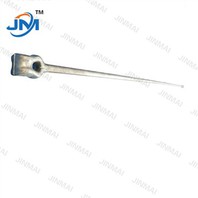
Hey there! As a supplier of Steel Angle Cross Arms, I often get asked about the straightness requirement for these crucial components. In this blog, I'll break down what straightness means for steel angle cross arms, why it matters, and how we ensure our products meet the necessary standards.
First off, let's talk about what straightness is in the context of a steel angle cross arm. A steel angle cross arm is typically made of steel and has an L-shaped cross - section. Straightness refers to how closely the arm follows a perfectly straight line along its length. Any deviation from this straight line can be measured in terms of how much the arm bows, twists, or sags.
Why is straightness so important for a steel angle cross arm? Well, these cross arms are used in overhead power lines, which are a critical part of our electrical infrastructure. They support the conductors that carry electricity from power plants to our homes and businesses. If a cross arm isn't straight, it can cause a whole bunch of problems.
For starters, an uneven or non - straight cross arm can lead to uneven distribution of the load. The conductors hanging from the cross arm put a certain amount of weight on it. When the cross arm is straight, this load is evenly spread across its length. But if it's bent or twisted, the load can concentrate in certain areas. This can cause excessive stress on those parts of the cross arm, leading to premature wear and tear, and in extreme cases, even failure.
Another issue is related to the alignment of the conductors. In an overhead power line, the conductors need to be properly spaced and aligned to ensure safe and efficient power transmission. A non - straight cross arm can throw off this alignment. The conductors might get too close to each other, increasing the risk of short - circuits, or they could be misaligned in a way that affects the electrical performance of the line.
So, what are the actual straightness requirements for a steel angle cross arm? The requirements can vary depending on the specific application and the standards set by different industries and regions. However, in general, the allowable deviation from straightness is usually quite small.
Most standards specify that the maximum deviation from a straight line should be within a few millimeters over the entire length of the cross arm. For example, for a cross arm that's a few meters long, the maximum bow or sag might be limited to 3 - 5 millimeters. This ensures that the cross arm can perform its function effectively and safely.
At our company, we take the straightness requirement very seriously. We have a strict quality control process in place to ensure that every steel angle cross arm we produce meets the necessary standards. Our manufacturing process starts with high - quality steel. We carefully select the steel based on its strength and other properties to ensure that it can be formed into a straight and durable cross arm.
During the manufacturing process, we use advanced machinery and techniques to shape the steel into the desired L - shape. After the initial forming, we perform a series of inspections. We use precision measuring tools to check the straightness of the cross arms. If any deviation is detected, we take corrective measures. This might involve adjusting the manufacturing process or, in some cases, re - working the cross arm to bring it within the acceptable straightness limits.
In addition to the in - house inspections, we also follow industry - recognized standards and guidelines. We stay updated on the latest regulations and requirements to make sure our products are compliant. This not only gives our customers peace of mind but also helps us maintain a good reputation in the market.


Now, let's talk about some of the related products that work in conjunction with steel angle cross arms. One such product is the Hot Dip Galvanized Secondary Clevis. These clevises are used to connect the cross arm to other components in the overhead power line system. They are hot - dip galvanized, which provides excellent corrosion resistance, ensuring a long service life.
Another important category of products is Overhead Pole Line Hardware. This includes various items like insulators, clamps, and brackets that are essential for the proper installation and functioning of the overhead power line. All these products need to work together seamlessly with the steel angle cross arms to ensure a reliable and efficient power transmission system.
If you're in the market for Steel Angle Cross Arms, you can count on us to provide high - quality products that meet the strict straightness requirements. Our cross arms are not only straight but also durable and reliable. We understand the importance of these components in the electrical infrastructure, and we're committed to delivering products that exceed your expectations.
Whether you're involved in a small - scale power line project or a large - scale electrical grid upgrade, we have the right steel angle cross arms for you. We can also provide customized solutions based on your specific requirements. Our team of experts is always ready to assist you with any questions you might have about our products or the straightness requirements.
So, if you're interested in purchasing steel angle cross arms or want to learn more about our products, don't hesitate to get in touch. We're here to help you make the right choice for your project and ensure that your overhead power line system runs smoothly and safely.
References
- Industry standards for overhead power line hardware
- Technical manuals on steel angle cross arm manufacturing and installation