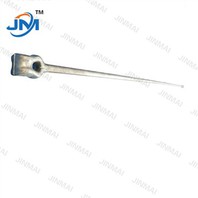
Hey there! As a supplier of Bolt Wire Clamps, I often get asked about the torque specification for tightening these clamps. It's a crucial topic because getting the torque right can make a huge difference in the performance and safety of the clamp.
First off, let's understand what torque is. Torque is basically a measure of the force that causes an object to rotate. When we're talking about tightening a Bolt Wire Clamp, we're applying a specific amount of rotational force to ensure that the clamp holds the wire securely in place. If the torque is too low, the clamp might not grip the wire tightly enough, which could lead to the wire coming loose over time. On the other hand, if the torque is too high, it could damage the clamp or even the wire itself.
Now, the torque specification for a Bolt Wire Clamp can vary depending on several factors. One of the most important factors is the size of the clamp. Smaller clamps usually require less torque compared to larger ones. For example, a tiny clamp used for delicate electrical wiring might only need a torque of around 2 - 5 Nm (Newton - meters). These small clamps are often used in applications like connecting wires in electronic devices.
On the other hand, larger Bolt Wire Clamps used in heavy - duty electrical or mechanical systems can require much higher torque values. For industrial power lines, the torque for a medium - sized clamp could range from 10 - 20 Nm, while larger clamps for high - voltage transmission lines might need torques of 30 Nm or more.


Another factor that affects the torque specification is the material of the clamp and the wire. If the clamp is made of a soft material like aluminum, it might require a lower torque to avoid deformation. Conversely, a clamp made of a hard material like steel can withstand higher torques. Similarly, the type of wire also matters. A thick, sturdy wire might need a higher torque to ensure a proper grip compared to a thin, flexible wire.
The application environment also plays a role. In a high - vibration environment, such as a machine or a vehicle engine, a higher torque might be necessary to prevent the clamp from loosening due to the vibrations. In a more stable environment, like an indoor electrical panel, a lower torque value might be sufficient.
When it comes to our products, we offer a wide range of Bolt Wire Clamps to suit different needs. For example, our Electric Hook - type Wire Clamp/Splint is designed for specific electrical applications. It has a unique hook - type design that allows for easy installation and a secure grip on the wire. The torque specification for this clamp is carefully calculated based on its size and intended use.
Our Parallel Groove Clamp is another popular product. It's used for connecting parallel wires in electrical systems. The design of this clamp ensures a uniform distribution of pressure on the wires, and the torque specification is set to provide optimal performance.
The Anchoring Clamp Suspension is used for suspending and anchoring wires in various applications. It's built to withstand significant forces, and the torque specification for tightening it is determined to ensure its long - term reliability.
To determine the correct torque for our Bolt Wire Clamps, we recommend referring to the product documentation that comes with each clamp. This documentation provides detailed information about the recommended torque values based on the specific model and application. If you're still unsure, our technical support team is always available to help you out.
When tightening the Bolt Wire Clamp, it's important to use the right tools. A torque wrench is the best tool for the job as it allows you to apply the exact amount of torque specified. Using a regular wrench might lead to over - or under - tightening, which can cause problems.
Here's a step - by - step guide on how to properly tighten a Bolt Wire Clamp using a torque wrench:
- First, make sure the clamp is clean and free of any debris. This ensures a good connection between the clamp and the wire.
- Place the clamp around the wire in the correct position. Make sure the bolt holes are aligned properly.
- Insert the bolt through the holes and start tightening it by hand until it's finger - tight. This helps to hold the clamp in place.
- Then, use the torque wrench to apply the recommended torque. Turn the wrench slowly and steadily until you reach the specified torque value. You'll usually hear a click sound when the correct torque is reached.
- After tightening, double - check the clamp to make sure it's securely holding the wire.
In conclusion, getting the torque specification right for tightening a Bolt Wire Clamp is essential for its proper functioning. Whether you're working on a small electrical project or a large - scale industrial installation, using the correct torque will ensure the safety and reliability of your wiring system.
If you're in the market for high - quality Bolt Wire Clamps, look no further. We're committed to providing top - notch products and excellent customer service. If you have any questions about our products or need help with torque specifications, feel free to reach out to us. We're here to assist you in finding the right solution for your needs. Start a conversation with us and let's discuss your requirements for Bolt Wire Clamps.
References
- "Mechanical Engineering Handbook" by Myer Kutz
- "Electrical Installation Handbook" by Siemens AG