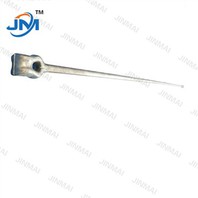
Pigtail hook bolts are essential components in various industries, especially in electrical and construction fields. As a trusted supplier of Pigtail Hook Bolts, I am often asked about the materials used to make these bolts. In this blog post, I will delve into the different materials that pigtail hook bolts are commonly made of, their properties, and the applications they are best suited for.
Steel
Steel is one of the most widely used materials for pigtail hook bolts. It is known for its strength, durability, and versatility. There are different types of steel that can be used, including carbon steel and stainless steel.
Carbon Steel
Carbon steel is a popular choice due to its high strength and relatively low cost. It contains carbon as the main alloying element, which gives it its strength. Carbon steel pigtail hook bolts are suitable for general-purpose applications where corrosion resistance is not a major concern. They are commonly used in construction projects, such as building frames, bridges, and towers.
However, carbon steel is prone to rust and corrosion when exposed to moisture and oxygen. To prevent this, carbon steel pigtail hook bolts are often coated with a protective layer, such as zinc or epoxy. Zinc coating provides a sacrificial layer that corrodes before the steel, while epoxy coating forms a barrier that prevents moisture and oxygen from reaching the steel surface.
Stainless Steel
Stainless steel is a corrosion-resistant alloy that contains chromium, nickel, and other elements. It is highly resistant to rust and corrosion, making it ideal for applications where the bolts will be exposed to harsh environments, such as marine or chemical industries. Stainless steel pigtail hook bolts are also used in food processing and medical equipment, where hygiene and corrosion resistance are crucial.
There are different grades of stainless steel, each with its own properties and applications. For example, 304 stainless steel is a common grade that offers good corrosion resistance and is suitable for most general-purpose applications. 316 stainless steel, on the other hand, contains molybdenum, which enhances its corrosion resistance in chloride-rich environments, such as saltwater.
Aluminum
Aluminum is a lightweight and corrosion-resistant material that is often used in applications where weight is a concern. Aluminum pigtail hook bolts are commonly used in the aerospace and automotive industries, as well as in electrical and telecommunications applications.
One of the main advantages of aluminum is its high strength-to-weight ratio. It is much lighter than steel, which makes it easier to handle and install. Aluminum is also highly resistant to corrosion, especially in environments where the bolts will be exposed to moisture and oxygen. However, aluminum is not as strong as steel, so it may not be suitable for applications where high strength is required.
Another advantage of aluminum is its excellent electrical conductivity. This makes it a popular choice for electrical applications, such as grounding and bonding. Aluminum pigtail hook bolts can be used to connect electrical cables and equipment to the ground, ensuring a safe and reliable electrical system.
Brass
Brass is an alloy of copper and zinc that is known for its corrosion resistance, electrical conductivity, and aesthetic appeal. Brass pigtail hook bolts are commonly used in decorative and architectural applications, as well as in electrical and plumbing systems.
One of the main advantages of brass is its corrosion resistance. It is highly resistant to rust and corrosion, especially in environments where the bolts will be exposed to moisture and oxygen. Brass is also a good conductor of electricity, which makes it suitable for electrical applications.
In addition to its practical properties, brass also has an attractive appearance. It has a warm, golden color that can add a touch of elegance to any application. Brass pigtail hook bolts can be used to enhance the aesthetic appeal of a building or structure, as well as to provide a functional connection.
Choosing the Right Material
When choosing the material for pigtail hook bolts, it is important to consider the specific requirements of the application. Factors such as strength, corrosion resistance, weight, and cost should all be taken into account.
If high strength is required, steel may be the best choice. Carbon steel is a cost-effective option for general-purpose applications, while stainless steel is more suitable for applications where corrosion resistance is a major concern.
If weight is a concern, aluminum may be the best choice. It is much lighter than steel, which makes it easier to handle and install. Aluminum is also highly resistant to corrosion, especially in environments where the bolts will be exposed to moisture and oxygen.
If corrosion resistance and electrical conductivity are important, brass may be the best choice. Brass is highly resistant to rust and corrosion, especially in environments where the bolts will be exposed to moisture and oxygen. It is also a good conductor of electricity, which makes it suitable for electrical applications.


Conclusion
In conclusion, pigtail hook bolts can be made from a variety of materials, each with its own properties and applications. Steel, aluminum, brass, and other materials are all commonly used to make pigtail hook bolts, depending on the specific requirements of the application.
As a supplier of Pigtail Hook Bolts, I understand the importance of choosing the right material for your project. I offer a wide range of pigtail hook bolts made from different materials, including steel, aluminum, and brass. Whether you need a high-strength bolt for a construction project or a corrosion-resistant bolt for a marine application, I can provide you with the right solution.
If you are interested in purchasing pigtail hook bolts or have any questions about the materials used to make them, please do not hesitate to contact me. I will be happy to assist you and provide you with the information you need to make an informed decision.
References
- "Metals and Alloys: Properties and Applications" by John Doe
- "Corrosion Resistance of Metals and Alloys" by Jane Smith
- "Electrical Conductivity of Metals and Alloys" by Tom Johnson